The Frame in Your Hand
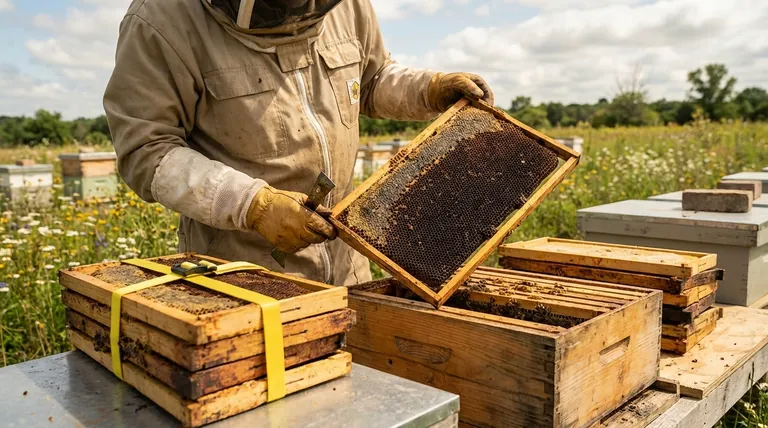
A beekeeper holds a used frame. It’s dark with old comb, perhaps a little battered. In that single moment, a complex decision unfolds. This frame is not just a piece of wood and plastic; it's a potential asset or a devastating liability.
The temptation to reuse it is powerful. It represents saved money, saved time, and a head start for a new colony. This is the psychology of thrift, a cornerstone of any successful operation. But the real skill of apiary management isn't just knowing how to clean a frame. It's knowing when the risk hidden within it is too great to bear.
This decision is a microcosm of the entire beekeeping enterprise: a constant negotiation between efficiency and biosecurity.
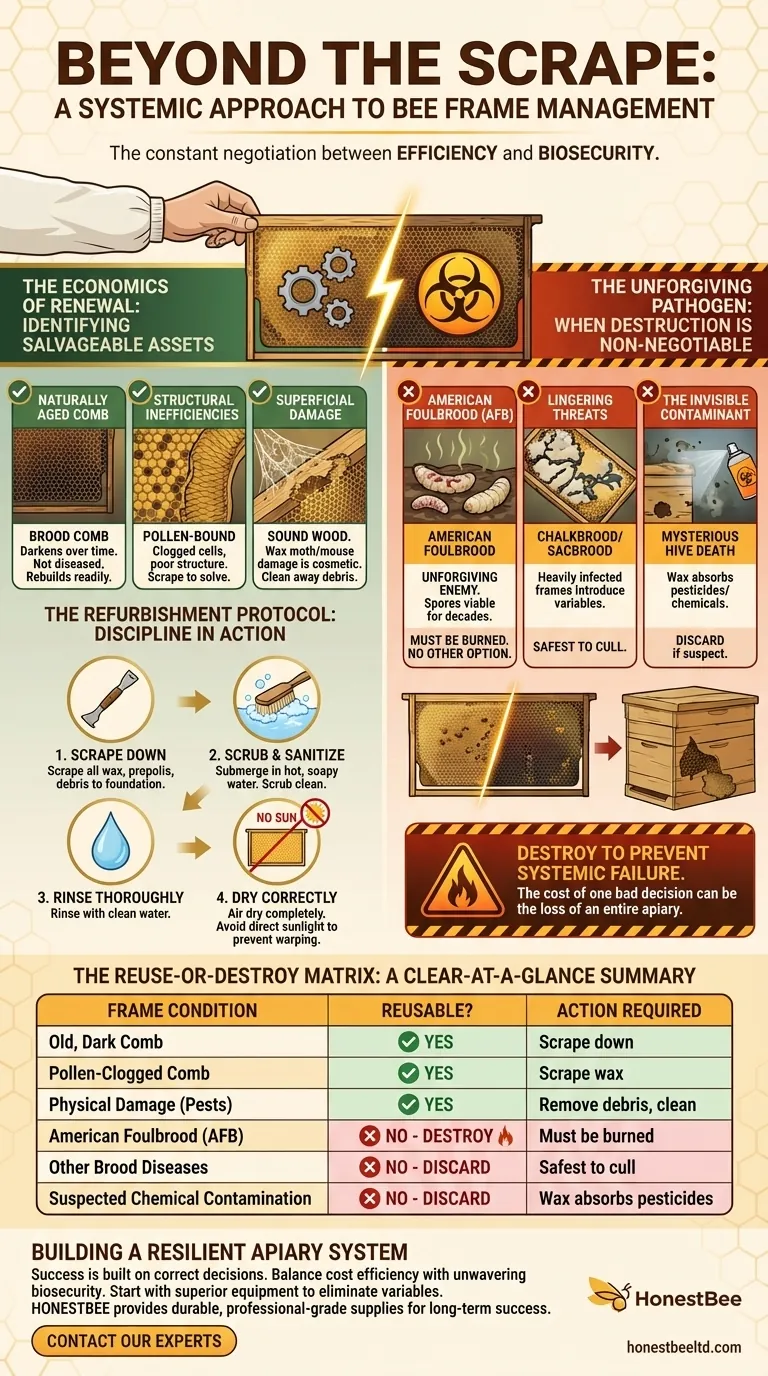
The Economics of Renewal: Identifying Salvageable Assets
Most used frames are, in fact, valuable assets. Recognizing them is the first step in an efficient equipment rotation strategy. These frames pose no biological threat and are prime candidates for refurbishment.
Naturally Aged Comb
Brood comb darkens over time. This is the natural result of pupal cocoons and propolis staining the wax, season after season. This dark comb is not diseased. It can be scraped down to the foundation, and the bees will readily rebuild on the familiar structure.
Structural Inefficiencies
Sometimes, a frame becomes "pollen-bound," with cells clogged by old, hardened pollen. In other cases, the comb is warped or filled with unwanted drone cells. These are not diseases; they are structural problems. Scraping the comb away solves the issue and restores the frame to a productive state.
Superficial Damage
Wax moths and mice can wreak havoc on stored equipment, leaving behind webbing and chewed comb. As long as the wooden frame and plastic foundation remain structurally sound, this damage is purely cosmetic. The debris can be cleaned away completely.
The Unforgiving Pathogen: When Destruction is Non-Negotiable
While thrift is a virtue, there are lines that cannot be crossed. Reusing a contaminated frame is not a calculated risk; it's a systemic failure waiting to happen. The cost of one bad decision can be the loss of an entire apiary.
The Specter of American Foulbrood (AFB)
This is the beekeeper's unforgiving enemy. If a hive is lost to American Foulbrood, every component—the frames, the comb, the box itself—must be destroyed by fire. There is no other option.
AFB spores are fantastically resilient, capable of remaining viable for decades. They are a biological time bomb. Any attempt to salvage equipment from an AFB-infected hive guarantees the spread of the disease. Signs like a foul odor or a "ropy" test are a death sentence for the equipment.
Lingering Threats
Other brood diseases like Chalkbrood or Sacbrood are less persistent than AFB. However, the principle of biosecurity remains. Heavily infected frames introduce an unnecessary variable into your operation. The safest, most professional practice is to cull them.
The Invisible Contaminant
Beeswax is lipophilic, meaning it readily absorbs fat-soluble substances. This includes pesticides and other environmental chemicals. If a colony dies suddenly and mysteriously, or if you suspect exposure to agricultural sprays, the wax and foundation should be considered contaminated. It is safest to discard them.
The Refurbishment Protocol: Discipline in Action
Once a frame is deemed safe for reuse, the cleaning process should be treated as a strict, repeatable protocol. Discipline here prevents mistakes elsewhere.
-
Scrape Down: Use a hive tool or putty knife to scrape all old wax, propolis, and debris from the frame and foundation. The goal is to return to the clean plastic base.
-
Scrub and Sanitize: Submerge the frames in hot, soapy water. The heat melts residual wax, and a stiff brush allows you to scrub the frame and foundation clean.
-
Rinse and Dry Correctly: Rinse thoroughly with clean water. Then, allow the frames to air dry completely. Crucially, keep them out of direct sunlight. The sun's heat can easily warp plastic foundation, rendering the frame useless.
The Reuse-or-Destroy Matrix
Your decision should always be guided by a clear understanding of risk and reward. This table provides a clear at-a-glance summary.
| Frame Condition | Reusable? | Action Required |
|---|---|---|
| Old, Dark Comb | Yes | Scrape down to foundation |
| Pollen-Clogged Comb | Yes | Scrape away old wax |
| Physical Damage (Wax Moths/Mice) | Yes | Remove debris, clean thoroughly |
| American Foulbrood (AFB) | No - Destroy | Must be burned to prevent spores |
| Other Brood Diseases | No - Discard | Safest practice is to cull |
| Suspected Chemical Contamination | No - Discard | Beeswax absorbs pesticides |
Building a Resilient Apiary System
A successful apiary is a complex system built on thousands of small, correct decisions. The management of your frames is fundamental to the integrity of that system. It requires balancing the practical need for cost efficiency with an unwavering commitment to biosecurity.
A resilient system also depends on high-quality, reliable components. When your frames and foundations are built to last, you can focus your energy on managing biological risks, not equipment failures. HONESTBEE provides commercial apiaries and distributors with the durable, professional-grade beekeeping supplies necessary to build a truly robust operation. By starting with superior equipment, you eliminate a critical variable and set the foundation for long-term success.
To equip your apiary with supplies built for resilience and productivity, Contact Our Experts.
Visual Guide
Related Products
- Assembled Wooden Bee Frames with Plastic Foundation for Durability and Convenience by HONESTBEE
- Assembled Wooden Bee Frames with Beeswax Foundation Ready to Use by HONESTBEE
- HONESTBEE Wired and Assembled Wooden Bee Frames Foundation for a Thriving Hive
- Plastic Bee Frame Beekeeping Hive Frames for Wholesale
- Professional Bee Frame Machine for Side Bar Shaping
Related Articles
- How to Clear Bees from Frames Without Compromising Honey Quality or Colony Health
- The Pragmatic Hive: Engineering Resilience with Wood Frames and Plastic Foundation
- Why Wooden Beehive Frames Outperform Alternatives: Science, Sustainability, and Beekeeper Experiences
- Why Your Plastic Frames Are Warping—And Costing You More Than You Think
- Wooden vs. Plastic Bee Hive Frames: Balancing Sustainability and Practicality