The Illusion of a Clean Tank
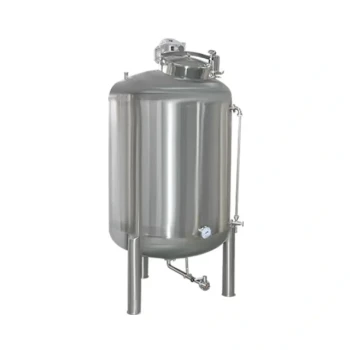
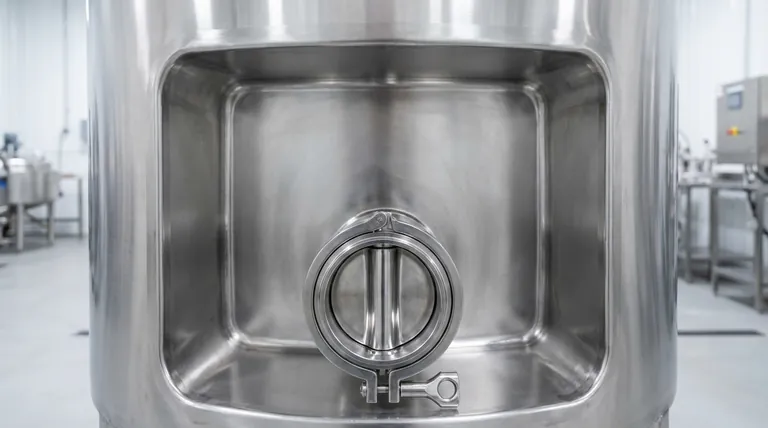
Imagine two honey tanks standing side-by-side. Both are gleaming stainless steel, wiped down and sparkling under the lights of a processing facility. To the naked eye, they are identical—symbols of cleanliness and quality.
Yet, one of them could be a ticking time bomb for contamination.
This is the psychological trap of sanitation. We are wired to trust what we can see. A shiny surface feels clean. But in food processing, especially with a product as delicate as honey, the greatest threats are microscopic. True hygiene isn't achieved with a sponge; it's engineered into the very design of the equipment. It's a battle fought in unseen corners, microscopic pores, and imperfect seams.
The Foundation: A Material That Forgets
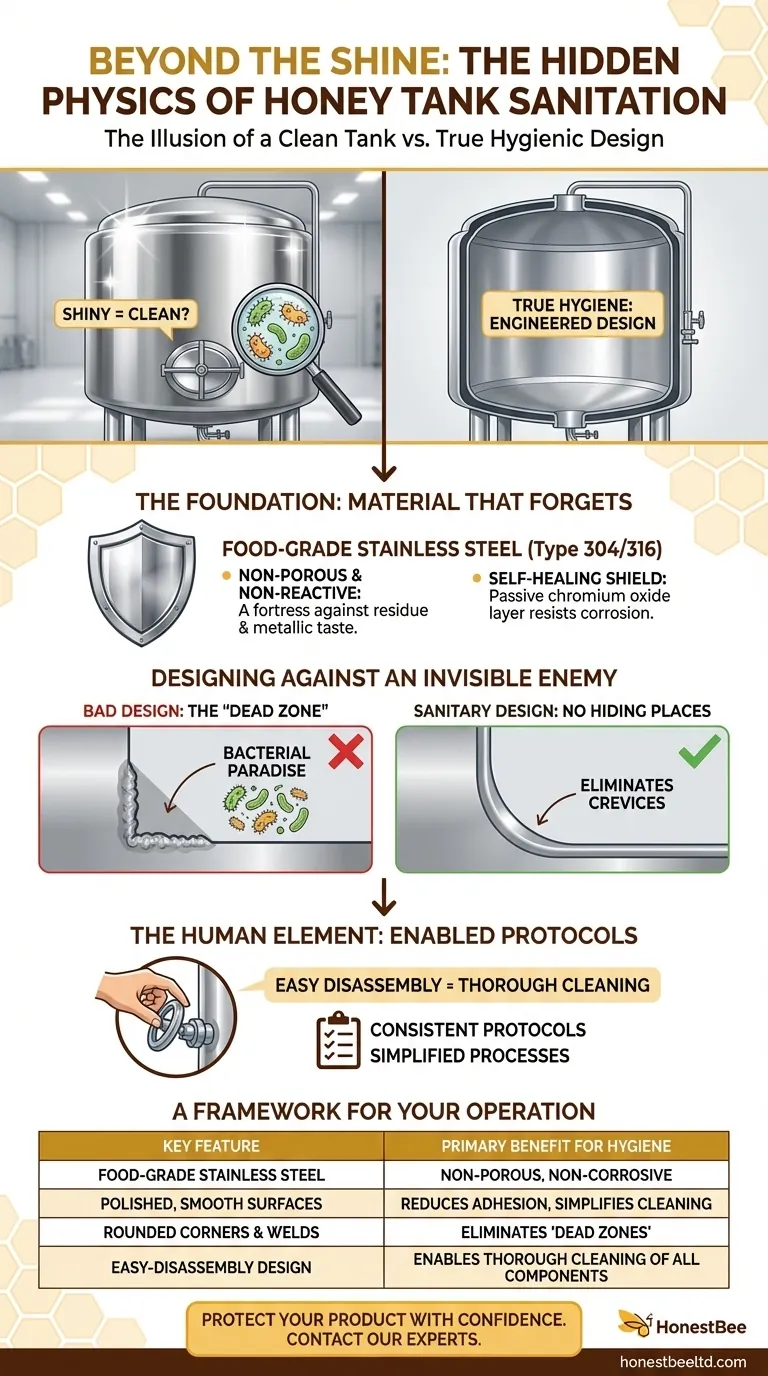
The first line of defense is choosing a material that doesn't hold a grudge. This is why food-grade stainless steel (like Type 304 or 316) is the undisputed industry standard. It’s not just about strength; it’s about its inherent amnesia.
Non-Porous and Non-Reactive
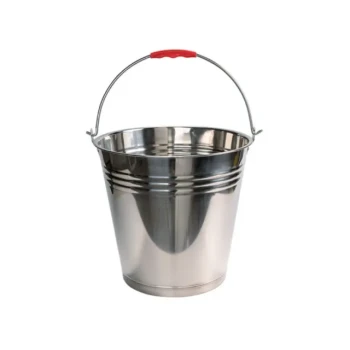
Wood and plastic have microscopic pores where residue can hide and bacteria can thrive. Stainless steel is different. Its surface is a fortress—smooth and non-porous, offering no shelter for contaminants.
More importantly, it's non-reactive. It won't impart a metallic taste or upset the delicate chemical balance of the honey. The material simply does its job and "forgets" it was ever there, preserving the product's natural purity.
Resisting the Slow Attack of Acidity
Honey is naturally acidic. Over time, this acidity can corrode lesser metals, leaching harmful elements into the product. Stainless steel’s defense is an invisible, passive layer of chromium oxide.
This layer is the essence of an engineer's romance: a self-healing shield. When scratched, it instantly reforms, providing relentless protection against corrosion. It ensures the tank's integrity not just for months, but for years of service.
Designing Against an Invisible Enemy
While the right material is the foundation, the geometry of the tank is where the war on contamination is won or lost. A brilliant material can be defeated by a single design flaw.
The Tyranny of the 90-Degree Corner
Bacteria are opportunistic. They seek refuge where cleaning pressure is lowest. A sharp, 90-degree corner in a tank is a bacterial paradise—a "dead zone" that is nearly impossible to scrub effectively.
Sanitary design wages war on these corners. High-quality tanks feature sweeping, rounded corners and continuous, polished welds. This isn't an aesthetic choice; it’s a strategic one. By eliminating crevices, you eliminate the enemy's hiding places.
A Welder's Signature is a Mark of Safety
The quality of a weld is a direct indicator of a tank's hygienic potential. A sloppy, uneven weld creates countless microscopic pits and fissures along the seam, completely negating the benefit of a polished stainless steel surface. It’s a scar that can harbor infection.
A smooth, fully polished weld is more than just good craftsmanship; it's a signature of safety. It creates a seamless interior landscape where no bacteria can gain a foothold.
The Logic of Disassembly
Valves, gates, and lids are notorious sanitation challenges. A well-designed tank operates on a principle of "no hidden parts." Components should be easy to disassemble without special tools, allowing operators to clean and inspect every surface that comes into contact with the honey.
The Human Element: Where Perfect Systems Fail
The most brilliantly engineered tank is only as good as the cleaning protocol it enables. The design makes effective sanitation possible, but it is the operator who makes it a reality.
For commercial apiaries and distributors, consistency is paramount. Your equipment should facilitate rigorous protocols, not fight against them. This is why HONESTBEE supplies wholesale equipment engineered for the demands of high-volume operations. Our tanks are designed not just to hold honey, but to simplify the critical processes of draining, cleaning, and inspection, ensuring your team can maintain the highest standards efficiently.
A Framework for Your Operation
Choosing the right tank is a strategic investment in your product's safety and your brand's reputation.
| Key Feature | Primary Benefit for Hygiene & Sanitation |
|---|---|
| Food-Grade Stainless Steel | Non-porous, non-corrosive surface prevents bacterial growth. |
| Polished, Smooth Surfaces | Reduces bacterial adhesion and simplifies cleaning and inspection. |
| Rounded Corners & Welds | Eliminates "dead zones" where contaminants can accumulate. |
| Easy-Disassembly Design | Enables thorough cleaning of all components, leaving no residue behind. |
Ultimately, protecting the purity of honey is about respecting the unseen. It's an appreciation for the physics of fluid dynamics, the chemistry of materials, and the biology of microscopic contaminants. It is a commitment to getting the details right, especially the ones no customer will ever see.
HONESTBEE shares that commitment. We provide commercial beekeepers and distributors with equipment built on a foundation of uncompromising sanitary design, helping you protect your product with confidence. To ensure your operation is built on a foundation of quality and safety, Contact Our Experts.
Visual Guide
Related Products
- Stainless Steel Honey Storage Tank with Lid for Honey
- Stainless Steel Honey Storage and Settling Tank with Double Strainer
- Stainless Steel Heated Honey Tank Warming Heating Tank
- Heavy Duty Stainless Steel Honey Processing Machine Decrystallizing Tank
- Premium Stainless Steel Honey Tank Bucket Pail with Reinforced Handle and Polished Finish
Related Articles
- Is Your Honey Tank Holding Your Business Hostage? How to Choose a Size That Fuels Growth, Not Frustration
- How to Choose Honey Storage Containers That Prevent Spoilage and Extend Shelf Life
- How Honey Storage Science Preserves Nutrients: Temperature, Light & Container Insights
- The Hidden Threat After Harvest: Why a Simple Lid Prevents Apiary Disaster
- Is Your Honey Tank a Hidden Hazard? Why Poor Sanitation Can Spoil Your Harvest