Imagine the scene: a perfect harvest. Your bees have worked tirelessly, and you've extracted gallons of beautiful, fragrant, golden honey. You store it carefully, ready for bottling. But weeks later, when you sample a batch, something is wrong. A faint, almost imperceptible metallic tang has appeared. The color seems just a shade darker. The pure, floral notes you worked so hard to preserve are now muted.
What went wrong between the comb and the jar?
The Frustrating Cycle of Failed Fixes and Hidden Costs
If this scenario sounds familiar, you're not alone. Many commercial beekeepers and growing apiaries encounter this frustrating mystery. In the rush to scale operations, equipment choices are often made based on immediate cost and availability, leading to a cycle of troubleshooting that never quite solves the problem.
You might blame a specific floral source or an anomaly in the season. You might switch to different food-grade plastic buckets, only to find they become scratched, impossible to truly sanitize, and eventually absorb off-flavors. Worse, you might have invested in a seemingly robust galvanized steel tank, believing its coating would protect your product, only to see quality issues persist or even worsen.
These aren't just minor annoyances; they are significant business problems.
- Product Loss: Every gallon of tainted honey is lost revenue.
- Brand Damage: Inconsistent quality erodes customer trust and your reputation for excellence.
- Wasted Investment: Constantly replacing "good enough" equipment costs more in the long run than investing in the right tools from the start.
The chase for a solution feels endless because most people are looking in the wrong place. The problem isn't your process. It's a fundamental misunderstanding of the product itself.
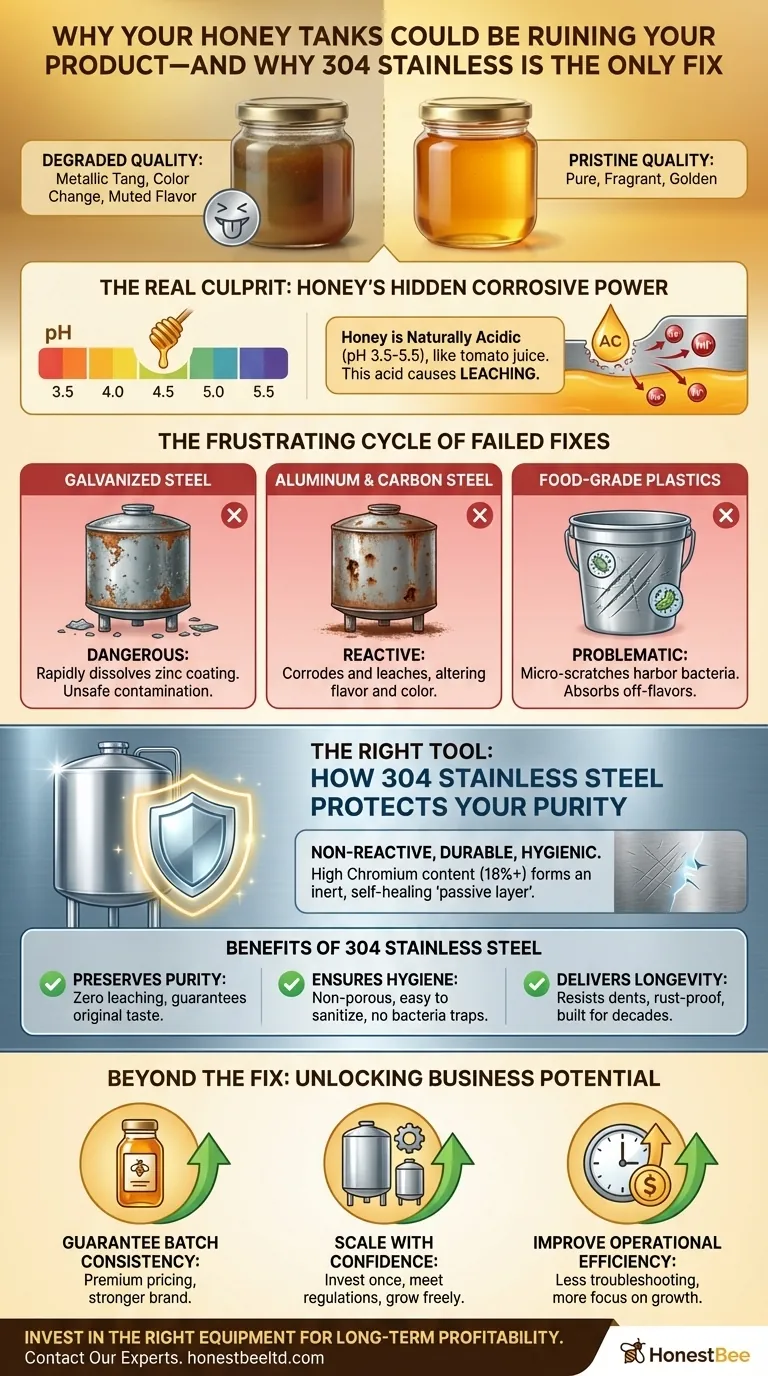
The Real Culprit: Honey’s Hidden Corrosive Power
The simple truth is that honey is not a neutral, inert substance. Honey is naturally acidic.
With a typical pH level between 3.5 and 5.5, raw honey is about as acidic as tomato juice or a soft drink. This acidity, primarily from gluconic acid produced by bees, is a fantastic natural preservative that inhibits bacterial growth. However, it also makes honey a mild but relentless corrosive agent.
When this acid comes into contact with the wrong materials, a chemical reaction called leaching occurs. The acid slowly dissolves the container's surface, releasing metallic ions or chemicals directly into your honey.
This is precisely why common "solutions" fail:
- Galvanized Steel: This is the most dangerous choice. Honey's acid rapidly dissolves the zinc coating, leading to unsafe levels of zinc contamination and a distinct metallic taste. It's completely unsuitable for direct contact with honey.
- Aluminum & Carbon Steel: These reactive metals will corrode and leach into the honey, altering its flavor, color, and safety.
- Food-Grade Plastics: While acceptable for short-term transport, plastic is a soft material. Over time, stirring and scraping create micro-scratches that are impossible to fully clean, creating a breeding ground for bacteria. Some plastics can also absorb flavors and aromas, leading to cross-contamination between batches.
You aren't just storing honey; you are trying to contain a mildly corrosive substance for weeks or months. The only way to win is to use a material that is fundamentally immune to its attack.
The Right Tool for the Job: How 304 Stainless Steel Protects Your Purity
To solve this problem at its root, you need a material that is completely non-reactive, exceptionally durable, and perfectly hygienic. This is where 304 stainless steel becomes non-negotiable.
It's not just "shiny metal"; it's a precisely engineered solution. The magic lies in its composition, specifically its high chromium content (at least 18%). The chromium reacts with oxygen to form a microscopic, invisible, and incredibly tough "passive layer" on the steel's surface.
Think of it as a self-healing suit of armor.
When honey's acid touches the tank, it doesn't contact the steel itself; it contacts this inert, non-reactive shield. If the surface is scratched, the chromium instantly reacts with the air to repair the shield. This is why 304 stainless steel provides absolute protection:
- It Preserves Purity: Being inert, it guarantees zero leaching. The taste of your honey remains exactly as the bees made it.
- It Ensures Hygiene: Its non-porous surface leaves no place for bacteria to hide, making it effortless to clean and sanitize to the highest food-safety standards.
- It Delivers Longevity: It resists dents, will not rust, and is built to withstand the rigors of a commercial operation for decades. It is an investment, not a recurring expense.
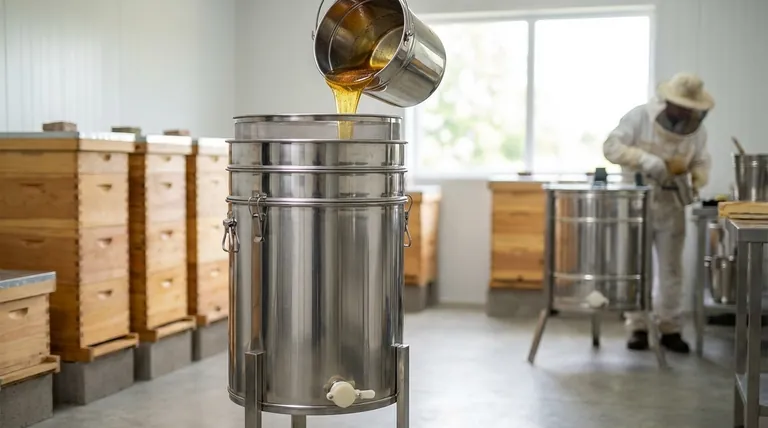
Our honey processing equipment at HONESTBEE is built from high-quality 304 stainless steel not by chance, but by design. It is the physical embodiment of a deep understanding of honey's chemistry—a tool engineered to solve the core challenge of preserving purity.
Beyond the Fix: What Flawless Quality Unlocks for Your Business
When you eliminate equipment-related quality issues, you’re not just fixing a problem; you’re unlocking potential. Moving to 304 stainless steel is a strategic shift that allows you to:
- Guarantee Batch Consistency: Deliver the same pristine quality and taste in every bottle, strengthening your brand and commanding premium prices.
- Scale with Confidence: Invest in equipment once, knowing it will meet food safety regulations and support your growth for years to come, from 100 gallons to 10,000.
- Improve Operational Efficiency: Spend less time troubleshooting quality issues and replacing failed equipment, and more time focusing on what you do best—managing your apiary and growing your business.
Ultimately, it provides peace of mind, knowing that the integrity of your hard work is protected from hive to bottle.
Solving the material issue is more than just a technical fix; it's a foundational business decision. It protects your brand, ensures compliance, and secures your long-term profitability. If you're ready to build an operation founded on quality and reliability, our team is here to help you select the right 304 stainless steel equipment for your scale and goals. Contact Our Experts to discuss your project and ensure every drop of your honey is as perfect as you intended.
Visual Guide
Related Products
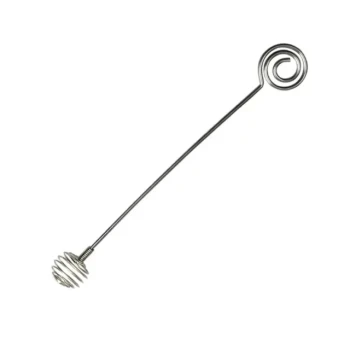
- Heavy Duty 304 Stainless Steel Honey Dipper
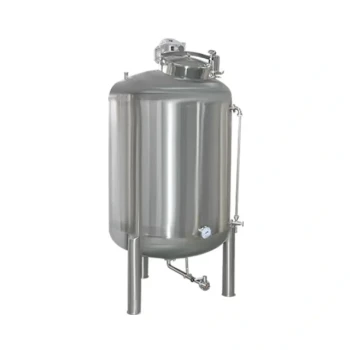
- Stainless Steel Honey Storage Tank with Lid for Honey
- Heavy Duty Stainless Steel Honey Processing Machine Decrystallizing Tank
- Stainless Steel Honey Storage and Settling Tank with Double Strainer
- Stainless Steel Heated Honey Tank Warming Heating Tank
Related Articles
- The Last Drop: Maximizing Yield and Purity with a Stainless Steel Honey Press
- The Beehive's Balance Sheet: Why a 2:1 Syrup Is a Non-Negotiable Winter Asset
- How to Optimize Autumn Syrup for Stronger Hives and Higher Honey Yields
- Why Honey Crystallizes Differently—And How to Manage It Naturally
- How Honey Processing Affects Nutrition: Science-Backed Insights for Healthier Choices