For beekeepers, efficiently purifying beeswax contaminated with brood comb debris while recovering residual honey is a common challenge. Traditional methods like oven melting often fall short, leaving behind impurities or wasting valuable honey. This guide explores advanced techniques—solar wax melters and water bath methods—to achieve cleaner wax and higher honey yields.
Effective Wax Recovery Challenges
Why Oven Melting Fails with Brood Comb Contamination
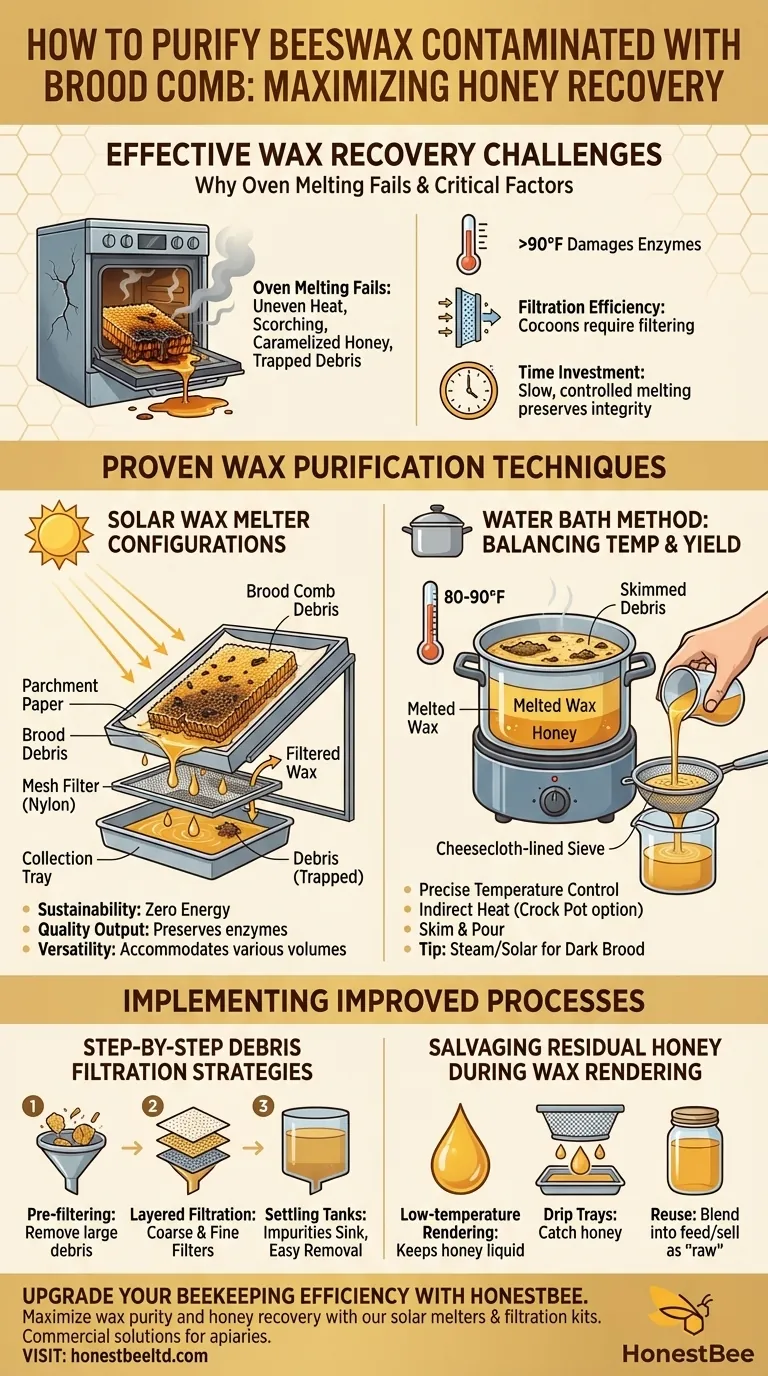
Oven melting, while straightforward, struggles with brood comb due to uneven heat distribution. High temperatures can scorch wax, degrade enzymes, and trap debris, reducing quality. Additionally, honey residues often caramelize, making recovery impossible.
Critical Factors in Wax-Honey Separation
Successful separation hinges on:
- Temperature control: Excessive heat (>90°F) damages wax enzymes and honey flavor.
- Filtration efficiency: Non-melting debris (e.g., cocoons) requires multi-stage filtering.
- Time investment: Slow, controlled melting preserves wax integrity.
Proven Wax Purification Techniques
Solar Wax Melter Configurations for Debris-Rich Wax
Solar wax melters leverage sunlight to gently melt wax, ideal for contaminated brood comb.
Advantages:
- Sustainability: Zero energy costs; fully solar-powered.
- Quality output: Slow melting preserves wax enzymes and honey residues.
- Versatility: Stainless steel models accommodate various hive systems and wax volumes.
Best Practices:
- Layer comb between parchment paper to prevent debris mixing.
- Angle the melter to direct filtered wax into a collection tray.
- Use a secondary mesh filter (e.g., nylon) to catch fine particles.
Water Bath Method: Balancing Temperature and Yield
A water bath (or double boiler) offers precise temperature control for delicate wax.
Steps:
- Heat water to 80–90°F—warm enough to melt wax but protect honey.
- Use a crock pot for indirect heat if stove monitoring is impractical.
- Skim floating debris; pour liquid wax through a cheesecloth-lined sieve.
Tip: Dark brood wax can be recycled by steaming or solar remelting to remove impurities.
Implementing Improved Processes
Step-by-Step Debris Filtration Strategies
- Pre-filtering: Remove large debris (e.g., wood splinters) before melting.
- Layered filtration: Combine coarse (metal mesh) and fine (nylon) filters.
- Settling tanks: Let melted wax cool slightly; impurities sink for easy removal.
Salvaging Residual Honey During Wax Rendering
- Low-temperature rendering: Keeps honey liquid for separation.
- Drip trays: Place under filtered wax to catch honey droplets.
- Reuse: Blend recovered honey into feed supplements or sell as "raw" byproduct.
Upgrade Your Beekeeping Efficiency with HONESTBEE
Maximize wax purity and honey recovery with HONESTBEE’s solar melters and filtration kits—designed for commercial apiaries and distributors. Explore our wholesale-focused solutions to streamline your rendering process today.
Visual Guide
Related Products
- Electric Commercial Beeswax Melter for Factory Use
- Electric Beeswax Flat Sheet Machine with Operating Tray for Wax Processing
- Steam Beeswax Melter Wax Warmer for Wax Processing
- Beeswax Melter for Candle Making Honey Bee Wax Melter
- Solar Beeswax Melter Easy Solar Wax Melter for Beeswax
Related Articles
- How to Melt Beeswax Safely: Expert Methods to Avoid Fire Risks
- The Beekeeper's Paradox: Why Slow Heat Unlocks the True Value of Beeswax
- Why Your Beeswax Melter Could Be a Fire Hazard—And How to Fix It
- How to Melt Beeswax Safely: Preserving Quality While Avoiding Hazards
- The Physics of Patience: Why Controlled Heat is Non-Negotiable for Beeswax