Beekeepers know that a loose hive cover can spell disaster—exposing colonies to predators, moisture, and temperature fluctuations. This guide examines proven cover security methods tailored to your hive design and local climate, drawing from material science and apiary field experience.
Hive Preservation Through Strategic Cover Security
Weight vs. Restraint: Decoding Physical Retention Methods
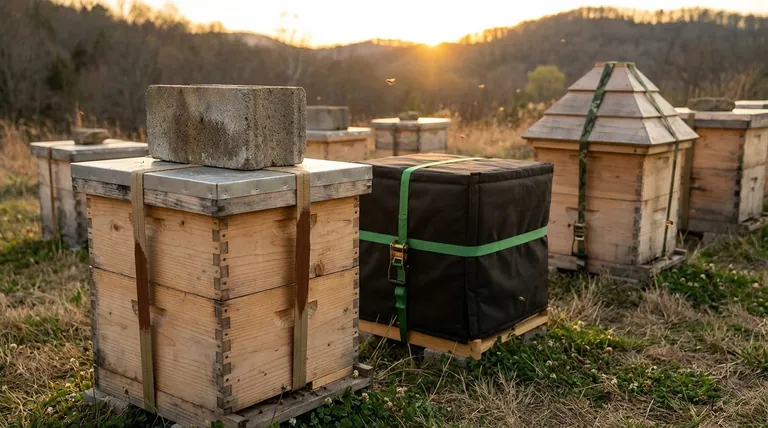
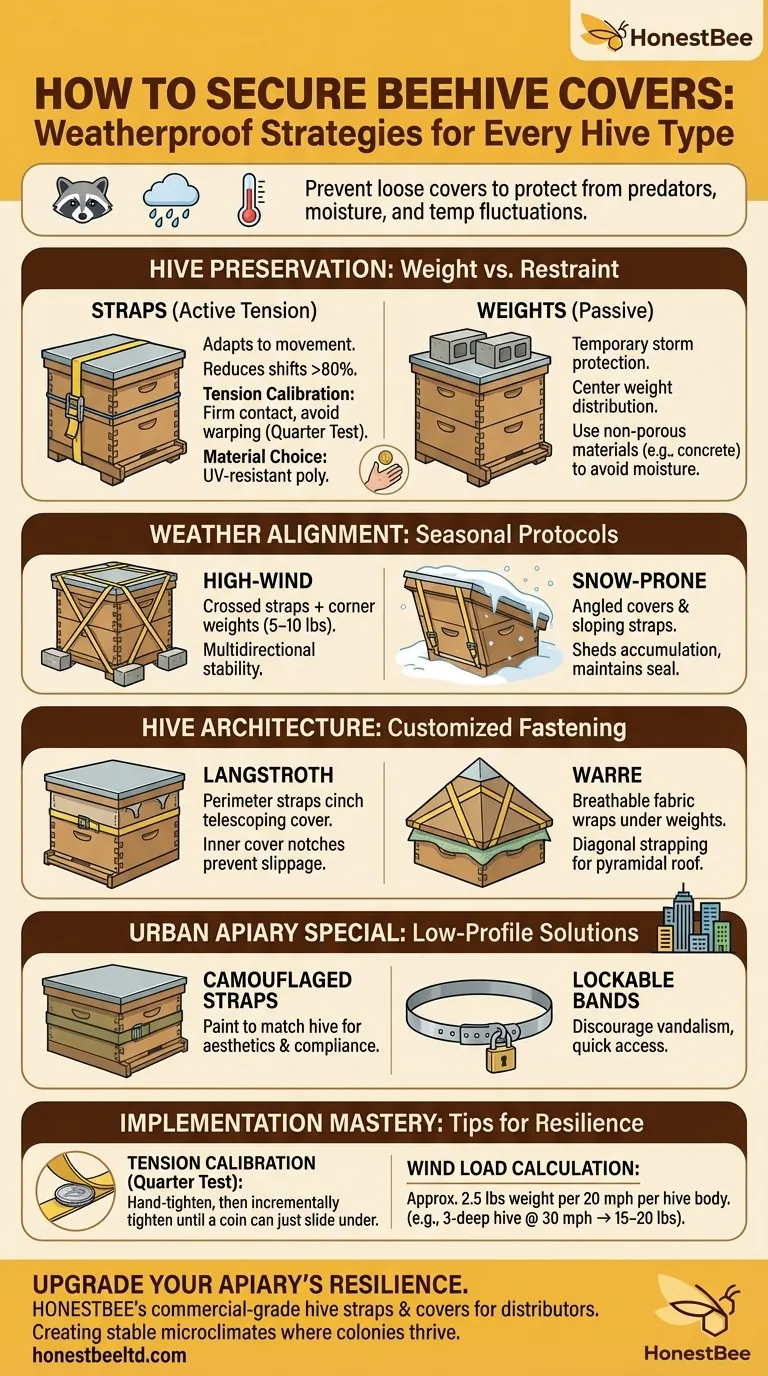
Straps (ratchet or elastic) provide active tension, adapting to hive movement during inspections. Research shows they reduce cover shifts by over 80% compared to passive weights. Key considerations:
- Tension calibration: Over-tightening warps wooden hive bodies; aim for firm contact without deformation.
- Material choice: UV-resistant poly straps outlast natural fibers in prolonged sun exposure.
Weights (bricks, rocks) suit temporary storm protection but lack adjustability. Best practices:
- Distribute weight near the cover’s center to prevent uneven pressure on hive joints.
- Use non-porous materials (e.g., concrete blocks) that won’t absorb rainwater and add excess moisture.
Weather Pattern Alignment: Seasonal Security Protocols
- High-wind regions: Combine crossed straps with corner weights (5–10 lbs total) for multidirectional stability.
- Snow-prone areas: Angled covers with downward-sloping straps shed accumulation while maintaining seal integrity.
Hive Architecture Considerations
Langstroth vs. Warre: Customized Fastening Approaches
Langstroth hives benefit from:
- Perimeter straps that cinch the telescoping cover’s outer ledge.
- Inner cover notches that accept strap hooks, preventing lateral slippage.
Warre hives require:
- Breathable fabric wraps (e.g., burlap) under weights to preserve quilt-box airflow.
- Diagonal strapping to accommodate the pyramidal roof design.
Urban Apiary Special: Low-Profile Security Solutions
City beekeepers often prioritize aesthetics and theft deterrence:
- Camouflaged straps (painted to match hive bodies) maintain neighborhood compliance.
- Lockable metal bands discourage vandalism while allowing quick beekeeper access.
Implementation Mastery
Tension Calibration for Ratchet Straps
- Hand-tighten until the strap webbing shows slight tension ridges.
- Perform the quarter test: If you can slide a coin between the strap and hive body, incrementally tighten.
Wind Load Calculations for Weight Placement
For every 20 mph of expected wind speed, add approximately 2.5 lbs of centered weight per hive body. Example:
- 3-deep Langstroth in 30 mph winds → 15–20 lbs total (including strap tension).
Upgrade Your Apiary’s Resilience
HONESTBEE’s commercial-grade hive straps and weatherproof covers help distributors equip beekeepers with security solutions that stand up to nature’s challenges. Explore wholesale options designed for high-volume apiaries.
Closing Thought: The right cover security isn’t just about keeping lids on—it’s about creating stable microclimates where colonies can thrive despite external chaos. Whether you’re weighting Warre quilts or strapping Langstroth supers, these adaptive methods ensure your bees stay protected season after season.
Visual Guide
Related Products
- Telescopic Beehive Outer Cover Lid Roof with Galvanised Sheeting for Langstroth Hive and Beehive Outer Cover
- Inner Beehive Cover for Beekeeping Bee Hive Inner Cover
- Professional Insulated Winter Hive Wrap for Beekeeping
- Metal Bee Hive Stand Bee Box Stand for Beekeeping
- Metal Hive Feet Bee Hive Stand for Ant Protection
Related Articles
- How Outer Telescoping Covers Protect Beehives: Materials and Design Explained
- How Telescoping Beehive Covers Outperform in Cold Climates: A Cost-Benefit Analysis
- How to Choose Between Telescoping and Migratory Lids for Your Langstroth Hive
- How to Strengthen Langstroth Hive Roofs Against Storms Without Compromising Functionality
- How Beehive Top Cover Design and Materials Protect Your Colony's Health