Your Bees Are Overheating in Transit—And You Might Not Even Know It
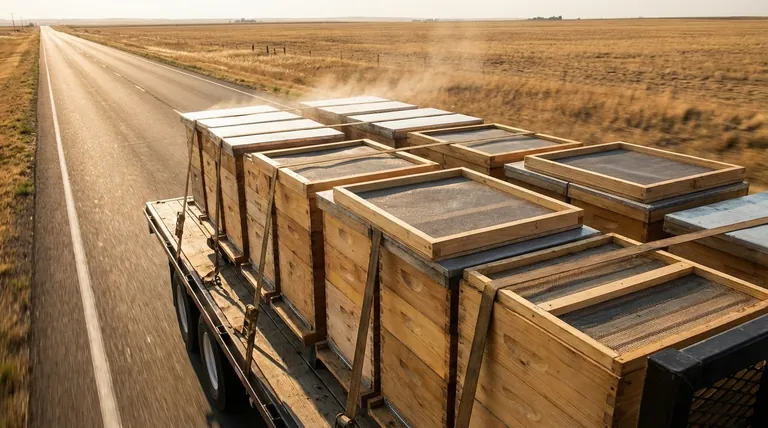
Imagine loading your precious beehives onto a truck, confident you've done everything right. You've sealed them up, secured them, and you're ready for the journey. But what if, beneath the surface, a silent killer is at work, slowly cooking your colonies from the inside out?
This isn't a hypothetical fear for commercial beekeepers; it's a distressingly common reality. Many operations suffer significant colony losses during transportation, attributing it to "stress" or "unavoidable circumstances." But what if there's a fundamental misunderstanding about how air moves (or doesn't move) through your hives during transit, turning a routine journey into a death march for your bees?
The Hidden Costs of Conventional Hive Transport
You've probably experienced it: despite your best efforts, some colonies arrive weak, stressed, or worse, dead. This isn't just a minor setback; it's a direct hit to your profitability and the health of your entire operation.
Common struggles often include:
- Weakened Colonies: Even if they survive, overheated bees emerge from transit exhausted and susceptible to disease, impacting honey production and pollination services.
- Significant Colony Loss: The outright death of hives means lost revenue, wasted resources, and the costly process of rebuilding.
- Unpredictable Outcomes: You might have good luck on some trips, only for disaster to strike on others, leaving you scratching your head about the inconsistency.
Many attempt to mitigate these issues with strategies like:
- Moving only at night: While helpful, it doesn't solve the core problem of heat generation within a sealed hive. Unexpected delays or rising dawn temperatures can still be fatal.
- Using larger, more open trailers: This might provide some ambient cooling but does little to address the trapped heat inside each individual hive.
- Simply "hoping for the best": A costly gamble for any commercial operation.
These approaches often fall short because they treat the symptoms, not the underlying cause. The real problem isn't just ambient temperature; it's the internal inferno generated by the bees themselves when confined. This leads to project delays, unforeseen expenses, and a reputation for unreliable colony health—all stemming from a failure to manage internal hive thermodynamics.
The Invisible Enemy: Thermal Runaway in a Sealed Hive
The core conflict arises from a simple biological fact and a critical oversight in transportation strategy. Your bees, when sealed for travel, don't just passively sit there. They get agitated. This agitation causes them to fan their wings and vibrate their flight muscles. This seemingly innocent activity generates an astonishing amount of heat.
Why Heat Builds Up So Rapidly
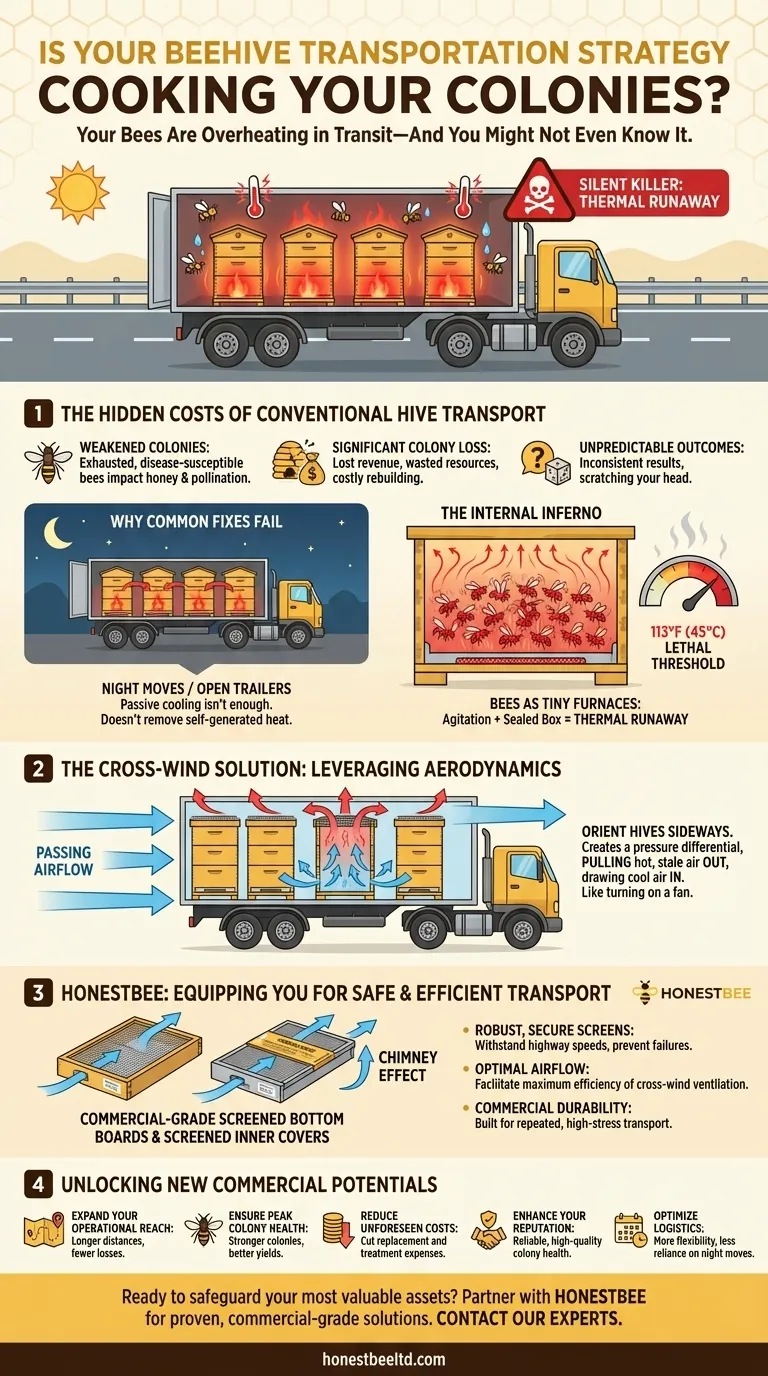
Think of it like this: A few thousand bees in a sealed box, all vibrating and fanning, are essentially tiny furnaces. Without proper ventilation, this heat has nowhere to go. As the temperature rises, the bees become more stressed, leading to more agitation, which generates even more heat. This vicious cycle, known as thermal runaway, can quickly push internal hive temperatures past 113°F (45°C)—a lethal threshold for bees.
Why Common Fixes Fail
The reason simply moving at night or using an open trailer isn't enough is that they don't actively remove this self-generated heat. The problem isn't just the sun beating down; it's the "oven" your bees create themselves. Traditional hive orientations, like having the entrance face forward or backward, either create air resistance that traps heat or offer only passive, insufficient airflow. They don't engage with the fundamental physics of how to effectively extract hot, humid air from a densely packed, agitated colony.
The Cross-Wind Solution: Leveraging Aerodynamics for Colony Survival
The true solution lies in understanding and harnessing basic aerodynamic principles to create a natural, powerful ventilation system. This is where cross-wind transportation comes in.
Instead of facing the hive entrance forward or backward, you simply orient it sideways—perpendicular to the direction of travel. This isn't just a minor adjustment; it's a fundamental shift that leverages the movement of the truck to actively cool your hives.
How Cross-Wind Creates a Life-Saving Airflow
When the hive entrance faces sideways, the passing air creates a pressure differential. This dynamic actively pulls hot, stale, moisture-laden air out of the hive while simultaneously drawing in fresh, cooler air. It's like turning on a fan within each hive, ensuring a continuous, vital air exchange. This consistent airflow prevents the deadly thermal runaway by dissipating the heat as quickly as it's generated.
HONESTBEE: Equipping You for Safe & Efficient Transport
To truly capitalize on cross-wind transportation, you need equipment designed to maximize its effectiveness. This is where HONESTBEE’s wholesale-focused products become indispensable. We understand the rigorous demands of commercial beekeeping and have engineered our supplies to integrate seamlessly with this critical best practice.
Our commercial-grade screened bottom boards and screened inner covers are not just accessories; they are foundational components for cross-wind success. They create the crucial "chimney effect" within the hive, allowing air to enter through the side entrance, flow upwards through the colony, and exit efficiently through the top screens. Without these robust, secure screened components, the cross-wind benefit is significantly diminished, as heat and moisture can still get trapped.
HONESTBEE products directly address the root cause of overheating by:
- Providing robust, secure screens: Engineered to withstand highway speeds and agitated bees, preventing screen failures that lead to lost colonies and safety hazards.
- Ensuring optimal airflow: Our designs facilitate the maximum efficiency of cross-wind ventilation, keeping your colonies cool and calm.
- Delivering commercial durability: Built for repeated, high-stress transport scenarios, protecting your investment trip after trip.
Beyond Just Moving Hives: Unlocking New Commercial Potentials
By mastering cross-wind transportation with the right equipment, you're not just solving an old problem; you're opening up new possibilities for your commercial apiary.
Imagine a future where you can:
- Expand Your Operational Reach: Transport hives over longer distances and for extended periods without fear of catastrophic losses, allowing you to access more diverse pollination contracts or new apiary locations.
- Ensure Peak Colony Health: Deliver consistently stronger, healthier colonies to pollination sites, leading to better contract renewals and higher honey yields.
- Reduce Unforeseen Costs: Drastically cut down on replacement colony costs, veterinary treatments for stressed bees, and project delays caused by compromised hive health.
- Enhance Your Reputation: Become known for the reliable, high-quality health of your transported colonies, attracting more lucrative commercial contracts.
- Optimize Logistics: Gain more flexibility in your moving schedule, reducing reliance on strict night-time-only operations, thanks to the robust safety net of effective ventilation.
This isn't just about moving bees; it's about moving your business forward with confidence, efficiency, and unparalleled colony protection.
Ready to transform your beehive transportation strategy and safeguard your most valuable assets? Don't let silent heat cook your profits. Partner with HONESTBEE to implement proven, commercial-grade solutions for successful, stress-free hive moves. Our experts are ready to help you optimize your operations for maximum colony health and business growth. Contact our team to discuss your unique projects or issues. Contact Our Experts
Visual Guide
Related Products
- Stainless Steel Round Beehive Air Vents for Ventilation
- Heavy Duty Adjustable Hive Connector
- Steel Round Disc Entrance Reducer for Flexzion Bee Hive Nuc Box Gate
- Durable Plastic Interlocking Hive Connector for Beekeeping
- High-Efficiency Pneumatic Bee Hive Making Machine for Rapid Box Assembly
Related Articles
- How to Optimize Beehive Ventilation: Prevent Disease and Boost Colony Health
- The Silent Killer in the Hive: Why Moisture, Not Cold, Is Winter's Greatest Threat
- Beyond the Bee Box: Why Your First Apiary Investment Determines Your Success
- The Precision of Chaos: Navigating the Biological Risks of Commercial Beehive Transportation
- Beyond the Box: Why Hive Architecture Is Your Apiary's Core Operating System