The Allure of a Single Number
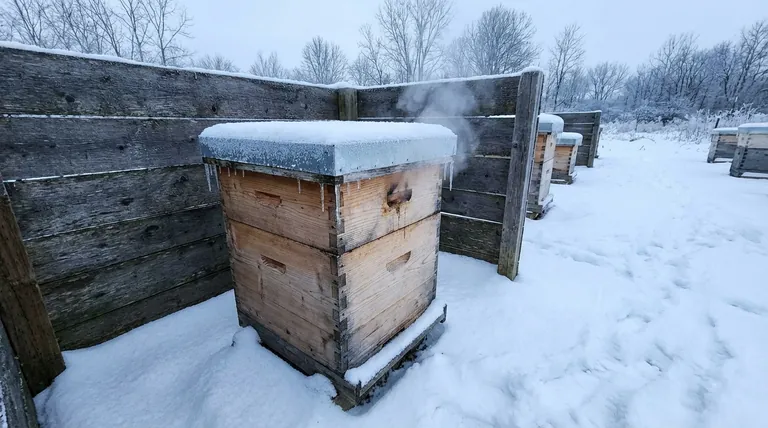
A commercial beekeeper sees a polar vortex in the forecast. The temperature is predicted to plummet to 5°F (-15°C). The immediate, instinctual question is: "Is that too cold?"
This is a natural human tendency. We crave simple metrics, a single number on a dashboard that tells us if things are okay or not. But in complex systems, whether in an operating room or an apiary, focusing on one dramatic number can blind us to the real, systemic threats.
The survival of a beehive through winter is not a story about the lowest temperature it can endure. It's a story of thermodynamics, energy management, and resource logistics. The real danger isn't the acute shock of a cold night; it's the chronic stress of a long, cold siege.
The Hive as a Self-Regulating Engine
To understand the hive's limits, we must first see it for the marvel of biological engineering it is. Bees don't heat their hive. That would be an impossible waste of energy. They only heat themselves.
A Living, Breathing Insulator
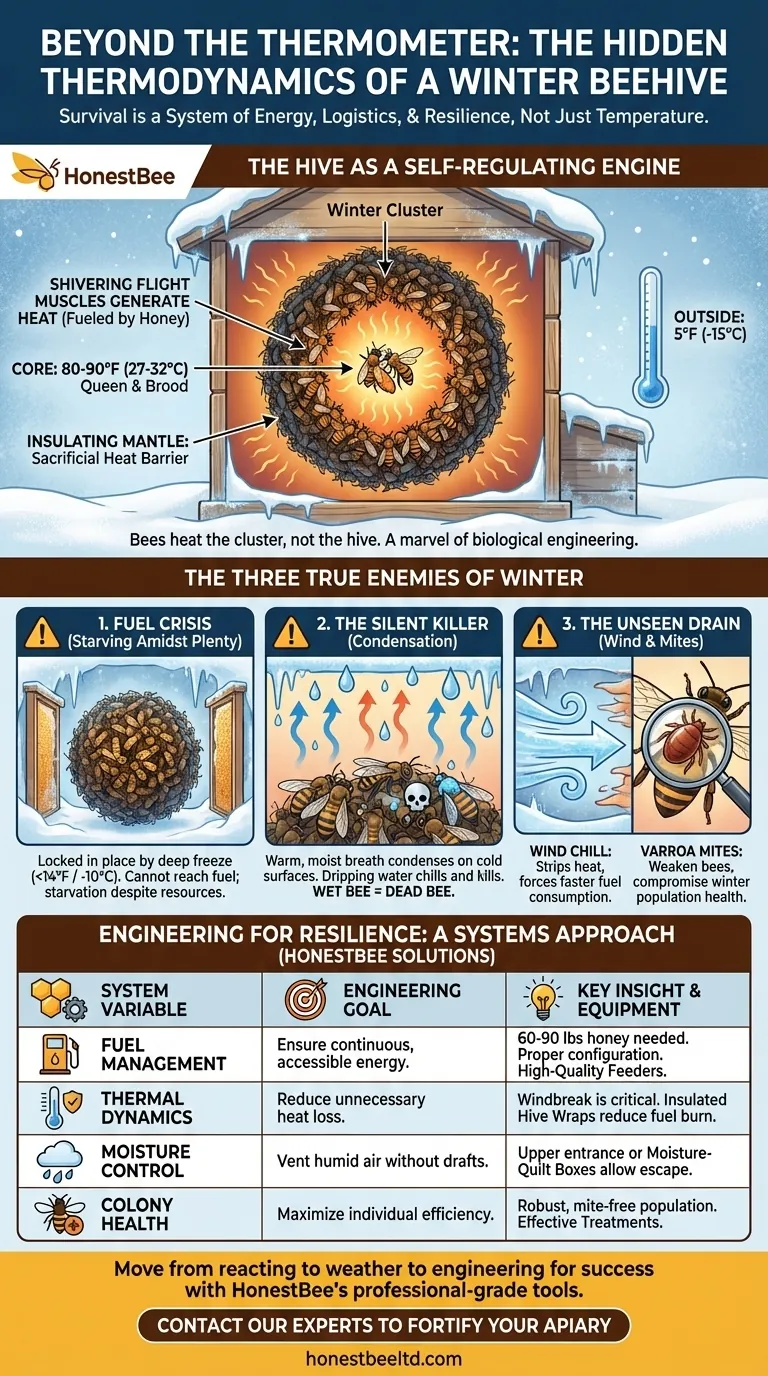
As the cold sets in, the colony coalesces into a tight sphere the size of a basketball—the winter cluster. This formation is a masterclass in efficiency, minimizing surface area to conserve heat. The bees on the outer layer press themselves together, forming a dense, living mantle. Their bodies may cool, but their sacrifice protects the warmth within.
The Core Reactor: Shivering for Life
Inside this insulating shell, the colony's "engine" roars to life. Bees engage their powerful flight muscles without moving their wings, a form of shivering that generates immense heat. Fueled by their honey stores, this collective effort keeps the cluster's core, where the queen resides, at a stable 80-90°F (27-32°C), even as the world outside freezes.
This is the central paradox: the colony survives by isolating itself from its own home, creating a pocket of tropical warmth inside a frozen box.
The Three True Enemies of Winter
The thermometer tells you the outside temperature, but it doesn't reveal the true battles being fought inside the hive. The enemies are more subtle and far more lethal than cold alone.
1. The Fuel Crisis: Starving Amidst Plenty
The most tragic hive death is finding a frozen cluster with frames of honey just inches away. This isn't a paradox; it's a failure of logistics.
During a prolonged deep freeze—generally below 14°F (-10°C) for a week or more—the cluster is locked in place. It cannot break its tight, heat-saving formation to crawl over to the next frame of honey. The bees consume the fuel they can touch and then starve, surrounded by life-saving resources they cannot reach.
2. The Silent Killer: Condensation
Moisture is a greater threat than cold. A single bee's respiration releases warm, moist air. In a colony of thousands, this creates a significant amount of humidity. When this warm, wet air hits the cold inner surfaces of the hive, it condenses into water.
This chilled water then drips back down onto the cluster. A wet bee is a dead bee. The water instantly negates the colony's heroic heating efforts, chilling them fatally. Poor ventilation turns the hive into its own rain machine.
3. The Unseen Drain: Wind and Mites
Wind acts as a relentless thief, stripping heat from the hive's surface exponentially faster than still air. This forces the cluster's "engine" to burn hotter, consuming precious honey stores at an alarming rate.
At the same time, internal parasites like Varroa mites weaken the bees that make up the winter population. A colony entering winter with a high mite load is like an army entering a siege already suffering from a plague. Their numbers are low, and their individual strength is compromised.
Engineering for Resilience: A Systems Approach
Successful wintering isn't about fighting the cold. It's about empowering the colony's own brilliant survival system. Your role is that of a systems engineer, managing the critical inputs and outputs that determine success.
| System Variable | Engineering Goal | Key Insight & Equipment |
|---|---|---|
| Fuel Management | Ensure continuous, accessible energy. | A northern hive needs 60-90 lbs of honey. Proper hive configuration ensures the cluster can always reach its fuel. |
| Thermal Dynamics | Reduce unnecessary heat loss. | A windbreak is more critical than insulation. High-quality insulated wraps reduce the rate of fuel consumption. |
| Moisture Control | Vent humid air without creating a draft. | A small upper entrance or a dedicated quilt box allows moist air to escape before it can condense and drip on the bees. |
| Colony Health | Maximize the efficiency of each individual "heater." | A robust, mite-free population is the foundation. Effective, timely mite treatments are non-negotiable. |
Supporting these systems is the core of modern commercial beekeeping. It’s about creating an environment where the colony’s natural resilience can shine. This requires durable, purpose-built equipment designed to manage these specific thermodynamic challenges. At HONESTBEE, we equip commercial apiaries and distributors with the professional-grade tools—from insulated hive wraps and moisture-quilt boxes to high-quality feeders—that form the backbone of a resilient wintering strategy.
By shifting your focus from the thermometer to the system, you move from reacting to weather to engineering for success. If you are ready to fortify your apiary's resilience for the coming winter, Contact Our Experts.
Visual Guide
Related Products
- Stainless Steel Round Beehive Air Vents for Ventilation
- Wholesales Dadant Size Wooden Bee Hives for Beekeeping
- Metal Hive Feet Bee Hive Stand for Ant Protection
- Metal Bee Hive Stand Bee Box Stand for Beekeeping
- Wooden Bee Hive Frames for Beekeeping and Wholesale
Related Articles
- How to Optimize Beehive Ventilation: Prevent Disease and Boost Colony Health
- The Silent Killer in the Hive: Why Moisture, Not Cold, Is Winter's Greatest Threat
- Beyond the Bee Box: Why Your First Apiary Investment Determines Your Success
- The Precision of Chaos: Navigating the Biological Risks of Commercial Beehive Transportation
- Beyond the Box: Why Hive Architecture Is Your Apiary's Core Operating System













