Beekeeping is an exciting yet complex endeavor, especially for beginners. One of the most common questions new beekeepers face is: How many hives should I start with? While it might seem logical to begin with just one, experienced apiarists overwhelmingly recommend starting with two. This strategic choice isn’t arbitrary—it’s rooted in practical risk management, accelerated skill development, and long-term sustainability.
In this guide, we’ll explore why two beehives offer the ideal balance for beginners, how they mitigate common pitfalls, and what real-world beekeepers have learned from this approach.
Starting with Two Beehives: The Strategic Choice
Cross-Checking Colony Health: Avoiding Catastrophic Losses
A single beehive leaves no room for error. If that colony fails—due to disease, queen loss, or environmental stress—your entire beekeeping venture stalls. With two hives, you gain a critical advantage: comparative observation.
- Early Problem Detection: Differences in hive activity, honey production, or brood patterns become obvious when you have a side-by-side reference. A lagging hive signals potential issues before they escalate.
- Queen Recovery: If one hive loses its queen, you can borrow a frame of eggs or brood from the healthy hive to help the queenless colony raise a new one. With a single hive, queen loss often means waiting months for recovery.
Research shows that new beekeepers with two hives recover from setbacks twice as fast as those with one.
Swarm Prevention and Resource Sharing Between Hives
Swarming—when bees leave to establish a new colony—is a natural process but can devastate a beginner’s single hive. Two hives provide flexibility to manage swarms and redistribute resources:
- Swarm Control: If one hive shows swarm tendencies (e.g., crowded brood chambers), you can transfer frames of brood or bees to the weaker hive, easing congestion.
- Hive Strengthening: A struggling hive can be bolstered with extra bees, honey, or pollen from its stronger counterpart, improving survival odds through winter or dearth periods.
Beekeepers who start with two hives report higher colony survival rates in their first two years.
Cost and Effort Realities for First-Time Beekeepers
Budget Breakdown: Hive Equipment vs. Long-Term Maintenance
While two hives require a slightly higher initial investment, the long-term savings outweigh the costs:
| Expense | 1 Hive | 2 Hives |
|---|---|---|
| Startup Equipment | $300–$500 | $500–$800 |
| Annual Maintenance | $100–$200 | $150–$300 |
| Potential Losses | High risk | Mitigated |
Key takeaway: The marginal cost of a second hive is offset by reduced replacement expenses and higher honey yields.
Time Commitment Comparison: 1 vs. 2 vs. 3+ Hives
Contrary to assumptions, maintaining two hives doesn’t double the work:
- Inspection Efficiency: Checking two hives back-to-back takes only 20–30% more time than inspecting one, as setup and cleanup are shared.
- Learning Curve: Two hives provide immediate feedback, helping beginners refine techniques like hive inspections or pest management faster.
Beginners who start with three or more hives often face overwhelm, while those with one miss critical learning opportunities.
Case Studies: Successes and Pitfalls from Real New Beekeepers
Success Story: Dual Hives as a Safety Net
Sarah, a first-year beekeeper in Ohio, lost a queen in her first season. Thanks to her second hive, she transplanted a frame of eggs and saved the colony. “Without that second hive, I’d have been back to square one,” she notes.
Pitfall Alert: The Lone Hive Gamble
Mark, who started with one hive in Texas, saw his colony collapse due to undetected varroa mites. “I had no baseline to compare its health. A second hive would’ve shown me the warning signs,” he admits.
Ready to Start Your Beekeeping Journey?
Two beehives strike the perfect balance for beginners: reducing risk, accelerating skills, and laying a foundation for sustainable apiaries. Whether you’re a hobbyist or aspiring commercial beekeeper, this approach sets you up for success.
For high-quality beekeeping supplies trusted by professionals, explore HONESTBEE’s wholesale equipment—designed to help you build resilient, productive hives from day one.
Have questions about starting your apiary? Reach out to our team for personalized guidance.
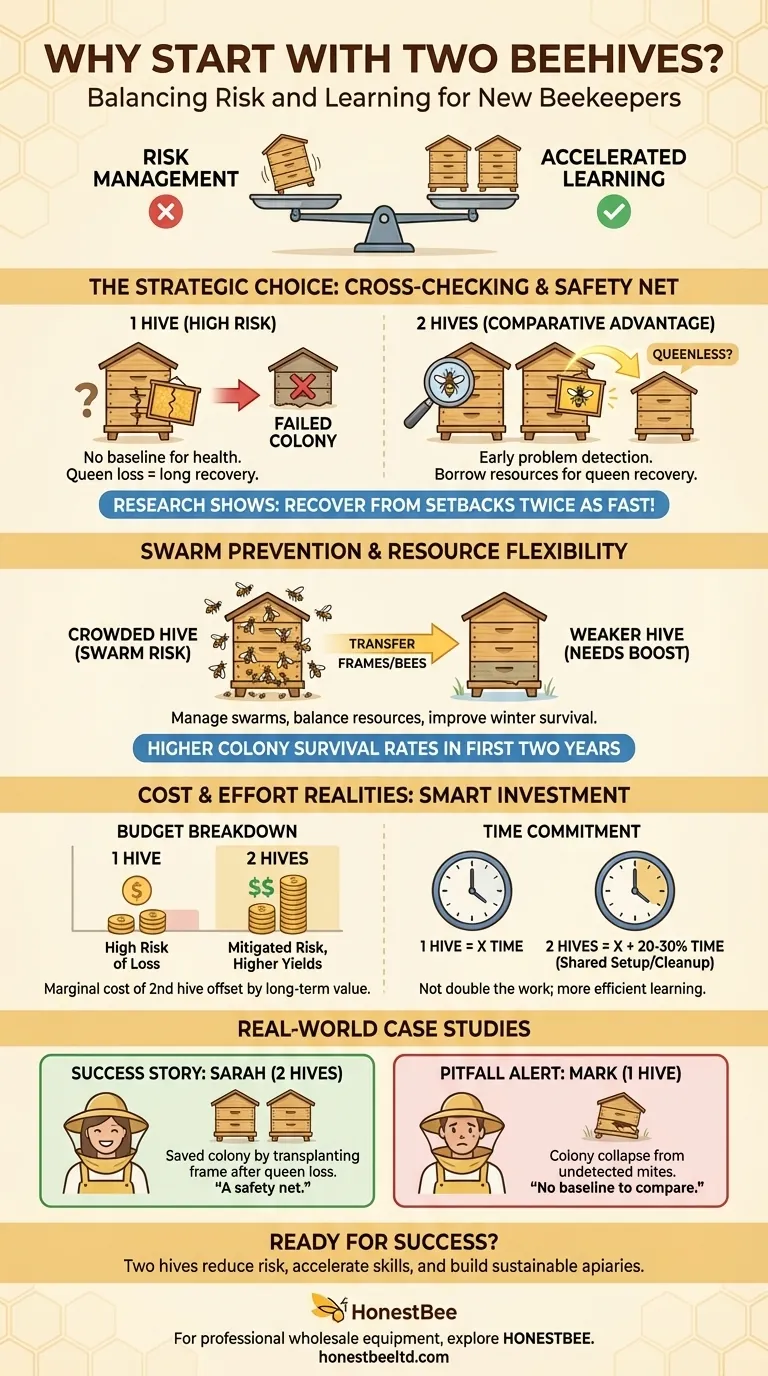
Visual Guide
Related Products
- Stainless Steel Round Beehive Air Vents for Ventilation
- Wholesales Dadant Size Wooden Bee Hives for Beekeeping
- Metal Hive Feet Bee Hive Stand for Ant Protection
- Metal Bee Hive Stand Bee Box Stand for Beekeeping
- Wooden Bee Hive Frames for Beekeeping and Wholesale
Related Articles
- How to Optimize Beehive Ventilation: Prevent Disease and Boost Colony Health
- Beyond the Bee Box: Why Your First Apiary Investment Determines Your Success
- The Silent Killer in the Hive: Why Moisture, Not Cold, Is Winter's Greatest Threat
- The Precision of Chaos: Navigating the Biological Risks of Commercial Beehive Transportation
- How to Choose the Right Beehive: A Practical Guide for Every Beekeeper













