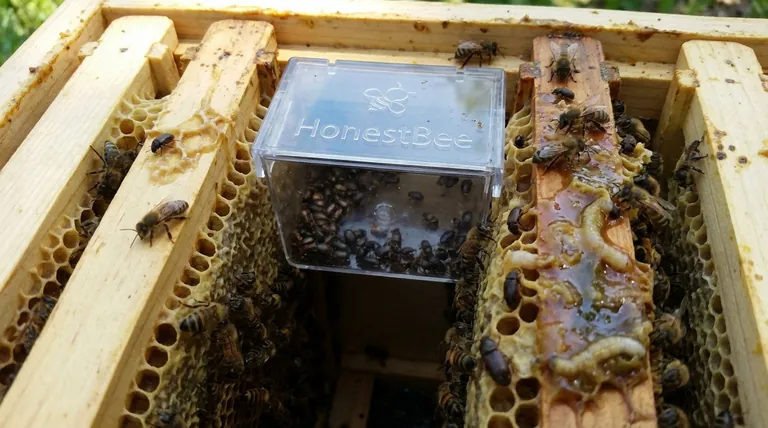
A Symptom, Not the Sickness
In medicine and in engineering, we learn to distinguish between a root cause and a symptom. A fever isn't the illness; it's the body's response to it. A crack in a foundation isn't the problem; it's the result of unstable ground beneath.
The same is true in a beehive. A small hive beetle (SHB) infestation is rarely the cause of a colony's failure. It is almost always the final, devastating symptom of a pre-existing weakness.
The core issue is a brutal numbers game. If a colony lacks the population to defend its territory, opportunistic invaders will win.
The Beetle's Quiet Opportunism
The small hive beetle, Aethina tumida, is not an aggressive warrior. It is a patient opportunist. It's drawn to the rich scents of a healthy hive—brood, pollen, honey—but it can only truly thrive when the hive's internal social order begins to break down.
Infiltration vs. Infestation
Beetles are skilled at infiltration. They slip through entrances and hide in cracks, evading the bees' initial notice. A few adult beetles lurking in a strong hive are a common, manageable nuisance.
Their presence is not the threat. Their goal is.
An adult beetle's entire purpose is to find a safe place to lay its eggs. It seeks undefended comb, untended pollen stores, or vulnerable brood. This is the critical moment where the battle is won or lost.
A Tale of Two Hives: A Study in Population Density
The difference between a beetle problem and a beetle catastrophe is a direct function of the colony's workforce. It's a story of surplus versus deficit.
The Strong Hive: A System with Redundancy
A strong, populous colony operates with a surplus of labor. While thousands of bees are occupied with foraging, nursing, and temperature control, a significant portion acts as a dedicated internal security force.
This "police force" relentlessly pursues beetles. They don't allow them to rest, feed, or lay eggs. More importantly, they deploy an elegant engineering solution: corralling the beetles into "prisons" built from propolis, a sticky plant resin. Trapped inside these jails, the beetles are neutralized, sometimes for months, by the sheer overwhelming numbers of the guard bees.
The Weak Hive: A System in Deficit
A weak colony is running on a skeleton crew. Every bee is consumed by a critical task essential for immediate survival. There is no one left to patrol the halls.
The system has no redundancy. There is no police force.
Beetles can wander the hive freely, like looters in an abandoned city. They access the richest resources and lay their eggs without interference. The colony is too small, too stressed, and too preoccupied to manage the growing threat.
The Tipping Point: The Slime-Out Cascade
Once beetles successfully lay their eggs, the colony passes a point of no return. The situation deteriorates with shocking speed, not because of the adult beetles, but because of their larvae.
The Biological Weapon
Thousands of beetle larvae hatch and begin tunneling through the comb. They consume honey, pollen, and, most critically, the developing bee brood. But their greatest damage is microbial.
The larvae carry and spread a specific yeast, Kodamaea ohmeri. This yeast contaminates the hive's honey stores, causing it to ferment, bubble, and ooze out of the cells.
The Final Act: Absconding
The combination of fermenting honey and larval waste creates a foul-smelling, golden slime that coats every surface. Beekeepers call this a "slime-out." The hive's structure is destroyed, its food is poisoned, and its brood is dead.
Faced with a toxic, unsalvageable home, the remaining bees make the only logical choice: they abandon the hive. This act, known as absconding, is not a surrender. It is an evacuation from a failed system.
Fortifying the System: Proactive Defense
Managing small hive beetles is not about killing every beetle. It's about managing colony strength so the bees can police themselves. The goal is to ensure the hive never becomes a fragile system.
- Keep Colonies Strong: The foundation of defense is a healthy, productive queen, low Varroa mite levels, and adequate nutrition. A populous colony is a resilient one.
- Reduce Defensible Space: For a weaker colony, reduce the hive's internal volume with follower boards. This concentrates the bees, making it easier for their smaller population to patrol the entire area.
- Install Traps: In-hive beetle traps can help reduce the adult beetle population, easing the defensive burden on the bees.
- Combine Forces: Sometimes, the best strategic move is to combine a weak, failing colony with a very strong one, sacrificing the weak queen to save the bees and resources.
Ultimately, preventing a beetle catastrophe is an exercise in proactive systems management.
| Colony Strength | Defense Capability | Key Characteristic | Outcome |
|---|---|---|---|
| Strong & Populous | High | Surplus "guard" bees corral and imprison beetles. | Beetles are a manageable nuisance. |
| Weak & Sparse | Low | No surplus bees for defense; beetles reproduce unchecked. | High risk of slime-out and colony collapse. |
Building resilient, populous colonies requires both expertise and the right equipment. HONESTBEE provides the high-quality supplies and tools commercial apiaries need to implement these proactive management strategies. Ensuring your operation is built on a foundation of strength is the best investment you can make. Contact Our Experts
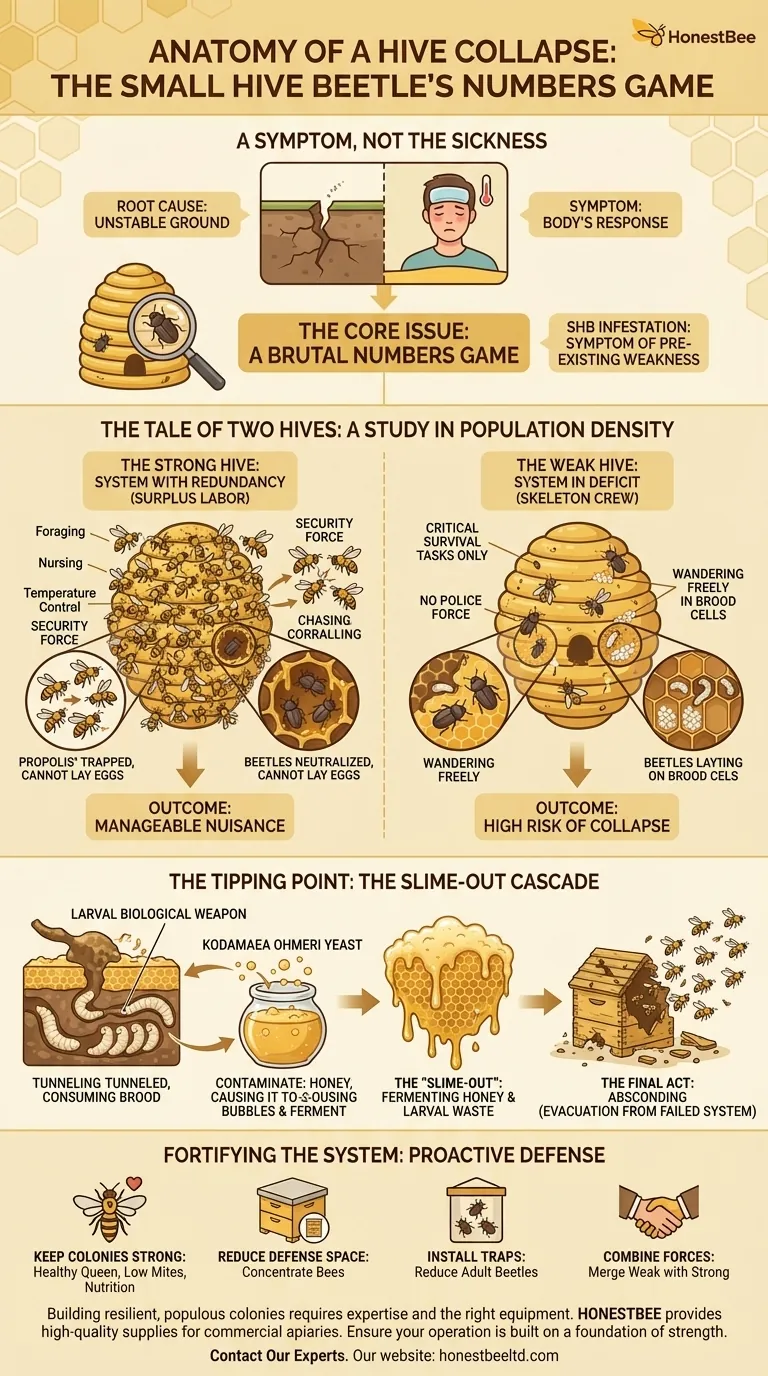
Visual Guide
Related Products
- Reusable Aluminium Beetle Trap for Small Hive Beetles Silver Bullet
- Reusable Clear Small Hive Beetle Traps for Beehives Beetle Trapping Tools
- Plastic Beetle Blaster Trap Beekeeping Tools and Supplies
- Black Plastic Beetle Barn Hive Beetle Trap for Beehives
- Removable Washable Hive Beetle Trap Attractants for Small Hive Beetles
Related Articles
- The Beetle in the Machine: Hive Health is the Only True Pest Control
- Precision Pest Control: The Paradox of In-Hive Beetle Traps
- The Scent Plume Protocol: A Strategic Guide to Swarm Capture
- Beyond Honey: The Strategic Calculus of the Pollen Trap
- How to Install Pollen Traps Without Stressing Your Hive: A Beekeeper’s Guide








