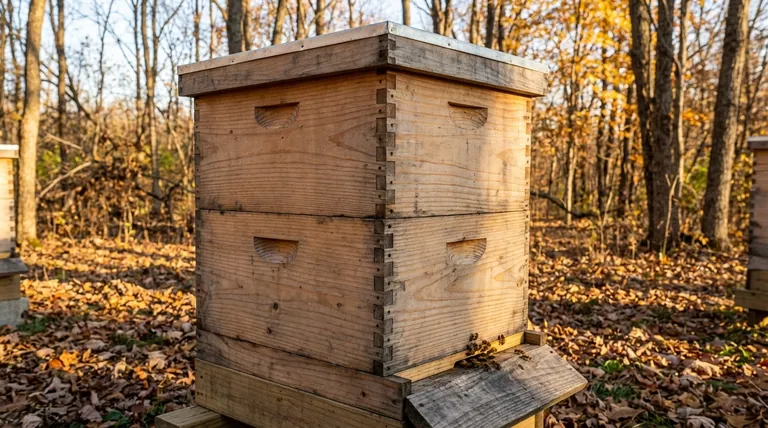
The Unspoken Contract With Your Colony
Every beekeeper, standing before a hive in late autumn, feels a quiet sense of responsibility. We look at these small, wooden boxes and ask a fundamental question: Have I given them enough to survive what’s coming?
This question isn't just about feeding or mite treatments. It begins with the most basic architectural choice we make for the colony: the structure of their home. The decision of how many hive bodies to use is not a matter of equipment preference; it's the fulfillment of an unspoken contract. It's a choice between a system designed for resilience and one that gambles on perfection.
The Brood Chamber: A City in Two Parts
The deep boxes at the base of a hive are not for the beekeeper's harvest. They are the exclusive domain of the bees, the engine room of the colony known as the brood chamber. To understand its architecture, you must see it not as one space, but as two distinct, vital districts.
The Nursery: A Queen's Domain
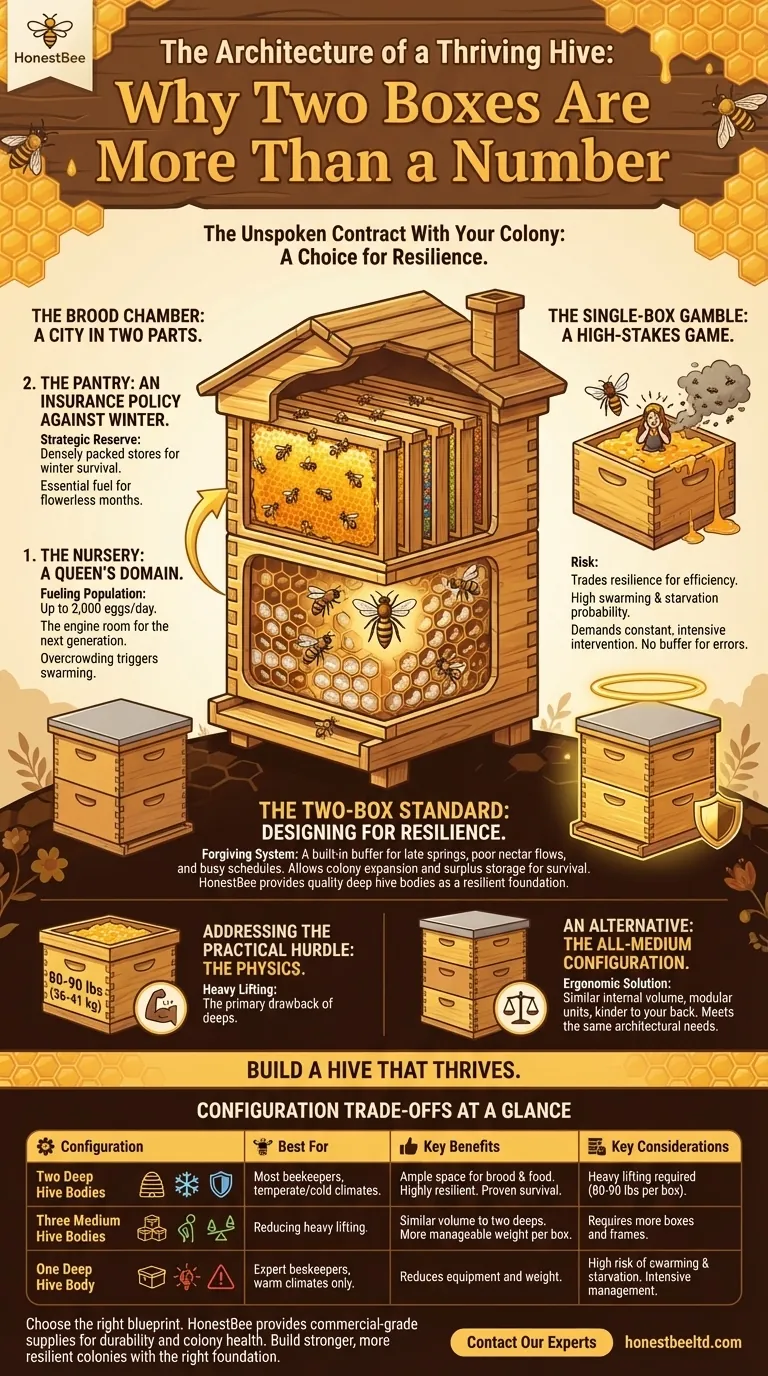
The lower deep is the nursery. It's where the queen lays up to 2,000 eggs per day, a relentless pace that fuels the colony's population. This is where the next generation is raised.
When this space becomes clogged with honey or pollen—a condition known as being "honey bound"—it's like a city running out of housing. The queen's laying rate plummets. From the colony's perspective, this is a systemic crisis. The psychological trigger is pulled, and their solution is elegant and drastic: they swarm, taking half the population to find a new home. A single box makes this scenario not just possible, but probable.
The Pantry: An Insurance Policy Against Winter
The second deep box, sitting atop the first, is the colony's pantry. This is their strategic reserve, the densely packed frames of honey and pollen that will fuel them through the long, flowerless months of winter.
A colony that consumes its winter stores is not a failure; it is a success. That food is their life savings, and a single box rarely provides a large enough account. Relying on one deep is like heading into a blizzard with only a day's worth of food, hoping the storm will be short. Hope is not a strategy.
The Single-Box Gamble: A High-Stakes Game
Some experienced beekeepers, often in warmer climates, operate with a single deep brood chamber. The appeal is understandable: less heavy lifting, less equipment.
But this is an expert-level technique that trades resilience for efficiency. It demands an unforgiving schedule of feeding and swarm management. The beekeeper must intervene constantly to manually correct for the system's inherent lack of space. It’s a system with no buffer, where a single miscalculation or an unexpectedly long cold snap can lead to colony collapse.
The Two-Box Standard: Designing for Resilience
For the vast majority of beekeepers, the two-deep configuration is the standard for a simple, powerful reason: it designs resilience directly into the hive's architecture.
The second box is a buffer. It forgives a late spring, a poor nectar flow, or a beekeeper's busy schedule. It gives a prolific queen room to expand and the colony the space to build a surplus that ensures their survival. It creates a robust, self-sufficient system that is far more forgiving of the unpredictability of nature.
Building this resilient architecture starts with the right components. A well-constructed deep hive body, like those supplied by HONESTBEE, isn't just wood; it's the foundation of your colony's fortress.
Addressing the Practical Hurdle: The Physics of Beekeeping
The primary drawback of the two-deep system is undeniable: weight. A deep box brimming with brood, pollen, and honey can weigh 80-90 pounds (36-41 kg). This presents a real physical challenge.
Fortunately, there is an elegant engineering solution.
An Alternative: The All-Medium Configuration
Many beekeepers now opt for three medium-depth boxes for the brood chamber. This configuration provides a nearly identical internal volume to two deeps but breaks the total weight into more manageable, modular units.
This isn't a compromise on the bees' needs. It's simply a smarter, more ergonomic way to meet the same architectural requirements for space. You provide the necessary volume for the nursery and pantry, but in units that are kinder to your back.
Configuration Trade-offs at a Glance
| Configuration | Best For | Key Benefits | Key Considerations |
|---|---|---|---|
| Two Deep Hive Bodies | Most beekeepers, especially in temperate or cold climates. | - Ample space for brood & winter food. - Highly resilient and forgiving. - Proven method for winter survival. |
- Heavy lifting required (80-90 lbs per box). |
| Three Medium Hive Bodies | Beekeepers seeking to reduce heavy lifting. | - Similar internal volume to two deeps. - More manageable weight per box. |
- Requires more boxes and frames. |
| One Deep Hive Body | Expert beekeepers in warm climates only. | - Reduces equipment needs and weight. | - High risk of swarming & starvation. - Requires intensive, advanced management. |
Build a Hive That Thrives
Choosing your hive's configuration is one of the most impactful decisions you will make. It’s about more than a box count; it’s about providing the architectural blueprint your colony needs to flourish through the seasons. You are their architect and their custodian.
The right blueprint requires the right materials. Whether you're building a classic two-deep fortress or a modern, modular all-medium system, the quality of your equipment is paramount. HONESTBEE specializes in providing commercial-grade beekeeping supplies that are built for durability and colony health, ensuring your apiary has a foundation for success.
To build stronger, more resilient colonies, start with the right foundation. Contact Our Experts
Visual Guide
Related Products
- High-Performance Langstroth Bee Hives for Global Professional Beekeeping
- Metal Bee Hive Stand Bee Box Stand for Beekeeping
- Ergonomic Two Person Foldable Hive Lifter
- Durable Plastic Interlocking Hive Connector for Beekeeping
- Professional Galvanized Steel Frame Rest for Beehives
Related Articles
- How to Choose Langstroth Hive Box Sizes for Ergonomics, Efficiency, and Bee Health
- Flow Hive vs. Langstroth: When Does the Premium Price Deliver Real Savings?
- How Langstroth Hive Design Optimizes Bee Colony Growth and Honey Production
- How the Langstroth Hive Solves Modern Beekeeping’s Biggest Challenges
- How to Choose Between Top Bar and Langstroth Hives for Effortless Beekeeping


















