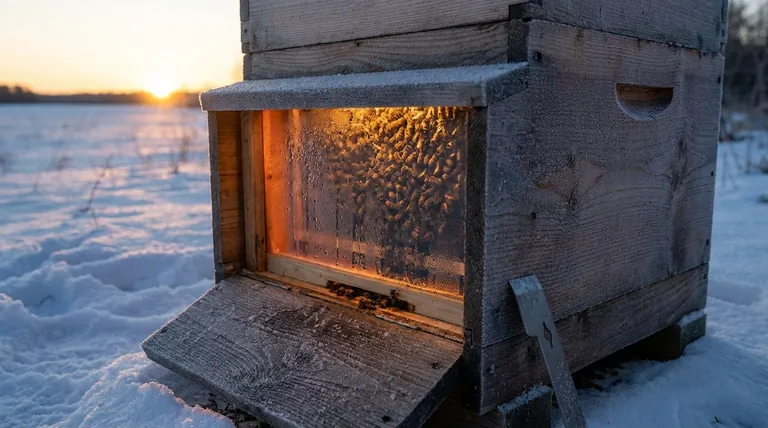
The Quiet Urgency of Autumn
In the cool, lengthening shadows of fall, an apiary seems to be winding down. The frantic energy of the summer nectar flow is gone. To the casual observer, it's a time of rest.
But for the beekeeper and the bees, it's one of the most critical, high-stakes periods of the year. A silent, urgent race is underway inside every hive—a race governed not by the calendar, but by the unyielding laws of thermodynamics.
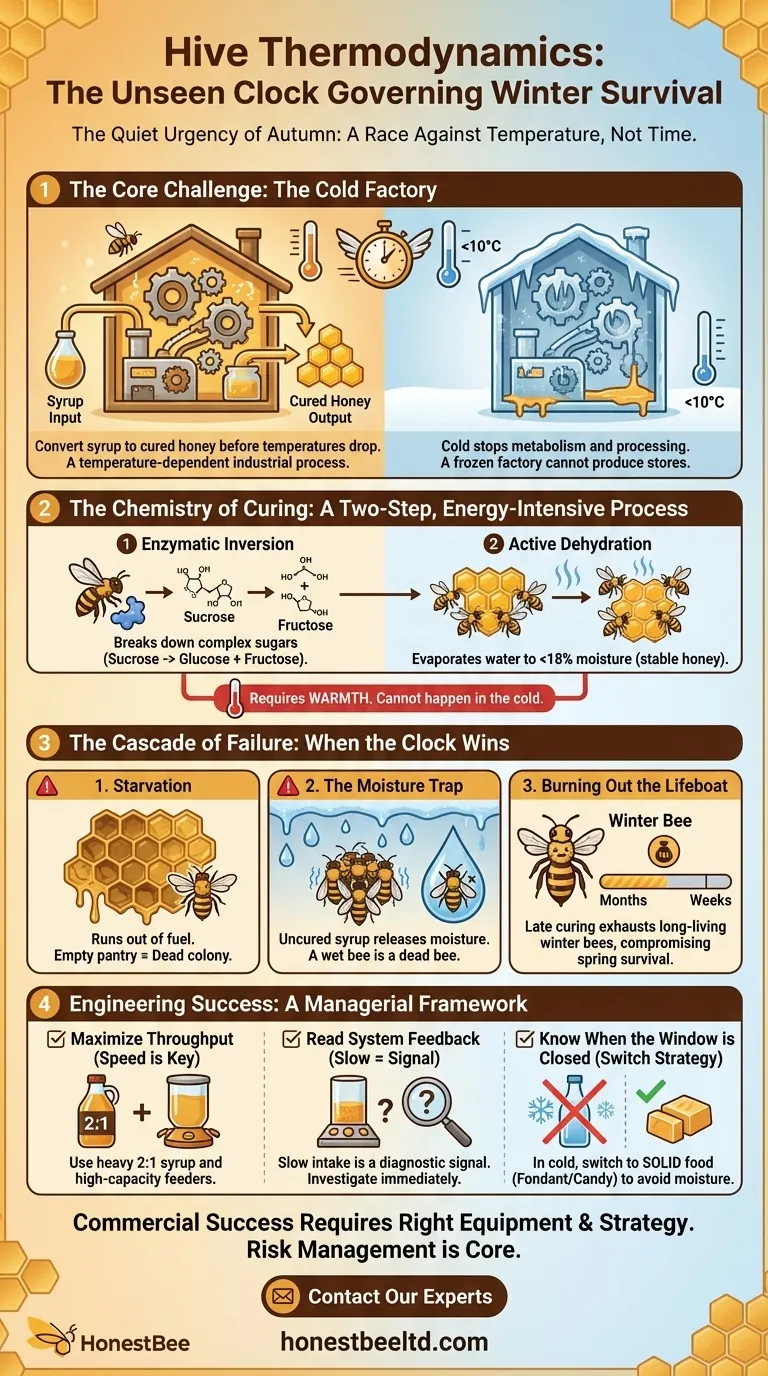
The challenge is simple to state but complex to solve: convert gallons of liquid sugar syrup into dense, cured, life-sustaining honey before the cold shuts the factory down for the winter.
A Race Against Temperature, Not Time
We talk about fall feeding as a deadline, but the true constraint isn't a date on the calendar. It's the ambient temperature.
As the mercury drops, a bee's world shrinks. Her metabolism slows. Flight becomes impossible. Even movement within the hive becomes a calculated expenditure of precious energy.
This has a profound impact on the hive's ability to process food. The very act of consuming syrup, let alone curing it, requires warmth. A cold colony is a lethargic one, physically incapable of taking in the resources it desperately needs.
The Chemistry of Curing
Bees don't just store syrup. They transform it. This is a two-part industrial process that demands energy and a favorable environment.
- Enzymatic Inversion: The bees add the enzyme invertase to the syrup, breaking down complex sucrose into simpler, more digestible sugars (glucose and fructose).
- Active Dehydration: They then pass the syrup mouth-to-mouth and fan it with their wings, actively evaporating water content until it reaches the stable, low-moisture state of honey (~18%).
Both of these processes are slow, laborious, and—most importantly—temperature-dependent. They cannot happen in the cold. Feeding too late is like asking a factory to produce goods after you've cut the power.
The Cascade of Failure: When the Clock Wins
Mismanaging this fall race doesn't lead to a single problem; it triggers a cascade of system failures, each more dangerous than the last.
First-Order Consequence: Starvation
This is the most direct risk. A colony that fails to process and store enough food simply runs out of fuel and starves. Slow consumption in the fall is a clear warning sign that the hive's winter pantry is dangerously empty.
Second-Order Consequence: The Moisture Trap
This is the more insidious killer. Uncured, watery syrup is a thermodynamic liability. As the bees form their winter cluster, their respiration already produces moisture. Adding gallons of high-moisture syrup to the hive dramatically increases internal humidity.
This water vapor condenses on the cold inner surfaces of the hive, then drips down onto the cluster. A wet bee is a dead bee. Moisture, far more than the external cold, is what extinguishes a colony's life.
Third-Order Consequence: Burning Out the Lifeboat
The bees born in late fall are physiologically different. These "winter bees" have developed fat bodies and are built to live for months, not the mere 4-6 weeks of a summer bee. Their sole purpose is to act as the colony's long-duration lifeboat, sustaining the queen and the cluster's core temperature until spring.
Forcing this critical generation to perform the exhausting labor of curing syrup late into the season wears them out. It shortens their lifespan and compromises their primary mission. It's like burning your lifeboat for firewood just before a long ocean voyage.
Engineering Success: A Managerial Framework
For a commercial apiary, managing this process at scale requires a clear, systematic approach. It's an engineering problem that demands the right strategy and the right tools.
Principle 1: Maximize Throughput
The goal is to get the maximum amount of cured food stored in the minimum amount of time.
- Syrup Ratio: Feed a heavy 2:1 sugar-to-water syrup. It has less water for the bees to evaporate, speeding up the curing process.
- Feeder Type: Use feeders that allow massive numbers of bees to eat at once. For commercial operations, this means large, efficient frame or top feeders that minimize disturbance and can be refilled quickly. Slow, small-entrance feeders create a bottleneck the bees cannot afford.
Principle 2: Read the System's Feedback
Slow syrup consumption is not a sign of a picky colony; it's a critical diagnostic signal. It could mean:
- The colony is too small or weak to manage the intake.
- The syrup is too cold for them to consume.
- The feeder is inaccessible or poorly designed.
Investigate immediately. The clock is ticking.
Principle 3: Know When the Window is Closed
If you're late, you're late. Acknowledging this is crucial. Feeding liquid syrup in cold weather is actively harmful. The strategy must change.
Switch to a solid food source like fondant, hard candy, or granulated sugar. These provide essential calories without adding dangerous moisture to the hive's delicate winter ecosystem.
| Strategy | When to Use It | Why It Works |
|---|---|---|
| 2:1 Liquid Syrup | Early Fall (Warm Days/Nights) | Rapid intake and curing for building winter stores. |
| Solid Feed (Fondant) | Late Fall / Winter (Cold) | Provides calories without adding moisture; emergency feed. |
Ultimately, successfully overwintering a colony is a testament to a beekeeper's understanding of this delicate interplay between biology, behavior, and physics. At a commercial scale, this understanding must be supported by equipment that is reliable, efficient, and designed for the task. Ensuring your operation has high-capacity, low-disruption feeding systems is not a matter of convenience—it's a core component of risk management.
For apiaries and distributors focused on operational excellence, having the right equipment ready before this critical window opens is paramount. Contact Our Experts to ensure your hives are prepared for the race against the cold.
Visual Guide
Related Products
- Durable Plastic Hive Number Set for Beekeeping
- Stainless Steel Round Beehive Air Vents for Ventilation
- Professional Large-Format Hive Number Set for Beekeeping
- Professional Engraved Round Hive Number Tags for Beekeeping
- Modern Flat-Mount Hive Number Set for Beekeeping
Related Articles
- How Beekeepers Can Diagnose Queen Issues and Prevent Colony Collapse
- The Tipping Point: Managing the Psychology of a Beehive to Prevent Swarming
- The Material Calculus: A Beekeeper's Choice Between Nature and Durability
- Rethinking the Beehive: Why Material Choice is a Bet on Your Time and Sanity
- The Physics of Survival: Managing the Unseen Threat in a Winter Beehive