Key Benefit: Learn to make precise insulation decisions based on colony health and local climate—reducing winter losses while preventing moisture-related hive damage.
Beehive Insulation Decision Framework
Winter hive losses often stem from two mistakes: insulating too late (exposing bees to cold stress) or over-insulating (trapping harmful humidity). This framework helps you strike the right balance.
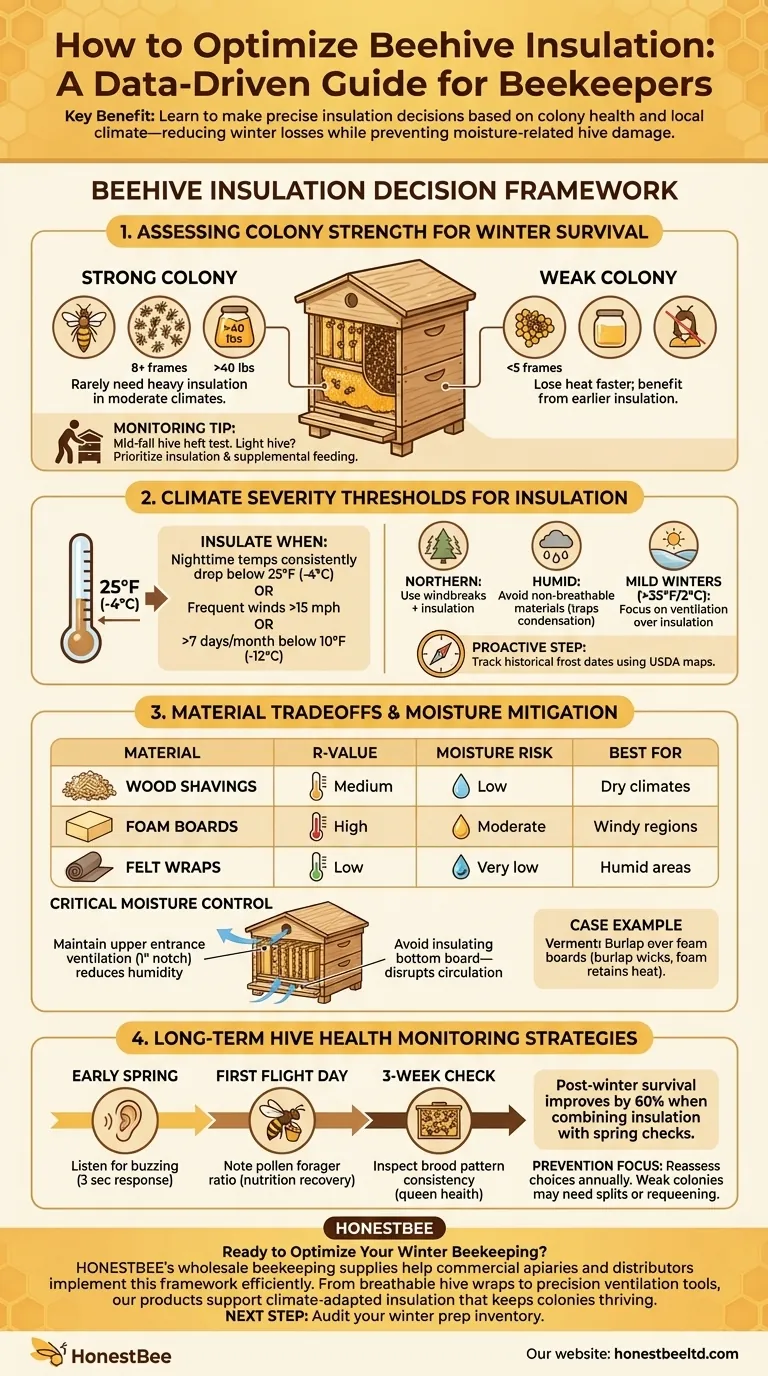
1. Assessing Colony Strength for Winter Survival
Lead conclusion: Strong colonies with 8+ frames of bees and ample honey stores rarely need heavy insulation in moderate climates.
Supporting factors:
- Population density matters: Smaller clusters (under 5 frames) lose heat faster and benefit from earlier insulation.
- Honey reserves: Colonies with <40 lbs of stored honey struggle to generate enough metabolic heat—insulate when reserves dip below this threshold.
- Queen quality: Late-season queen failures lead to dwindling populations; check brood patterns in fall before deciding.
Monitoring tip: Conduct a mid-fall hive heft test. If the hive feels light when lifted from the back, prioritize insulation and supplemental feeding.
2. Climate Severity Thresholds for Insulation
Lead conclusion: Insulate when nighttime temperatures consistently drop below 25°F (-4°C), or if your region has:
- Frequent winter winds above 15 mph
- More than 7 days per month below 10°F (-12°C)
Regional adaptations:
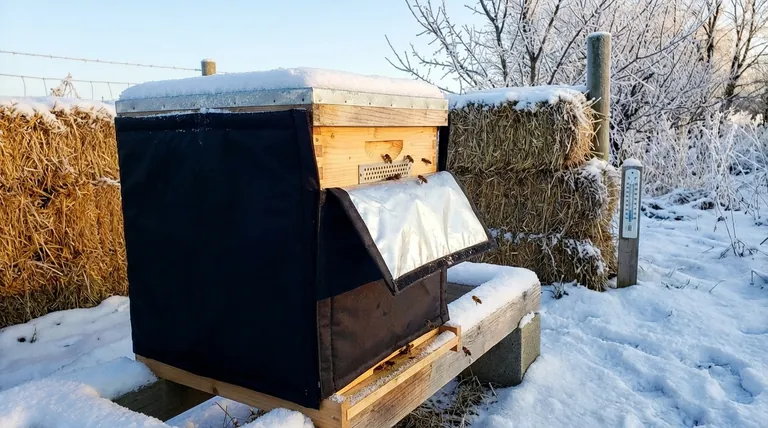
- Northern beekeepers: Use windbreaks (e.g., straw bales) alongside insulation to combat wind chill.
- Humid climates: Avoid non-breathable materials like plastic wraps—they trap condensation, increasing mold risks.
- Mild winters (above 35°F/2°C): Focus on ventilation over insulation to prevent dampness.
Proactive step: Track historical frost dates for your area using USDA Plant Hardiness Zone maps as a baseline.
3. Material Tradeoffs and Moisture Mitigation
Lead conclusion: The best insulation balances R-value (heat retention) and breathability.
Comparison of common materials:
| Material | R-Value | Moisture Risk | Best For |
|---|---|---|---|
| Wood shavings | Medium | Low | Dry climates |
| Foam boards | High | Moderate | Windy regions |
| Felt wraps | Low | Very low | Humid areas |
Critical moisture control:
- Always maintain upper entrance ventilation (a 1" notch under the inner cover reduces humidity buildup).
- Avoid insulating the hive’s bottom board—this disrupts natural air circulation.
Case example: Beekeepers in Vermont reduce winter moisture by layering burlap over foam boards—the burlap wicks away condensation while the foam retains heat.
4. Long-Term Hive Health Monitoring Strategies
Lead conclusion: Post-winter colony survival improves by 60% when beekeepers combine insulation with spring health checks.
Post-insulation monitoring:
- Early spring: Listen for buzzing within 3 seconds of tapping the hive—delayed response suggests colony weakness.
- First flight day: Note the ratio of returning pollen foragers. Low pollen collection indicates poor nutrition recovery.
- 3-week check: Inspect brood pattern consistency. Spotty brood signals queen issues exacerbated by winter stress.
Prevention focus: Reassess insulation choices annually. Colonies that required heavy insulation last winter may need splits or requeening to boost vigor.
Ready to Optimize Your Winter Beekeeping?
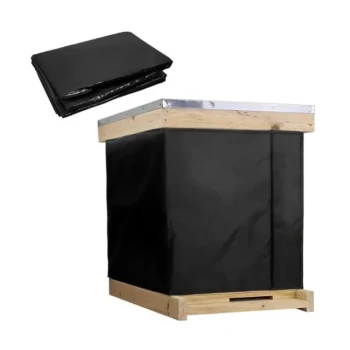
HONESTBEE’s wholesale beekeeping supplies help commercial apiaries and distributors implement this framework efficiently. From breathable hive wraps to precision ventilation tools, our products support climate-adapted insulation that keeps colonies thriving.
Next step: Audit your winter prep inventory—do you have the right materials for your region’s cold snaps and humidity levels?
Visual Guide
Related Products
- Professional Insulated Plastic Bee Hives
- Professional Insulated Winter Hive Wrap for Beekeeping
- Inner Beehive Cover for Beekeeping Bee Hive Inner Cover
- Stainless Steel Round Beehive Air Vents for Ventilation
- Metal Hive Feet Bee Hive Stand for Ant Protection
Related Articles
- Plastic Bee Hives: A Smart Investment for Modern Beekeepers
- The Engineer's Guide to Wintering Beehives: Why Moisture, Not Cold, is the Enemy
- How to Insulate Beehives for Winter Survival: A Regional Guide for Beekeepers
- How to Time Hive Insulation for Maximum Winter Bee Survival
- Beyond Warmth: The Critical Thermodynamics of Wintering Honey Bees