The Paradox of the Gate: Engineering Ethical Bee Venom Collection
A beehive is a fortress. A superorganism governed by impossibly complex rules of chemistry, communication, and social structure. To harvest from it is to negotiate with a system far older than our own.
When we seek bee venom, we aren't just taking a product. We are triggering the colony's most primal defense mechanism. The challenge is immense: how do you provoke an army to reveal its most potent weapon without causing it to self-destruct?
The answer lies not in brute force, but in elegant engineering and a deep understanding of bee psychology. It lies at the gate.
A Manufactured Threat
The tool for this task is a paradox in itself: a threat that isn't real.
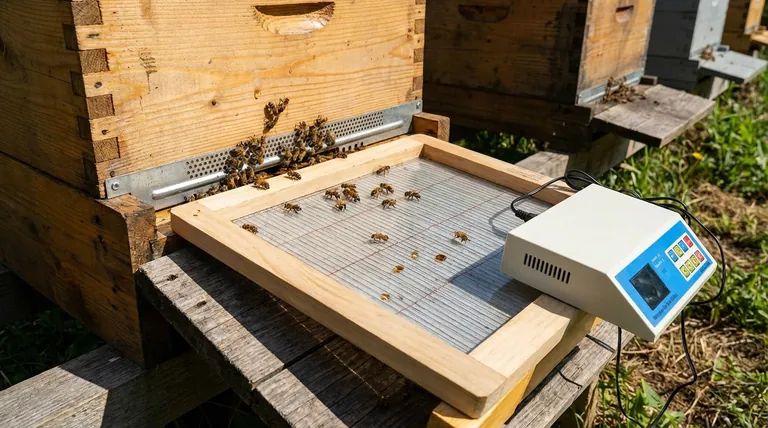
A typical venom collector is a glass plate overlaid with a grid of wires, placed at the hive's entrance. As a returning forager steps onto the grid, a mild electrical current passes through its body. It's a sensation with no physical enemy—a ghost in the machine.
The bee's instinct, honed over millions of years, screams "danger." It does what it is programmed to do: it stings the surface it's standing on.
Here is the critical design insight. The bee's stinger, designed to lodge in the elastic skin of a mammal, cannot penetrate the hard glass. A droplet of venom is deposited, but the bee retracts its stinger and survives the encounter. It's a non-lethal transaction, a carefully engineered misunderstanding.
The Logic of the Choke Point
Why the entrance? Because in any complex system, the greatest flow passes through the narrowest points.
The hive entrance is the colony's single busiest thoroughfare. Every forager—the older, more experienced bees with the most developed venom glands—must pass through it. Placing the collector here is an act of strategic interception, not invasion.
Consider the catastrophic alternative. Placing a foreign, agitating device inside the hive, near the brood chamber, is akin to setting off a fire alarm in a nursery.
It would induce mass panic, disrupt the delicate work of raising a new generation, and risk the one thing a colony cannot afford to lose: the queen. The entrance placement ensures the queen, who rarely leaves the hive, is never exposed. It isolates the "threat" from the colony's vital core.
The Price of Alarm
The process is not without cost. The electrical stimulus is a stressor.
When a bee stings, it releases an alarm pheromone. It’s a chemical signal that screams attack to the rest of the colony. The collector may not be a real threat, but the colony's reaction is very real. The hive's collective mood shifts. They become more aggressive, more defensive.
This is why venom collection is a delicate balance—an act of controlled agitation. It cannot be a continuous process.
- Only Strong Colonies: A weak or struggling colony lacks the resilience to withstand the stress. Harvesting from them is irresponsible.
- Short Durations: The collector should only be active for brief periods, giving the bees time to return to a state of calm.
- Ample Recovery: The colony needs time between sessions to recover its energy and social equilibrium.
Responsible harvesting acknowledges that you are borrowing from the colony's energy budget, not liquidating its assets.
A Framework for Sustainable Harvesting
The principles for effective and ethical venom collection are simple but non-negotiable. They are built on respecting the hive as a systemic whole.
| Aspect | Engineering Principle | Biological Rationale |
|---|---|---|
| Placement | At the hive entrance | Intercepts maximum bee traffic at a natural choke point. |
| Mechanism | Mild electrical stimulus on glass | Triggers a defensive sting without harming the bee. |
| Target | Returning forager bees | Older bees with mature venom glands; avoids disrupting nurse bees. |
| Exclusion | Never inside the brood chamber | Protects the queen, larvae, and internal hive stability. |
| Timing | Short, spaced-out sessions | Minimizes colony-wide stress and prevents exhaustion. |
This isn't just about placing a piece of equipment. It's about applying a methodology that honors the biology of the creature you are working with.
Success in modern apiculture, especially for commercial operations, hinges on this balance of efficiency and stewardship. As a supplier to commercial apiaries, HONESTBEE provides equipment that is both effective and designed with the colony's welfare in mind—the cornerstone of a sustainable business.
For professional-grade tools that help you manage this delicate paradox correctly, Contact Our Experts.
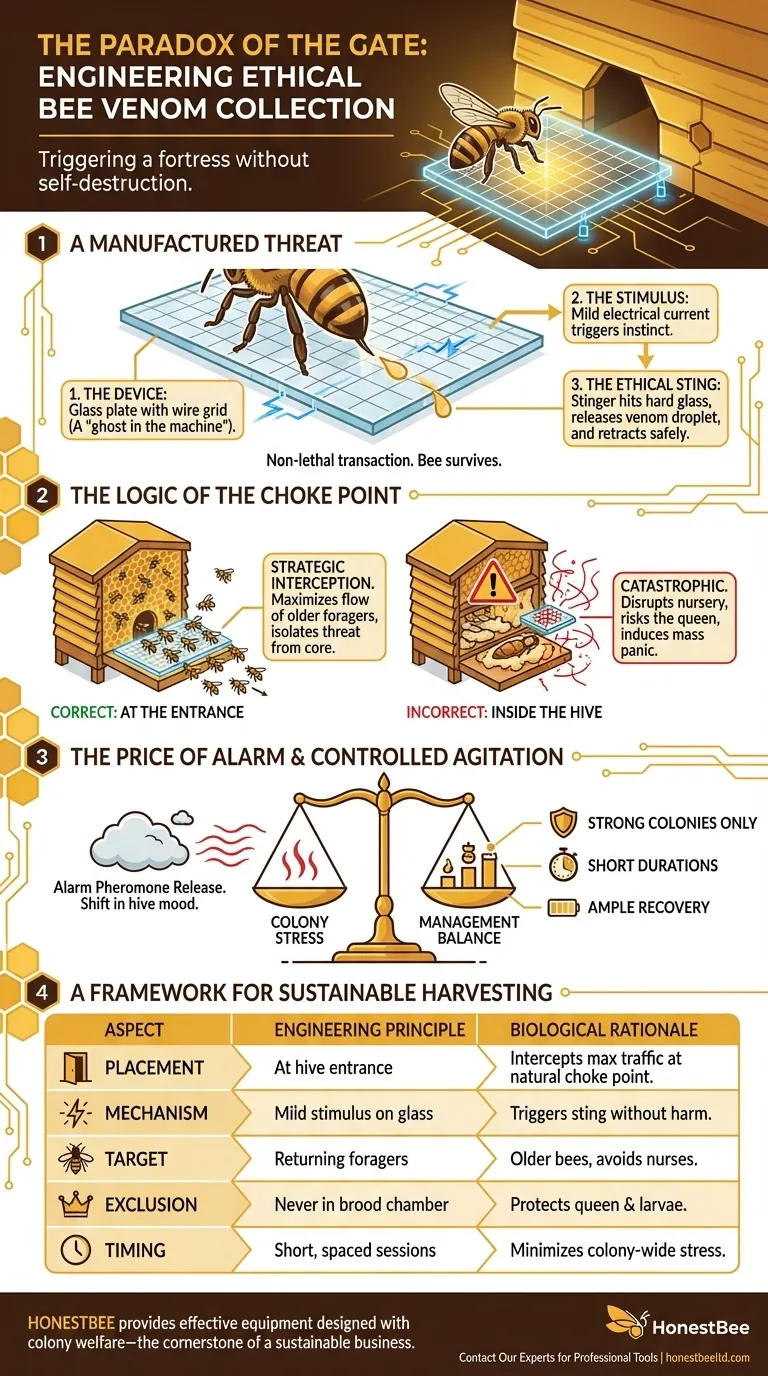
Visual Guide
Related Products
- Full Set Beekeeping Electronic Bee Venom Collector Machine Device for Bee Venom Collecting
- Stainless Steel Honey Bee Smoker Hive and Honeycomb Smoker for Beekeeping
- Professional Beekeeper Suit with Square Folding Cotton Veil
- Miniature Stainless Steel Bee Smoker for Beekeeping
- Professional Bee Smoker with Elongated Spout and Durable Bellows for Beekeeping