The Illusion of Immortality
We think of honey as eternal. It’s a comforting idea, reinforced by stories of edible honey found in ancient tombs. This perception of invincibility is rooted in a fundamental truth: honey is incredibly resistant to the kind of microbial spoilage that ruins other foods.
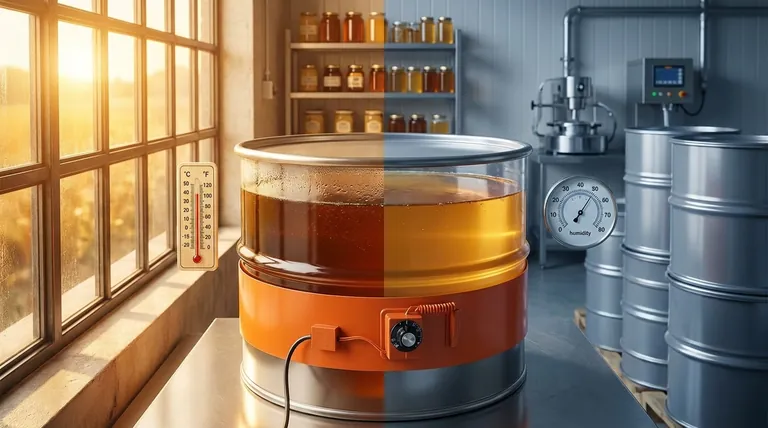
But for a commercial apiary, immortality is the wrong metric. The real measure is quality. A drum of premium, light amber clover honey stored in a warehouse through an unexpected summer heatwave won't become unsafe to eat. But it can lose the very characteristics that make it premium, slowly and silently transforming a high-value product into a generic sweetener.
This isn't spoilage. It's degradation. And understanding the difference is critical to protecting your bottom line.
Redefining "Bad": Spoilage vs. Degradation
Our brains are wired to identify spoilage through simple cues—mold, foul smells, changes in texture. Honey challenges these mental models.
A Fortress Against Microbes
Honey is an engineering marvel. Its composition is a masterclass in preservation.
- Low Water Content: With moisture levels typically below 18%, there isn't enough free water for bacteria or yeast to thrive.
- High Acidity: A low pH creates a hostile environment for microorganisms.
This combination makes honey a biological desert where spoilage can't get a foothold.
The Psychology of Crystallization
Many consumers mistake crystallization for spoilage. This is a psychological error, not a chemical one. We see a change in texture and our food-safety instincts trigger an alarm.
In reality, crystallization is a harmless physical process. It’s glucose separating from the solution—a sign of pure, unprocessed honey, not of decay. The honey's quality remains intact, and the process is easily reversed with gentle warming. Degradation, however, is permanent.
The Slow Fire: How Heat Unravels Honey's Complexity
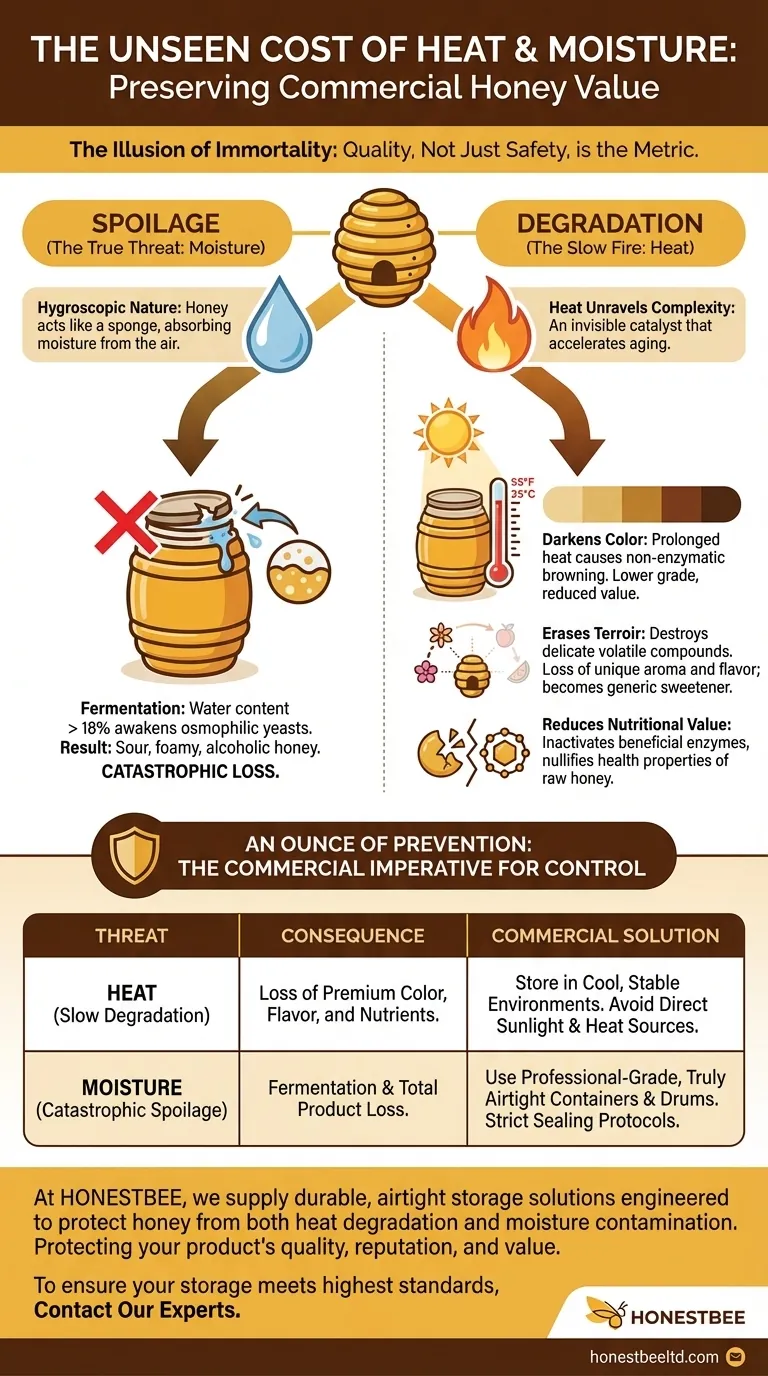
Heat is the invisible catalyst that accelerates honey's aging. It doesn't spoil it; it unravels it, stripping away its value one molecule at a time.
It Darkens the Color
Prolonged exposure to heat triggers non-enzymatic browning, where sugars and amino acids react. The honey gradually darkens, turning from a pale gold to a deep, less desirable brown. For a distributor, this color shift isn't just aesthetic; it’s a change in grade and a reduction in market value.
It Erases the Terroir
The most significant loss is to flavor and aroma. The delicate, volatile compounds that tell the story of a honey's origin—the specific blossoms, the soil, the season—are the first casualties of heat. High temperatures destroy these complex notes, erasing the honey's unique "terroir" and leaving behind a one-dimensional, generic sweetness. A prized Tupelo honey begins to taste like simple sugar syrup.
It Reduces Nutritional Value
For raw honey, the damage is even greater. The beneficial enzymes and antioxidants that make it a premium health product are extremely sensitive to heat. Exposing raw honey to high temperatures effectively pasteurizes it, nullifying the very properties that command a higher price.
The Real Saboteur: An Invasion of Moisture
While heat degrades, moisture is the one thing that can truly spoil honey.
Honey is hygroscopic, meaning it acts like a sponge, actively pulling moisture from the surrounding air. This is its Achilles' heel. If a container isn't perfectly sealed, the honey’s water content can creep above that critical 18% threshold.
Once that line is crossed, dormant osmophilic yeasts, naturally present in all honey, can awaken. They begin to ferment the sugars, producing alcohol and carbon dioxide. The honey will develop a sour, alcoholic taste and may appear foamy. This is true spoilage. For a commercial operation, a single improperly sealed drum is a catastrophic and entirely preventable loss.
An Ounce of Prevention: The Commercial Imperative for Control
For businesses that depend on honey's quality, storage is not a passive activity; it's a critical control point. Preserving the value harvested from the hive requires an engineered approach to fighting honey's two enemies.
| Threat | Consequence | Commercial Solution |
|---|---|---|
| Heat | Slow degradation of color, flavor, and nutritional value. Loss of premium status. | Store in cool, stable environments. Avoid direct sunlight and proximity to heat sources in warehouses. |
| Moisture | Catastrophic spoilage via fermentation. Total product loss. | Utilize professional-grade, truly airtight containers and drums. Implement strict sealing protocols. |
These principles are operational necessities. Maintaining the delicate profile of your honey from the drum to the distributor relies on equipment designed for the task. At HONESTBEE, we supply durable, airtight storage solutions engineered to protect honey from both the slow fire of heat degradation and the immediate threat of moisture contamination.
Protecting your product isn't about chasing immortality; it's about preserving the quality, reputation, and value you worked so hard to create. To ensure your storage and handling processes meet the highest standards, Contact Our Experts
Visual Guide
Related Products
- 0.5T Capacity Honey Dehumidifier Dryer with Vacuum Heating and Thickening Filtering Machine
- Double Nozzle Small Honey Filling Machine Honey Sachet Packing Packaging Equipment
- Manual Honey Filling Machine Bottling Machine for Honey
- High Quality Honey Dehumidifier Dryer Thickening Machine for Beekeeping
- Small Honey Filling Machine Sachet Packing Equipment Single Nozzle
Related Articles
- Is Your Honey Dryer Secretly "Cooking" Your Profits?
- How Controlled Disc Speed in Honey Dryers Preserves Quality and Prevents Spoilage
- The Sticky Bottleneck: Why Your Honey Filtering Fails and How to Fix It for Good
- From Chaos to Clarity: The Physics and Psychology of Honey Filtering
- How Professional Honey Filtration Preserves Quality While Meeting Food Safety Standards