Measuring grids and scoring rulers act as quantitative instruments that transform visual hive inspections into precise data regarding a queen's fertility. By overlaying these standardized grids on brood combs, beekeepers count the area or specific number of capped brood cells and divide that figure by the 12-day capped development cycle to calculate the queen's average egg production per 24 hours.
By standardizing the measurement of capped brood, these tools allow breeders to look past the current population size and calculate the queen's actual biological output. This converts a subjective visual check into an objective "digital indicator" vital for commercial breeding selection.
The Mechanics of Measurement
Standardizing the Visual Field
Technicians place measuring grids directly over the brood combs during an inspection.
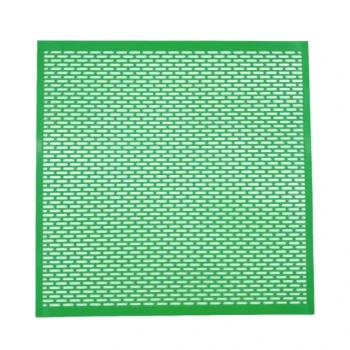
These frames typically feature standardized squares, often measuring 2x2cm or 5x5cm.
This overlay creates a uniform reference point, allowing the beekeeper to estimate the total brood area without the inconsistency of "eyeballing" the frame.
Targeting Capped Brood
The primary target for this measurement is capped brood cells, not open larvae or fresh eggs.
Capped brood represents the most stable and easily quantifiable stage of development for calculating long-term laying consistency.
From Static Count to Daily Rate
The Biological Constant
The calculation relies on a fixed biological constant: the 12-day capped development cycle of the worker bee.
Because a worker bee remains in the capped stage for approximately 12 days, the total amount of capped brood on a frame represents the queen's cumulative effort over that specific 12-day period.
Calculating the Daily Average
To find the daily laying rate, the total count of capped cells is divided by 12.
For example, if the grid indicates 12,000 capped cells, dividing by 12 reveals that the queen is laying an average of 1,000 eggs per 24-hour period.
Evaluating Genetic Quality
Commercial Selection Criteria
This derived daily rate serves as a core digital indicator for genetic selection.
Commercial breeders use this data to identify high-fertility queen populations, ensuring that only queens capable of sustaining massive colony turnover are selected for breeding programs.
Assessing Brood Compactness
Beyond simple arithmetic, the grid helps evaluate the compactness of the brood pattern.
A solid pattern within the grid lines indicates a healthy queen with high viability, whereas a "spotty" pattern (empty cells inside the grid) may indicate genetic issues, disease, or poor mating.
Understanding the Limitations
Estimation vs. Precision
While grids provide a standardized number, they are inherently estimations based on area.
Variations in cell size or comb structure can introduce slight margins of error compared to counting every single individual cell.
Environmental Context
The grid measures performance, but it does not account for environmental constraints.
A high-genetic-potential queen may score poorly on the grid if the colony lacks pollen, nectar, or sufficient nurse bees to support her laying capacity.
Making the Right Choice for Your Goals
The use of measuring grids allows you to move from guessing to knowing regarding your queen's performance.
- If your primary focus is Commercial Breeding: Prioritize the calculated 24-hour egg production rate to select stock that guarantees high population turnover.
- If your primary focus is General Hive Health: Focus on the grid's visual feedback regarding compactness, ensuring the queen lays in solid patterns rather than maximizing the raw number.
Data-driven selection is the bridge between a surviving colony and a thriving one.
Summary Table:
| Feature | Description | Key Metric / Value |
|---|---|---|
| Primary Tool | Measuring Grids / Scoring Rulers | 2x2cm or 5x5cm standardized squares |
| Target Subject | Capped Brood Cells | Most stable development stage for counting |
| Biological Constant | Capped Development Cycle | 12 Days (Worker Bees) |
| Calculation Formula | Total Capped Cells ÷ 12 | Average Eggs per 24 Hours |
| Quality Indicator | Brood Compactness | Solid vs. Spotty patterns (Genetic health) |
Elevate Your Apiary Operations with HONESTBEE
Transition from guesswork to data-driven precision in your commercial breeding program. At HONESTBEE, we specialize in empowering commercial apiaries and distributors with high-performance beekeeping tools and industrial-grade machinery. From specialized hive-making and honey-filling machines to a complete range of essential consumables, our portfolio is designed to maximize your efficiency and output.
Why partner with HONESTBEE?
- Comprehensive Wholesale Offering: A one-stop shop for all your beekeeping hardware and consumables.
- Precision Machinery: Scale your production with our honey-processing and hive-manufacturing technology.
- Industry Expertise: Solutions tailored to the needs of professional breeders and large-scale distributors.
Ready to optimize your colony turnover and secure top-tier genetic stock? Contact us today to discuss how our wholesale solutions can grow your business!
References
- Tatiana Mardari, Nicolae Eremia. Particularitățile selecției albinelor locale. DOI: 10.61562/mgfa2023.24
This article is also based on technical information from HonestBee Knowledge Base .
Related Products
- JZBZ Langstroth Queen Rearing Frame for Beekeeping
- Automatic Heat Preservation 6 Frame Pro Nuc Box for Honey Bee Queen Mating
- Portable Bee Mating Hive Boxes Mini Mating Nucs 8 Frames for Queen Rearing
- Professional Queen Bee Introduction and Transport Cage
- Professional Multi-Compartment Queen Cage with Sliding Lid
People Also Ask
- Why use finishing colonies for queen cell capping? Secrets to Superior Queen Quality and Performance
- How do queen rearing frames and grafting needles function together? Master the Doolittle Method for High-Quality Queens
- What is the purpose of queen rearing frames? Master Controlled Queen Production for Your Apiary
- What are the functions of queen rearing frames and artificial queen cells? Master Bee Genetic Improvement
- What roles do professional queen rearing frames and artificial queen cells play? Scaling Your Queen Bee Production