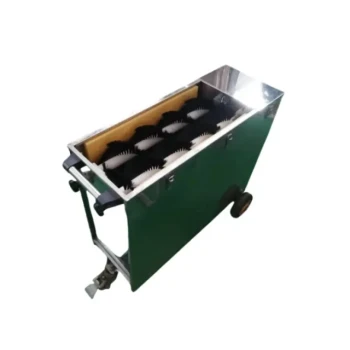
Specialized chemical application tools represent the difference between effective pest suppression and catastrophic colony loss. These devices are critical because they ensure the uniform distribution and precise dosage control of treatments, such as acaricides. Without this mechanical precision, beekeepers risk either failing to suppress the parasite population or accidentally poisoning the bees they aim to protect.
Core Takeaway: Managing Varroa destructor is a high-stakes balancing act between potency and safety. Professional application equipment transforms variable chemical treatments into controlled interventions, ensuring pathogen suppression while safeguarding bee health and maintaining food safety standards.
The Mechanics of Precision
Achieving Uniform Distribution
The anatomy of a bee colony is complex, with thousands of individuals hiding in tight spaces. Specialized equipment, particularly professional spraying devices, ensures that medicinal solutions are atomized and distributed across every hive frame gap.
This capability is essential for treatments like oxalic acid dihydrate. It guarantees that the therapeutic agent reaches every adult bee, rather than pooling in specific areas or missing parts of the colony entirely.
The Criticality of Dosage Control
The line between a cure and a poison is often defined by the dose. Specialized tools allow for exact dosage regulation, which is fundamental for avoiding acute toxicity in bees.
By maintaining consistent dosing, these tools also facilitate the "chronic toxicity" studies required to understand long-term effects. This ensures that the treatment remains lethal to the mites but safe for the host.
Protecting Colony Health and Stability
Suppressing Colony Collapse Disorder (CCD)
Varroa destructor is a primary driver of colony collapse, often facilitating secondary infections like Deformed Wing Virus. High-precision tools effectively lower these pathogen loads, acting as a preventative measure against CCD.
Applying these treatments during the pre-winter preparation phase is particularly critical. It strengthens the bees' immune systems, preventing disease outbreaks that frequently lead to total colony loss during the winter months.
Ensuring Food Safety
Beyond the health of the bee, there is the safety of the product. Professional drug delivery equipment minimizes the risk of chemical residues contaminating honey products.
By utilizing precise release mechanisms, these tools ensure that acaricides target the pest without compromising the purity of the harvest, satisfying strict food safety standards.
Understanding the Risks of Improper Application
The Danger of Localized Overdosing
Without specialized equipment, treatments are often applied unevenly. This leads to localized overdosing, where specific sections of the hive receive toxic concentrations of chemicals.
This can cause immediate mortality among adult bees or brood, negating the benefits of the treatment.
The Threat of Under-dosing
Conversely, manual or imprecise application often results in under-dosing. This fails to kill the mites, allowing the infestation to persist and grow.
Furthermore, consistent under-dosing can accelerate the development of drug resistance in mite populations, rendering future treatments ineffective.
Making the Right Choice for Your Goals
To effectively manage apiary health, select your tools based on your specific operational priorities.
- If your primary focus is Colony Survival: Prioritize equipment that guarantees high atomization and uniform coverage to eliminate pests in hard-to-reach frame gaps.
- If your primary focus is Commercial Production: Focus on tools with precise release mechanisms to strictly control dosage and eliminate the risk of chemical residues in your honey.
Invest in precision today to secure the biological integrity and economic future of your apiary.
Summary Table:
| Feature | Benefit for the Colony | Risk of Manual Application |
|---|---|---|
| Uniform Distribution | Reaches every frame gap and adult bee | Localized overdosing or missed areas |
| Precise Dosage Control | Ensures efficacy without bee toxicity | Under-dosing leading to mite resistance |
| Atomization Technology | Optimized medicinal coverage | Inefficient chemical usage and waste |
| Residue Management | Maintains food safety and honey purity | Chemical contamination of the harvest |
Secure Your Apiary's Future with HONESTBEE Precision
Don't leave your colony’s survival to chance. HONESTBEE provides commercial apiaries and distributors with professional-grade beekeeping machinery and application tools designed for maximum efficacy. Whether you need advanced spraying devices for pest management, hive-making equipment, or honey-filling machines, our comprehensive wholesale offering ensures your operation stays productive and compliant with food safety standards.
Ready to elevate your beekeeping efficiency and protect your bees?
Contact our experts today to find the right equipment for your commercial needs.
References
- Pilar De la Rúa, José Serrano. Biodiversity, conservation and current threats to European honeybees. DOI: 10.1051/apido/2009027
This article is also based on technical information from HonestBee Knowledge Base .
Related Products
- Heavy Duty 12V Oxalic Acid Evaporator Vaporizer for Bee Varroa Mite Treatment Beekeeping Fumigator Atomizer
- Durable 12V Oxalic Acid Vaporizer for Varroa Mite Treatment Beehive Beekeeping Tool
- Oxalic Acid Vaporizer 12V for Bee Varroa Mite Treatment
- Compact Circular Bee Mite Treatment Dispenser
- 12V Bee Mite Removal Evaporator Oxalic Acid Vaporizer for Bee Fumigation Treatment 180W Atomization
People Also Ask
- How can oxalic acid treatment be applied effectively when capped brood is present? Master the 3-Stage Vapor Protocol
- What are the main advantages of using oxalic acid vaporization for Varroa mite control? Achieve 90%+ Efficacy Safely
- What is the process of using an oxalic acid vaporizer? A Step-by-Step Guide to Safe Varroa Control
- How can oxalic acid vaporization be used effectively in a hive that contains brood? Master Multi-Stage Mite Control
- Why is it necessary to control varroa mite infestations? Protect Your Colony with Oxalic Acid Vaporizers