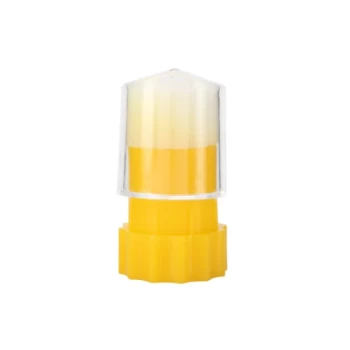
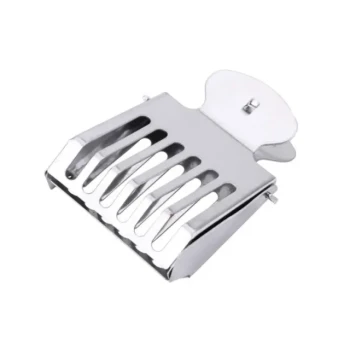
Water-based opaque markers are the standard tool for the precise, non-invasive identification of queen bees within a colony. By applying a specialized pigment to the thorax, apiary managers and researchers can visually differentiate between specific individuals, such as mother and daughter queens. This ensures that the history and genetics of the colony leader are instantly recognizable without harming the insect.
By enabling the distinction between original queens and natural replacements, these markers ensure that critical data regarding egg-laying and mating is accurately attributed to the correct individual.
The Mechanics of Queen Identification
Targeting the Thorax
The identification mark is applied specifically to the thorax of the queen bee. This anatomical placement provides a stable, visible surface for the mark that does not interfere with the queen's wings or sensory organs.
Distinguishing Generations
A primary use of these markers is to differentiate between mother queens and their daughter queens. In a colony environment, bees may replace an existing queen naturally. Without a mark, it is often impossible to distinguish the original queen from a natural replacement.
The Value of Individual Data Tracking
Accurate Attribution of Behavior
For data to be valid, it must be linked to a specific biological entity. Markers ensure that observations regarding egg-laying patterns are attributed to the exact queen performing the action, rather than a look-alike successor.
Long-Term Mating Analysis
Markers facilitate the long-term study of mating behavior. By maintaining the identity of the queen over time, researchers can correlate early mating events with long-term colony health and productivity.
Critical Considerations and Trade-offs
The Necessity of Water-Based Formulas
Not all markers are suitable for biological use. It is critical to use water-based opaque markers because they are chemically harmless to the insect. Using solvent-based or toxic markers can damage the queen's exoskeleton or impact her health, negating the purpose of the study.
Dependence on Application Accuracy
The reliability of this method depends entirely on the mark's placement and durability. The marker must be applied carefully to the thorax to avoid inhibiting movement. Furthermore, the identification is only valid as long as the opaque mark remains visible; if the mark wears off, the ability to distinguish an original queen from a replacement is lost.
Making the Right Choice for Your Goal
To effectively utilize marking for colony management, align the technique with your specific objectives:
- If your primary focus is genetic fidelity: Use markers to instantly verify if a colony is still headed by the original breeder queen or if a supersedure (replacement) has occurred.
- If your primary focus is behavioral research: Rely on individual markings to ensure that longitudinal data on mating and egg production is not contaminated by mistaken identity.
Successful colony management relies on the certainty that the queen you are observing today is the same one you observed yesterday.
Summary Table:
| Feature | Specification/Benefit |
|---|---|
| Primary Application | Applied to the queen bee's thorax |
| Formula Type | Non-toxic, water-based opaque pigment |
| Key Function | Differentiates mother from daughter queens |
| Data Tracking | Verifies egg-laying patterns & mating history |
| Safety Benefit | Chemically harmless to insect exoskeletons |
Streamline Your Apiary Operations with HONESTBEE
At HONESTBEE, we specialize in empowering commercial apiaries and distributors with high-performance beekeeping solutions. Whether you need specialized hardware like hive-making and honey-filling machines, or a reliable supply of essential industry consumables like marking tools and protective gear, our comprehensive wholesale portfolio has you covered.
Why partner with us?
- Comprehensive Range: From heavy machinery to honey-themed cultural merchandise.
- Industry Expertise: Quality-tested tools designed for professional honey production.
- Scalable Supply: Tailored offerings for large-scale distributors.
Ready to enhance your productivity and genetic tracking accuracy? Contact us today to discuss how our tools can optimize your beekeeping business!
References
- Erik de Jesús Solórzano-Gordillo, Daniel Sánchez. Gene Flow from Wild to Managed Colonies in the Stingless Bee <i>Scaptotrigona Mexicana</i> and an Update on its Mating Frequency. DOI: 10.2478/jas-2021-0020
This article is also based on technical information from HonestBee Knowledge Base .
Related Products
- Queen Bee Marking Pen POSCA Queen Marking Pens for Beekeeping Bee Markers
- Plastic Queen Marking Tube Cage with Plunger for Beekeeping
- Plastic Long Marker Device for Catching and Marking Bees Queen Bee Marking Tube and Cage
- Queen Bee Marking Pen UNI Medium Point for Queen and Bee Marking
- Transparent Plastic Bee Catcher Queen Marker Tube Cage Beekeeping Tool Equipment
People Also Ask
- What role do specialized marking pens and color-coding systems play in honeybee tracking? Enhance Research Precision
- Why are specialized marking pens used for stingless bee queens? Essential Tools for Large-Scale Breeding Success
- How should a new paint pen be primed before marking a queen bee? Essential Tips for Safe & Clear Markings
- How should a queen bee marking pen tip be properly primed? Master the Art of Safe Queen Marking
- What specifications are required for a high-quality queen bee marking pen? Ensure Safety and Precision for Your Colony