To effectively relieve congestion in a single-hive body colony, you must provide additional vertical space for resource storage. The specific method involves placing honey supers directly above a queen excluder.
Congestion is best managed by expanding the hive upward. By installing honey supers over a queen excluder, you create essential room for nectar while maintaining a distinct boundary for the brood nest.
The Mechanics of Vertical Expansion
The Role of the Honey Super
When a single hive body reaches capacity, the colony runs out of room to store incoming nectar and pollen. This lack of space is the primary driver of congestion.
By adding a honey super, you provide an immediate release valve for this pressure. It allows the bees to move resources upward, freeing up cells in the lower box for the queen to lay eggs.
Function of the Queen Excluder
The primary reference dictates that these supers must be placed above a queen excluder. This piece of equipment is critical for maintaining the organization of the hive.
The excluder functions as a sieve; it is sized to allow worker bees to pass through carrying nectar but is too narrow for the larger queen to traverse. This confines the queen to the single hive body below, ensuring the brood nest remains compact and does not expand into your honey stores.
Understanding the Trade-offs
Potential for "Honey Barriers"
While the queen excluder is effective, it introduces a physical barrier. Occasionally, worker bees may be reluctant to cross the excluder, especially if the foundation in the super is not yet drawn out.
If the workers refuse to cross, the congestion in the lower brood box remains unresolved despite the added equipment.
Management Complexity
Using this method creates a distinct separation between "brood" and "food" zones. While this is excellent for honey harvesting, it requires you to actively manage the single brood box to ensure the queen doesn't become honey-bound in the lower chamber.
Making the Right Choice for Your Colony
To implement this strategy effectively, assess your specific goals for the season:
- If your primary focus is pure honey production: Use the queen excluder immediately to ensure your supers remain free of eggs and larvae.
- If your primary focus is rapid colony expansion: Monitor the bees closely to ensure they are actually crossing the excluder and utilizing the new space provided.
Properly timed vertical expansion is the key to a calm, productive apiary.
Summary Table:
| Method | Action Required | Primary Benefit | Equipment Needed |
|---|---|---|---|
| Vertical Expansion | Add honey supers above the brood box | Provides immediate storage for nectar | Honey Super |
| Space Segregation | Install a queen excluder | Keeps brood nest separate from honey stores | Queen Excluder |
| Resource Management | Move nectar storage upward | Frees up cells for the queen to lay eggs | Worker Bees |
| Barrier Monitoring | Check if workers cross the excluder | Prevents the colony from becoming honey-bound | Beekeeping Veil/Tools |
Maximize Your Apiary's Productivity with HONESTBEE
Are you a commercial apiary or a distributor looking to optimize your honey yield and colony health? HONESTBEE is your strategic partner in professional beekeeping. We offer a comprehensive wholesale range of high-quality tools, from precision-engineered queen excluders and honey supers to industrial-grade honey-filling and hive-making machinery.
Whether you need essential consumables or specialized hardware, our products are designed to help you manage hive congestion and streamline production at scale.
Ready to upgrade your operations? Contact us today to explore our wholesale solutions!
Related Products
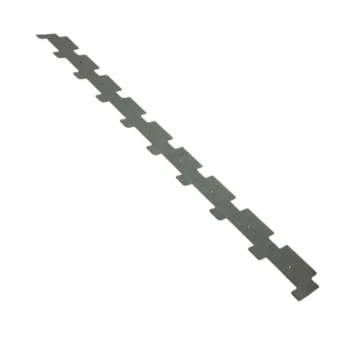
- Heavy Duty Castellated Iron Frame Spacer for Honey Supers
- Durable 16 Way Circular Bee Escape for Efficient Honey Harvesting
- Digital Honey Refractometer for Precision Measurement of Optimal Honey Quality
- Precision Honey Refractometer Instrument for Quality Assessment
- Professional Plastic Honey Dipper for Easy Honey Drizzling
People Also Ask
- What are honey super frames and what foundation options are available? Choose the Best Support for Your Bees
- What are the reasons and drawbacks of using nine frames in a ten-frame honey super? Boost Extraction Speed Today
- What are honey super frames and how many are needed per box? A Beekeeper's Essential Guide
- What are honey super frames and their foundation options? Choose the Best Support for Your Hive's Honey Production
- Why might a beekeeper use fewer than the standard number of frames in a honey super? Boost Extraction Efficiency