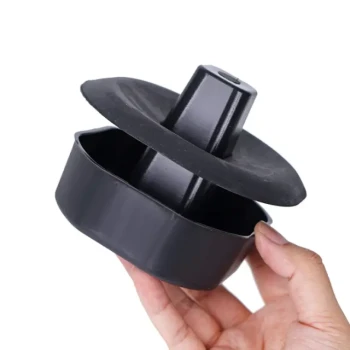
To create an effective ant moat, place the legs of your hive stand into individual dishes or containers filled with soapy water. This liquid creates an impassable barrier that prevents flightless pests from climbing up the legs to access the colony. Ensure the container is wide enough so that the hive leg sits centrally without touching the container's edge, preventing ants from bridging the gap.
Core Takeaway An effective moat relies on breaking the physical path between the ground and your hive with a liquid barrier. By modifying surface tension with soap or oil and installing safety guards, you can eliminate ant access without endangering the bees.
The Principles of an Effective Moat
Breaking Surface Tension
Simply using plain water is often insufficient. Some ant species can walk across the surface tension of water or float until they reach the leg.
Soap is the critical ingredient. Adding dish soap to the water breaks the surface tension. This ensures that any ant attempting to cross the liquid will immediately break through the surface and sink, rather than floating across.
Alternative Fluids
While soapy water is the standard recommendation, vegetable oil is a viable alternative mentioned in supplementary practices.
Oil is viscous and naturally prevents insects from crossing. It also has the benefit of evaporating much slower than water, potentially reducing maintenance frequency during hot weather.
Construction and Safety
Establishing the Gap
The geometry of your setup is just as important as the liquid. The dish must be significantly wider than the hive leg.
There must be a clear, liquid-filled gap between the leg and the rim of the dish. If the leg touches the side, or if the gap is too narrow, ants will simply step over the moat entirely.
Protecting Your Bees
A liquid moat poses a drowning risk to your own honeybees, who may attempt to drink from it.
To prevent this, you should cover the moats with wire mesh. The weave of the mesh must be large enough to allow ants to fall through into the liquid, but small enough to physically exclude bees from entering the container.
Common Pitfalls to Avoid
Environmental Bridging
A moat is useless if debris creates a bridge over the liquid.
Leaves, grass clippings, or twigs that fall into the dish can provide a walkway for ants. You must regularly inspect the moats to ensure the surface is clear of floating debris.
Evaporation Management
The primary weakness of the soapy water method is evaporation.
In high heat, shallow dishes can dry out quickly, removing your defense. If you choose water over oil, commit to checking levels frequently or use deeper containers to extend the refill interval.
Making the Right Choice for Your Goal
To ensure your moat system is effective and safe, choose the approach that fits your maintenance capacity:
- If your primary focus is low maintenance: Use vegetable oil instead of water, as it does not evaporate quickly and requires less frequent refilling.
- If your primary focus is cost and availability: Use a mixture of water and dish soap, but commit to checking the levels weekly to ensure the barrier remains intact.
- If your primary focus is bee safety: Strictly install wire mesh guards over every moat container to prevent your colony from drowning in the pest deterrent.
The most successful moat is one that maintains a continuous, clean perimeter that ants physically cannot bypass.
Summary Table:
| Feature | Soapy Water | Vegetable Oil |
|---|---|---|
| Mechanism | Breaks surface tension to sink ants | Viscous barrier that traps insects |
| Maintenance | High (frequent refills due to evaporation) | Low (slow evaporation rate) |
| Cost | Very Low | Low |
| Risk Factor | Requires wire mesh to prevent bee drowning | Requires wire mesh to prevent bee drowning |
| Effectiveness | High, provided it is kept clean | Very High, durable over time |
Secure Your Apiary with Professional Solutions from HONESTBEE
Protecting your colony from pests is vital for a productive season. At HONESTBEE, we understand the unique challenges faced by commercial apiaries and distributors. We provide a comprehensive range of professional beekeeping tools, from robust hive stands to advanced honey-filling machinery and essential industry consumables.
Whether you are scaling your operation or supplying the market, our high-quality hardware and specialized equipment ensure your success. Contact us today to discover how our wholesale offerings can optimize your beekeeping business and safeguard your investment!
Related Products
- Professional Ant-Proof Beehive Stand with Integrated Moat for Beekeeping
- Metal Hive Feet Bee Hive Stand for Ant Protection
- Wooden Bee Hive Frames for Beekeeping and Wholesale
- Wholesales Dadant Size Wooden Bee Hives for Beekeeping
- Solid Bottom Board Australian Pine Wood Langstroth Bottom Board for Wholesale
People Also Ask
- What physical protection advantages do individual hive stands provide against Small Hive Beetles? Secure Your Apiary
- Why are specialized ant-proof stands necessary for Africanized honeybee apiaries? Prevent Absconding in Semi-Arid Regions
- Why are specialized beehive stands or protective barriers necessary for pest management in apiaries? Secure Your Colony
- What are the benefits of elevating a bee hive with a stand or base? Protect Your Colony and Your Back
- What to stand a beehive on? The Best Foundation for a Healthy, Manageable Apiary