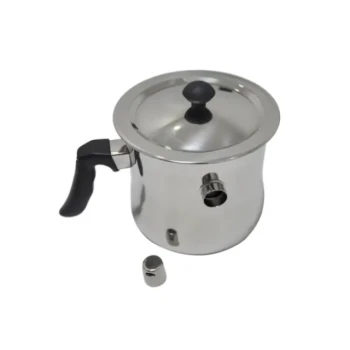
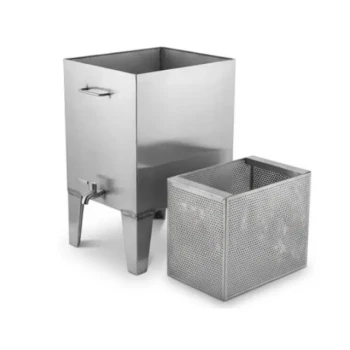
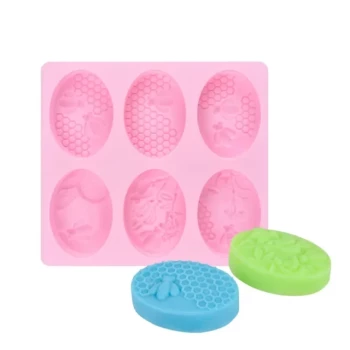
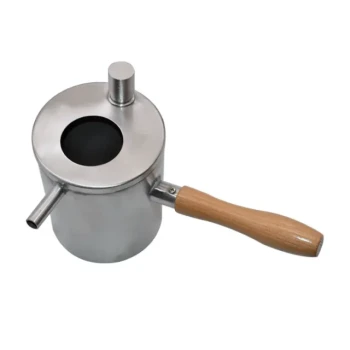
To achieve higher purity in beeswax, you must subject the wax to a secondary cycle of reheating, melting, and straining. Once the wax is fully liquid, it is passed through a finer filtration medium to capture smaller debris that passed through the initial filter. This process can be repeated as many times as necessary using materials like cheesecloth, paper towels, or coffee filters until the wax is clean.
Re-filtering is essentially a repetitive cycle of melting and straining designed to remove progressively smaller particulates. The specific number of repetitions and the fineness of the filter should be strictly dictated by your final application, as high-end uses like cosmetics require significantly more purification than general uses.
The Mechanics of Purification
The Melting and Straining Cycle
To begin the purification process, you must reheat the beeswax until it melts into a liquid state. Once liquefied, pour the wax through a filter to catch remaining debris. You can repeat this melt-and-pour cycle multiple times to achieve your desired level of clarity.
Selecting the Filtration Medium
The material you use to strain the wax determines how much fine debris is removed. Standard cheesecloth works well for larger particles. For a higher level of purity, you can switch to finer materials such as paper towels or coffee filters, which are capable of trapping much smaller sediment.
Using Water to Assist Cleaning
The Boiling Water Method
To enhance the cleaning process, you can add boiling water to the wax. This helps separate the wax from impurities during the melting phase. The water acts as a washing agent, allowing heavy debris to settle out of the wax more effectively.
Easing Extraction
Using water offers a significant mechanical advantage when the process is finished. As the mixture cools, the wax will float to the top and harden separately from the water. This separation makes it significantly easier to remove the solid wax cake from the container without it sticking.
Understanding the Trade-offs
Matching Purity to Application
It is important not to over-process the wax if it is not necessary. The required level of filtration depends entirely on the intended application. While general household uses may tolerate some sediment, cosmetic or artistic uses typically demand a much finer, cleaner product.
Time vs. Necessity
Using very fine filters like coffee filters creates a slower flow rate and requires more patience. You must weigh the time investment against the need for perfection. Ideally, you should stop filtering the moment the wax meets the visual and textural requirements of your specific project.
Making the Right Choice for Your Goal
Before you begin re-filtering, assess the requirements of your final product to determine how many times you need to repeat the process.
- If your primary focus is Cosmetics or Art: Use fine filters like coffee filters or paper towels and repeat the process multiple times to ensure the wax is free of all visible debris.
- If your primary focus is General Utility: Stick to simpler materials like cheesecloth and perform fewer filtration cycles to save time and effort.
Your beeswax is ready whenever it is clean enough for its purpose—simply melt, strain, and assess.
Summary Table:
| Filtration Level | Recommended Medium | Ideal Applications |
|---|---|---|
| Standard | Cheesecloth (Single/Double Layer) | General utility, candles, wood finishes |
| High Purity | Paper Towels / Fine Mesh | Detailed artistic work, smooth coatings |
| Ultra Purity | Coffee Filters | Cosmetics, pharmaceuticals, high-end skincare |
| Debris Removal | Boiling Water Method | Initial cleaning of raw or heavily soiled wax |
Elevate Your Wax Processing with HONESTBEE
Producing high-purity beeswax is essential for premium products, but efficiency is key to scaling your operations. HONESTBEE supports commercial apiaries and global distributors with professional-grade beekeeping tools and advanced machinery. From high-capacity melting units to precision honey-filling systems, we provide everything you need to refine your workflow.
Ready to upgrade your apiary’s output? Contact us today to explore our wholesale equipment solutions and see how our industry expertise can grow your business.
Related Products
- Beeswax Machine Press Embosser Wax Foundation Mold Printer Bee Hive Equipment Making Sheet
- Beeswax Foundation Sheets Beehive Foundation for Wholesale
- Colorful Silicone Beeswax Foundation Mold Mould for Beekeeping
- Economy Manual Beeswax Embossing Mill Wax Foundation Machine Roller
- Electric Beeswax Flat Sheet Machine with Operating Tray for Wax Processing
People Also Ask
- What equipment is needed to make beeswax foundation? A Guide to DIY Wax Sheet Production
- What miscellaneous equipment is needed for making foundation? A Guide to the Essential Tools
- What miscellaneous equipment is useful when making beeswax foundation? Essential Support Tools for Beekeepers
- What specific equipment is required for making beeswax foundation? Essential Tools for High-Quality Production
- What is the recommended temperature for melting beeswax to make foundation sheets? Master the 70°C-80°C Ideal Range