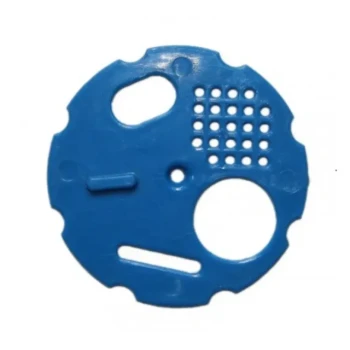
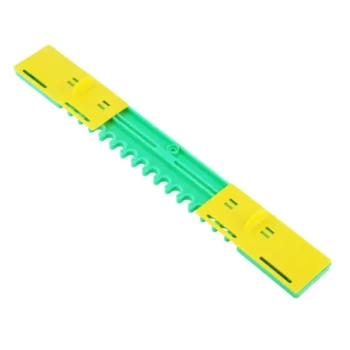
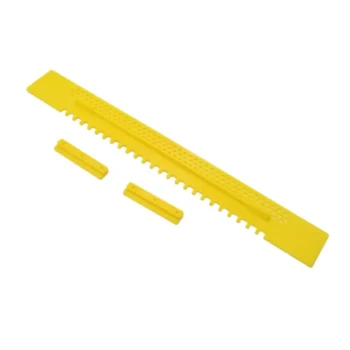
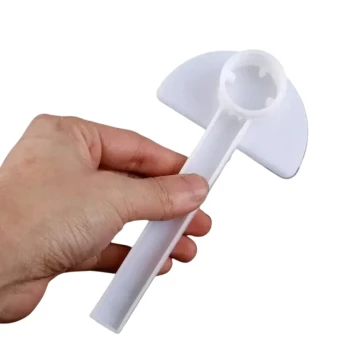
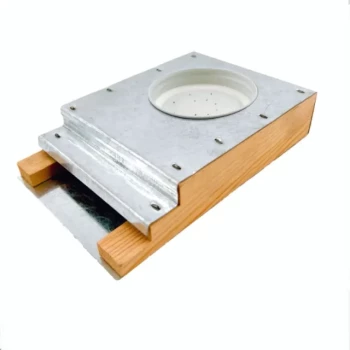
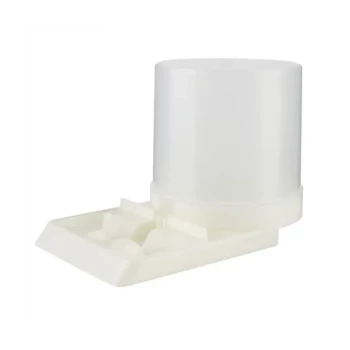
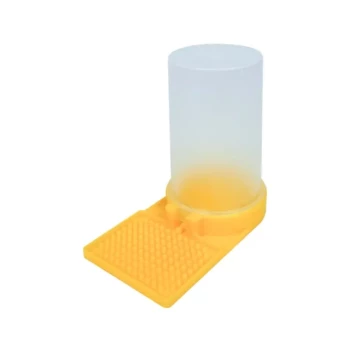
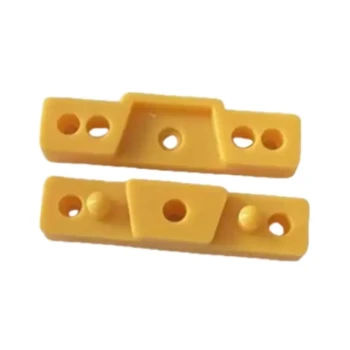
Commercial beekeepers can reduce hornet access by fitting hive entrance equipment that narrows or shields the colony opening. Adjustable entrance reducers can limit the entrance height to approximately 0.5–0.6 cm—the reference target is about 0.25 inches—so worker bees can pass while larger hornets are physically restricted. For heavier pressure, entrance-mounted hornet traps, wire screens, guard boards, or protective cages add a second barrier outside the hive.
The most practical defense is a layered entrance system: reduce and reinforce the hive opening, capture hornets before they reach the entrance, and adjust the equipment as colony strength and predator pressure change.
Why Hive Entrance Protection Matters
Hornets exploit the hive entrance
Hornets commonly hunt individual bees near flight paths and entrance cracks before gathering at the hive to kill workers. If the attack continues, they may enter the hive and occupy it while robbing honey and brood.
A reduced entrance gives guard bees a smaller area to defend. This is especially important for Apis mellifera, which generally lacks the coordinated “bee ball” defense used by some Eastern honey bee populations against hornets.
Colony losses can escalate quickly
Hornet attacks are not limited to a single predator. Groups of hornets can repeatedly return to an apiary, overwhelm entrance guards, and cause severe worker losses in a short period.
Predator activity may originate within roughly 800 meters to 1.5 kilometers of the apiary, so entrance equipment should be considered part of a broader monitoring and control program.
Which Entrance Equipment Should Be Used?
Adjustable entrance reducers
An entrance reducer narrows the hive opening while preserving a controlled passage for worker bees. During periods of hornet activity, commercial beekeepers can set the entrance height to approximately half a centimeter, subject to local bee size, colony traffic, and equipment design.
Adjustable models are particularly useful for distributors and commercial apiaries because one product can support different hive configurations and seasonal operating conditions.
Wire entrance screens and protective cages
Wire screens or cages create a physical stand-off between the colony and attacking hornets. They can make it more difficult for hornets to land directly at the entrance while allowing bees to navigate through the protected opening.
The screen or cage must not obstruct normal bee traffic, ventilation, or beekeeper access. A design that is too restrictive may cause congestion and increase stress inside the hive.
Entrance-mounted hornet traps
Specialized traps fitted directly in front of the hive entrance can intercept hornets before they reach the colony. These devices are most useful when combined with a reduced opening rather than treated as a complete substitute for entrance control.
Commercial users should evaluate trap compatibility with the hive body, ease of emptying, durability, and whether captured predators create congestion around the entrance.
Guard boards and related barriers
Guard boards can extend or shield the entrance, helping resident bees defend the opening and making direct hornet access more difficult. They are useful where the goal is to create a controlled approach zone rather than simply reduce the opening size.
Sticky capture sheets may be positioned near the entrance as an additional control measure, but they should be installed so they do not trap worker bees or interfere with routine inspections.
How to Build a Layered Protection System
Start with the correct entrance restriction
Install an adjustable reducer before hornet pressure reaches its peak. The opening should remain large enough for normal worker traffic but small enough that guard bees can control it effectively.
Do not assume one fixed opening is suitable for every colony. Strong colonies, weak colonies, local bee strains, and different hive designs may require different settings.
Add an external capture or screening layer
Where hornets are actively hunting or gathering, place an entrance trap, protective cage, wire screen, or sticky barrier outside the reduced entrance. The purpose is to stop predators before they can reach the brood chamber.
A layered arrangement is more resilient than relying on a single component. If one barrier becomes damaged, overloaded, or poorly positioned, the remaining equipment still provides some protection.
Monitor the entrance frequently
Inspect for hornet presence, dead bees, blocked passages, trapped worker bees, and excessive congestion. Entrance equipment should be checked particularly often during the hunting and slaughtering phases of a hornet attack.
If hornets are repeatedly concentrating at several hives, inspect the wider apiary rather than treating only the most visibly affected colony.
Match protection to colony strength
Weak colonies may need more restrictive protection because they have fewer guard bees available. However, overly aggressive restriction can create traffic jams and ventilation problems.
Strong colonies may tolerate greater traffic, but they can still be overwhelmed during coordinated hornet attacks. Equipment selection should therefore combine entrance control with population monitoring.
Operational Considerations for Commercial Apiaries
Standardize compatible equipment
For wholesalers, distributors, and beekeeping operations, compatibility is a major practical requirement. Entrance reducers, screens, cages, and traps should match the hive dimensions and be available in consistent specifications across the product portfolio.
Standardized equipment simplifies purchasing, inventory management, staff training, and rapid replacement during peak predator activity.
Prioritize fast installation and servicing
Protective entrance hardware should be easy to fit without dismantling the hive. Tool-free or low-tool designs can reduce labor demands when multiple colonies require immediate protection.
Trap components should also be simple to inspect, clean, reset, or replace. Efficient servicing is essential when hornet pressure persists across a large apiary.
Use entrance equipment alongside population control
Entrance barriers reduce the opportunity for hornets to enter, but they do not necessarily remove predators from the surrounding area. Commercial apiaries may also use appropriately managed lure or bait traps away from hive entrances to reduce local hornet pressure.
Any bait or poison-based control must follow applicable regulations and be positioned to avoid exposing bees and other non-target organisms.
Understanding the Trade-offs
Smaller openings improve defense but reduce traffic capacity
A restricted opening is easier for guard bees to defend, but it can slow worker movement during nectar flows or periods of intense foraging. Monitor queues, clustering, and unusual entrance behavior after installation.
The correct setting is a balance between defensibility and airflow rather than the smallest possible opening.
Traps can affect bees if poorly positioned
Entrance traps and sticky sheets may capture worker bees if their openings, surfaces, or flight paths are unsuitable. They can also create congestion if too close to the hive or if the capture chamber fills.
Select bee-compatible designs, maintain clear passageways, and inspect devices routinely.
Screens and cages require ventilation
A protective screen must allow sufficient air exchange, particularly in warm weather. Any equipment that blocks the entrance too extensively can contribute to overheating or poor hive ventilation.
Avoid treating an entrance barrier as a sealed closure unless the colony has an independent, adequately ventilated arrangement and the confinement is strictly temporary.
Entrance hardware is not a complete defense
Reducers and traps protect the access point, but they cannot address every source of hornet pressure. Colonies still require routine observation, apiary-level monitoring, and timely intervention when predator activity increases.
How to Apply This to Your Apiary or Product Program
Choose equipment according to predator intensity, hive compatibility, colony strength, and the level of operational service your apiary requires.
- If your primary focus is basic colony protection: Install an adjustable entrance reducer and set a bee-passable opening of approximately 0.5–0.6 cm during periods of hornet activity.
- If your primary focus is severe hornet pressure: Combine the reducer with an entrance-mounted hornet trap, wire screen, guard board, or protective cage.
- If your primary focus is large-scale apiary management: Standardize compatible entrance hardware, maintain replacement stock, and use inspection procedures for rapid deployment and servicing.
- If your primary focus is distributor or wholesale supply: Build a complete offering around reducers, screens, cages, traps, sticky barriers, and replacement parts so customers can source a coordinated protection system.
- If your primary focus is colony health: Monitor congestion, ventilation, trapped bees, and foraging traffic after every equipment adjustment.
With correctly sized and well-maintained entrance equipment, commercial beekeepers can make hive access harder for hornets while preserving the colony’s essential movement and ventilation.
Summary Table:
| Equipment Type | Purpose | Key Consideration |
|---|---|---|
| Adjustable entrance reducer | Restrict entrance height to ~0.5-0.6 cm | Ensure worker bees can pass while hornets are blocked |
| Wire entrance screen/cage | Physical barrier against hornets | Maintain ventilation and bee traffic |
| Entrance-mounted trap | Capture hornets before entry | Easy to empty and inspect |
| Guard board/sticky sheet | Extend entrance and capture predators | Avoid trapping worker bees |
Defend your apiary with our comprehensive range of hive entrance equipment. As a one-stop sourcing partner for commercial beekeepers and distributors, HONESTBEE supplies high-quality reducers, screens, traps, and more, ensuring rapid delivery and dedicated support. Contact us today to build a tailored protection system for your colonies. Get in touch!
Related Products
- Steel Round Disc Entrance Reducer for Flexzion Bee Hive Nuc Box Gate
- Multi-Functional Rotary Hive Entrance Disc for Beekeeping
- Beehive Entrance Reducer Guardian Metal Hive Entrance for Bees
- Multi-Functional Sliding Hive Entrance for Beekeeping
- Professional Reversible Beehive Hive Entrance
People Also Ask
- What is the purpose of an entrance reducer for a beehive? Strengthen Colony Defense and Prevent Robbery
- Why are entrance reducers used to counter hornet infestations? Protect Your Hive with Strategic Choke Points
- Why is it critical to maintain a smaller entrance for a newly established bee hive? Boost Colony Growth and Security
- What is the function of an entrance reducer on a beehive? Strengthen Colony Defense and Climate Control
- Under what conditions should a beekeeper adjust the size of a beehive entrance? Seasonal & Defense Management Tips