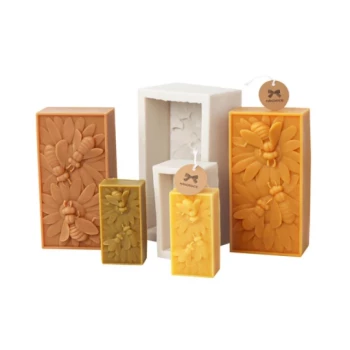
Purifying natural beeswax involves a systematic process of melting, straining, and settling to separate the wax from hive debris. You must melt the raw material to liquefy it, remove large contaminants, strain out finer particles, and finally mold the clean wax into solid blocks for storage or usage.
Core Takeaway: Effective purification relies on heat and filtration to isolate the wax. By melting the material—often in water to utilize density differences—impurities are separated, allowing the clean wax to be strained, poured, and hardened into a usable form.
The Principles of Wax Rendering
The Melting Phase
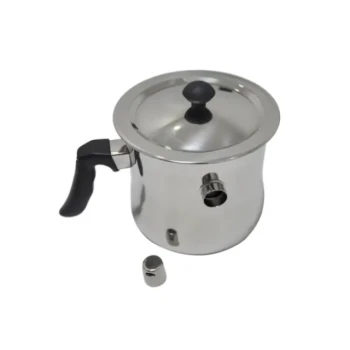
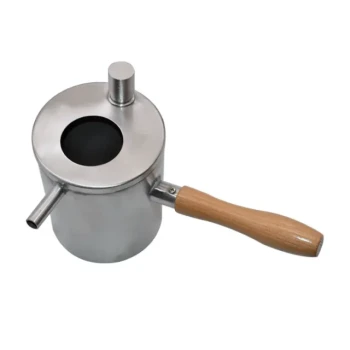
The purification process begins by applying heat to the raw beeswax. This transforms the solid hive scrapings into a liquid state, freeing debris trapped within the structure.
During this melting stage, you should actively remove large pieces of extraneous matter. These are the visible contaminants that are easily separated before fine filtration begins.
The Role of Water Separation
A highly effective technique involves melting the beeswax in water. Because beeswax is lighter than water, it naturally rises and floats to the surface of the container.
This density difference creates a physical separation layer. Heavy impurities sink to the bottom, and residual honey washes into the water, isolating the wax for easier collection.
Filtration and Straining
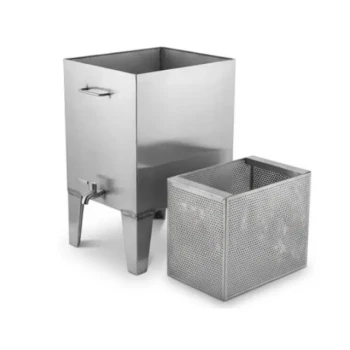
Once the wax is fully melted and large debris is removed, the liquid must be strained. This step passes the hot wax through a filter to catch finer particles that were not removed during the initial melt.
Straining ensures that the final product is smooth and free of the microscopic grit often found in raw hive material.
Molding and Hardening
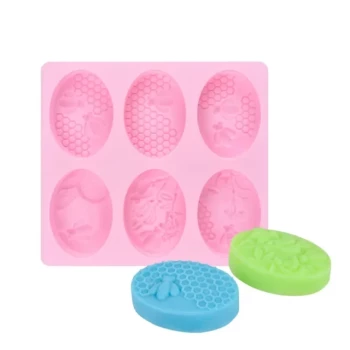
The final step is to pour the purified, strained liquid into a mold. As the wax cools, it solidifies into blocks, stabilizing the material for long-term storage.
If water was used, the hardened wax block can be lifted off the surface of the water, leaving the separated dirty water behind.
Understanding the Trade-offs
Process Time vs. Purity
Using the water-melting method yields a cleaner product by washing away honey and heavy dirt, but it extends the process. You must wait for the entire mass to cool completely to separate the solid wax block from the water below.
Material Loss
Every stage of purification involves a slight loss of raw material. Straining removes debris, but some wax will inevitably remain trapped in the filter or attached to the discarded "slumgum" (waste matter).
Optimizing Your Purification Strategy
Depending on your end goal, you may prioritize different aspects of the process:
- If your primary focus is maximum purity: Utilize the water-melting method to ensure honey and heavy sediments are fully separated from the wax block.
- If your primary focus is rapid processing: Focus on melting and straining immediately to convert raw comb into manageable blocks, acknowledging that some fine impurities may remain.
Transforming raw comb into purified wax requires patience, but the result is a clean, versatile material ready for high-quality application.
Summary Table:
| Purification Stage | Primary Action | Key Benefit |
|---|---|---|
| Melting | Apply controlled heat | Liquefies wax to release trapped debris |
| Water Separation | Melt wax in water | Heavy impurities sink while clean wax floats |
| Filtration | Strain through fine mesh | Removes microscopic grit and fine particles |
| Molding | Pour into containers | Solidifies wax into blocks for easy storage |
Elevate Your Beekeeping Operation with HONESTBEE
Are you looking to scale your wax production or optimize your commercial apiary? HONESTBEE specializes in supporting commercial beekeepers and distributors with a comprehensive range of professional-grade equipment. From high-efficiency wax processing machinery and honey-filling machines to specialized hive-making hardware, we provide the tools you need to maximize your yield and purity.
Whether you need industrial-scale machinery or essential consumables, our portfolio is designed to enhance your efficiency and profitability. Contact us today to explore our wholesale solutions and see how HONESTBEE can power your beekeeping success.
Related Products
- Beeswax Machine Press Embosser Wax Foundation Mold Printer Bee Hive Equipment Making Sheet
- Beeswax Foundation Sheets Beehive Foundation for Wholesale
- Colorful Silicone Beeswax Foundation Mold Mould for Beekeeping
- Economy Manual Beeswax Embossing Mill Wax Foundation Machine Roller
- Electric Beeswax Flat Sheet Machine with Operating Tray for Wax Processing
People Also Ask
- What equipment is needed to make beeswax foundation? A Guide to DIY Wax Sheet Production
- What miscellaneous equipment is needed for making foundation? A Guide to the Essential Tools
- What miscellaneous equipment is useful when making beeswax foundation? Essential Support Tools for Beekeepers
- What specific equipment is required for making beeswax foundation? Essential Tools for High-Quality Production
- What is the recommended temperature for melting beeswax to make foundation sheets? Master the 70°C-80°C Ideal Range