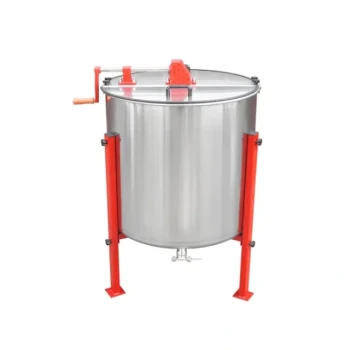
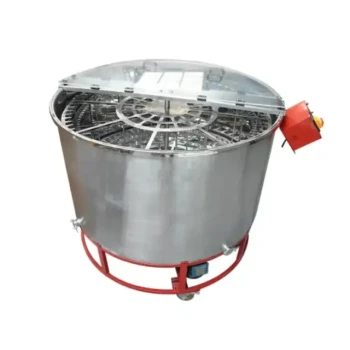
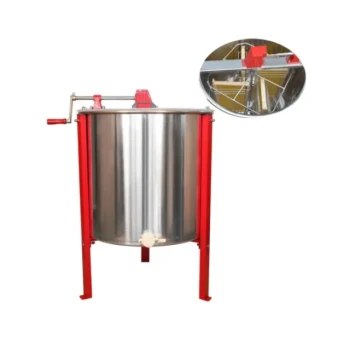
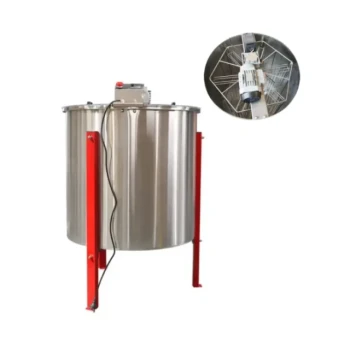
2-frame and 4-frame plastic honey extractors facilitate harvesting by utilizing centrifugal force to spin honey out of the frames without destroying the comb. These compact units act as an essential bridge for small-scale beekeepers, allowing for professional-style extraction and easy bottling via a built-in honey gate without the expense or footprint of industrial machinery.
Core Takeaway These extractors provide the critical advantage of comb preservation to the hobbyist beekeeper. By separating honey mechanically rather than destructively, you allow bees to reuse the wax, significantly increasing future yields and reducing the colony's energy expenditure.
The Mechanics of Extraction
Utilizing Centrifugal Force
The fundamental operating principle of these devices is high-speed rotation. You place uncapped frames into the basket, and the spinning motion generates centrifugal force that pulls the liquid honey out of the comb.
Gravity-Fed Collection
As the honey is flung from the frames, it hits the inner wall of the plastic drum and flows downward. This creates a simple, gravity-fed collection pool at the bottom of the unit.
Simplified Transfer via Honey Gate
A key feature of these plastic models is the integrated honey gate. This valve allows you to dispense the pooled honey directly into buckets or jars, streamlining the workflow and minimizing the mess typically associated with manual crushing methods.
Strategic Advantages for Small Operations
Preserving the Honeycomb Structure
The most significant biological advantage of using a centrifugal extractor is that it keeps the wax comb intact. Destructive methods (like crush-and-strain) force bees to rebuild the wax, which consumes vast amounts of energy and honey resources.
Optimizing the Production Cycle
By returning intact combs to the hive, you allow the colony to focus immediately on refilling them with nectar rather than secreting new wax. This reuse creates a more efficient cycle and increases the annual honey yield per hive.
Right-Sizing for the Apiary
Industrial extractors are designed for speed and volume, often holding 30+ frames. For a beekeeper with only a few hives, a 2 or 4-frame plastic unit offers the necessary efficiency of mechanical extraction without the excessive cost or storage requirements of commercial-grade hardware.
Understanding the Trade-offs
Material Durability
While plastic units are cost-effective and lightweight, they lack the longevity of stainless steel. Over many years of service, plastic components may be more susceptible to wear or stress fractures compared to metal counterparts.
Manual Effort vs. Volume
Most entry-level 2/4 frame extractors rely on manual cranking. While efficient for small batches, the physical effort required creates a bottleneck if your operation expands significantly beyond a hobby scale.
Limited Throughput
With a capacity of only 2 to 4 frames per spin, the process is time-consuming during a heavy harvest. If you have a short flowering period and high volume, the lower capacity may slow down your ability to get frames back into the hives quickly.
Making the Right Choice for Your Goal
If you are evaluating whether a plastic 2/4 frame extractor fits your needs, consider your long-term objectives:
- If your primary focus is cost-effective entry: These units offer the professional benefit of centrifugal extraction at the lowest possible price point.
- If your primary focus is maximizing hive health: The ability to recycle drawn comb back to the bees outweighs the cost of the machine, regardless of material.
- If your primary focus is rapid expansion: You may quickly outgrow a 2 or 4-frame manual unit; consider investing in a larger motorized metal extractor immediately to handle future volume.
For the small-scale beekeeper, these devices represent the single most impactful upgrade from manual harvesting to semi-professional management.
Summary Table:
| Feature | 2-Frame Extractor | 4-Frame Extractor | Key Benefit |
|---|---|---|---|
| Mechanism | Manual/Centrifugal | Manual/Centrifugal | Protects comb structure for reuse |
| Capacity | 2 Frames per spin | 4 Frames per spin | Ideal for 1-5 hive operations |
| Material | Food-grade Plastic | Food-grade Plastic | Lightweight, portable, & affordable |
| Discharge | Built-in Honey Gate | Built-in Honey Gate | Mess-free bottling and transfer |
| Best For | Entry-level hobbyists | Small-scale apiaries | Maximizes honey yield per hive |
Scale Your Apiary Efficiency with HONESTBEE
Whether you are a growing distributor or managing a commercial apiary, HONESTBEE provides the professional-grade tools you need to succeed. From manual plastic extractors for entry-level markets to industrial-strength honey-filling machines and hive-making hardware, our comprehensive wholesale portfolio is designed to optimize every stage of honey production.
Why partner with HONESTBEE?
- Full Spectrum Supply: Access everything from essential beekeeping consumables to specialized machinery.
- Commercial Expertise: We cater specifically to the needs of distributors and large-scale operations.
- Value-Added Products: Enhance your brand with our unique honey-themed cultural merchandise.
Ready to upgrade your equipment or stock your shelves? Contact us today to explore our wholesale offerings!
Related Products
- Plastic Hand Crank 2 Frame Honey Extractor Low Price
- Professional Plastic Honey Dipper for Easy Honey Drizzling
- HONESTBEE 3-Frame Manual Acrylic Honey Extractor
- Acrylic Lid Beekeeping Honey Extractor for Beekeepers
- HONESTBEE 2 Frame Manual Acrylic Honey Extractor Beekeeping Equipment
People Also Ask
- Are honey extractors compatible with different frame sizes? Versatile Extraction Solutions for Your Apiary
- Who is credited with inventing the honey extractor and when? Discover the 1864 Breakthrough by Franz Hrushka
- What is the primary function and benefit of a honey extractor? Boost Efficiency & Preserve Comb Integrity
- How does using a honey extractor compare to alternative harvesting methods like crush-and-strain or comb honey for commercial honey production? Discover the most efficient and scalable method
- What are the key technical and operational differences between radial and tangential honey extractors when selecting extraction equipment for an apiary? Understand the trade-offs to choose wisely.