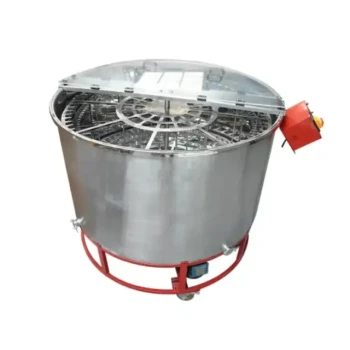
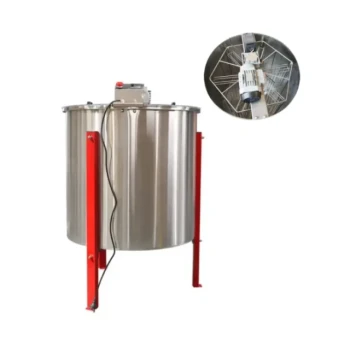
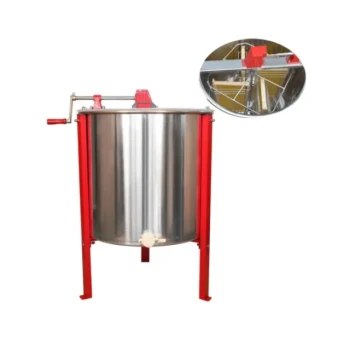
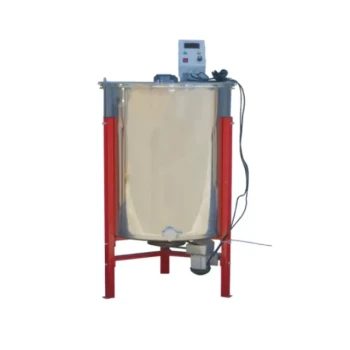
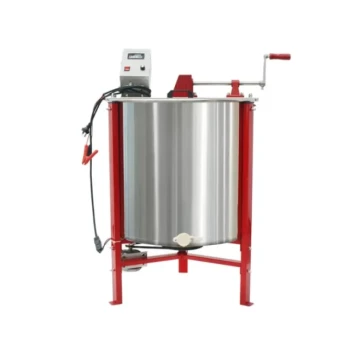
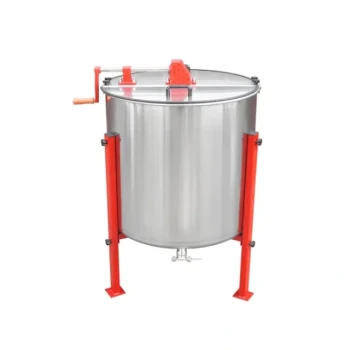
The primary function of a honey extractor is to mechanically separate liquid honey from honeycomb frames without destroying the delicate wax structure. Using centrifugal force, the device spins the frames to release the honey, allowing the intact combs to be returned to the hive for immediate reuse by the colony.
By eliminating the need to crush the comb to retrieve the harvest, extractors transform beekeeping into a sustainable cycle. They allow bees to focus energy on refilling existing combs with nectar rather than building new wax from scratch.
The Mechanics of Extraction
Utilizing Centrifugal Force
The core mechanism of an extractor is a spinning basket or drum that holds the hive frames. A motor or manual crank generates high-speed rotation, creating centrifugal force.
The Separation Process
As the basket spins, this force pulls the liquid honey out of the wax cells. The honey is then projected against the inner walls of the drum, where it flows down to a collection tray or tank for processing.
Preservation of Structure
Unlike crush-and-strain methods, this mechanical spinning leaves the wax comb structure undamaged. This is the defining technical advantage of using an extractor over other harvesting methods.
The Strategic Value of Comb Preservation
Enhancing Hive Efficiency
Bees consume a significant amount of honey and energy to produce wax. By using an extractor, you preserve the bees' previous labor. This allows the colony to immediately begin honey production rather than reconstruction.
Sustainable Harvesting
The primary reference highlights that preserving the comb makes harvesting a sustainable method. It maintains the biological momentum of the hive, ensuring resources are utilized for growth and storage rather than repair.
Maintaining Biological Quality
Modern extractors are designed to perform this task quickly and cleanly. This reduces the time frames are exposed to the open air, helping to minimize secondary contamination and preserve the biological activity of the raw honey.
Operational Considerations and Trade-offs
Manual vs. Electric Input
Extractors require a power source to generate the necessary torque. Manual models rely on a hand crank, which is cost-effective but labor-intensive for larger harvests.
The Role of Motors
Electric models utilize a motor to spin the drum. While this increases the speed and reduces manual labor significantly, it introduces mechanical complexity and requires a power source, which may not be available in all apiary locations.
Equipment Footprint
While efficient, extractors are specialized pieces of inventory. They require specific storage, cleaning, and maintenance protocols that simpler harvesting methods do not, representing a trade-off between efficiency and logistical complexity.
Making the Right Choice for Your Goal
- If your primary focus is maximum yield efficiency: Prioritize an electric extractor to maximize torque and speed, allowing you to process high volumes while reducing physical labor.
- If your primary focus is colony sustainability: Ensure your extraction speed is carefully regulated to prevent comb blowout, ensuring the wax remains perfectly intact for the bees to reuse.
Ultimately, the correct use of a honey extractor shifts your role from a harvester to a steward, protecting the hive's infrastructure while collecting the surplus.
Summary Table:
| Feature | Manual Honey Extractor | Electric Honey Extractor |
|---|---|---|
| Mechanism | Hand-cranked rotation | Motor-driven rotation |
| Core Benefit | Cost-effective & portable | High speed & low labor |
| Comb Safety | High (User-controlled speed) | High (Consistent torque) |
| Ideal For | Hobbyists/Small apiaries | Commercial apiaries/High volume |
| Key Outcome | Intact wax for hive reuse | Maximum yield efficiency |
Elevate Your Beekeeping Operation with HONESTBEE
At HONESTBEE, we specialize in empowering commercial apiaries and distributors with professional-grade beekeeping infrastructure. From precision-engineered honey extractors and honey-filling machines to durable hive-making machinery, we provide the full spectrum of equipment needed to scale your production.
Our value to you:
- Sustainability: Tools designed to preserve wax combs, keeping your colonies productive.
- Efficiency: High-torque machinery that minimizes labor and maximizes harvest speed.
- Comprehensive Support: A complete portfolio of industrial consumables and specialized hardware tailored to your business needs.
Ready to optimize your apiary or expand your distribution catalog? Contact us today to explore our wholesale solutions!
Related Products
- HONESTBEE 72 Frame Industrial Electric Honey Extractor for Beekeeping
- Commercial Electric 12 Frame Honey Extractor Spinner Motorized Honey Extractor
- HONESTBEE 6 Frame Self Reversing Electric Honey Extractor for Beekeeping
- HONESTBEE 3-Frame Manual Acrylic Honey Extractor
- Stainless Steel Manual 8 Frame Radial Honey Extractor Machine for Beehives
People Also Ask
- What is the importance of balancing honeycomb frames within a honey extractor? Ensure Stability and Protect Machinery
- How is honey separated from the frames after they are uncapped? Efficient Extraction Methods for High Yields
- What are the main benefits of using a honey extractor? Maximize Yields and Protect Your Honeycomb
- What are the recommended methods for removing honey from the honeycomb? Top Extraction Techniques for Maximum Efficiency
- How do manual honey extractors compare to electric honey extractors? Choosing the Right Tool for Your Apiary Growth