Automated Filling and Capping Equipment ensures long-term honey stability by establishing a controlled, closed-loop packaging environment. By minimizing the duration of atmospheric exposure, these systems drastically reduce the risk of moisture absorption and oxidation. Precision sealing technology locks in the product's chemical profile, ensuring that the honey’s physicochemical properties remain consistent from the production line to the consumer's pantry.
Core Takeaway: The value of automation extends beyond speed; it provides the airtight integrity necessary to combat honey’s natural hygroscopic tendencies. By eliminating variables like humidity ingress and air bubbles, automated equipment stabilizes critical quality markers—such as pH, conductivity, and antioxidant activity—that are often compromised in manual packaging.
Controlling Atmospheric Variables
Minimizing Air Exposure
Honey is highly sensitive to its environment. Automated equipment reduces the time honey spends in contact with open air during the packaging process. This rapid processing is critical for preventing the absorption of environmental moisture, which can lead to fermentation or spoilage.
Ensuring Airtight Integrity
The capping phase in automated systems applies torque and pressure with mechanical consistency. This precision sealing creates a hermetic barrier that prevents fluctuations in water content. For varieties like Acacia honey, which crystallizes slowly, or Chestnut honey, which naturally resists crystallization, this airtight seal is vital to maintaining their specific textural states.
Stabilizing Physicochemical Indicators
Regulating HMF and Acidity
Exposure to oxygen and heat can alter honey’s chemical composition. Automated filling occurs in a hygienic, enclosed environment that stabilizes key indicators such as Hydroxymethylfurfural (HMF) levels and pH. This protection ensures the honey does not become acidic due to oxidation, helping it meet strict international commercial quality standards.
Preserving Volatile Aromas
The sensory profile of honey relies on volatile compounds that can easily evaporate. By utilizing a closed-system design, automated fillers prevent the loss of these delicate aromas. This guarantees that the unique sensory properties of the varietal are preserved alongside its chemical structure.
Precision Engineering for Chemical Stability
Eliminating Air Bubbles
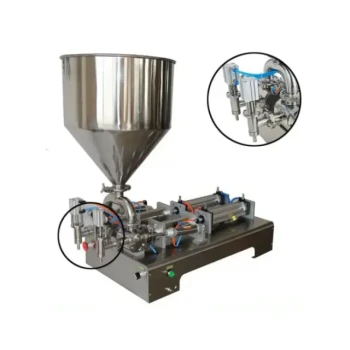
Industrial-grade machines use high-precision piston or peristaltic pumps to control filling pressure and speed. This control minimizes the entrapment of air bubbles within the honey. Since trapped air promotes oxidation, eliminating bubbles helps retain the honey's antioxidant activity and complex mineral components over time.
Preventing Secondary Contamination
Automated systems often operate with sterile dosing mechanisms. This eliminates human contact and drastically lowers the risk of secondary contamination. By maintaining a sterile baseline, the physicochemical stability of the honey is not threatened by introduced microbes or foreign particulates.
Understanding the Operational Trade-offs
Calibration Complexity
While automation offers consistency, it requires precise calibration for different honey viscosities. If the equipment is not correctly adjusted for a specific batch (e.g., a thick raw honey vs. a fluid Acacia), the filling pressure may fluctuate, potentially re-introducing the very air bubbles you are trying to avoid.
Maintenance Dependencies
The reliability of the airtight seal depends entirely on the mechanical health of the capping heads. Unlike manual sealing, where an operator might feel a cross-thread, a machine may continue capping incorrectly if not properly maintained. Regular torque testing and seal verification are essential to prevent "silent failures" in shelf stability.
Making the Right Choice for Your Production Line
To leverage automation effectively, align the equipment capabilities with your specific stability goals:
- If your primary focus is Commercial Compliance: Prioritize systems with enclosed environments and sterile dosing to rigorously control HMF, pH, and electrical conductivity levels.
- If your primary focus is Sensory Preservation: Choose equipment with high-speed sealing and low-turbulence filling to lock in volatile aromas for premium varietals like Acacia or Chestnut.
Automated packaging is not merely a labor-saving device; it is a critical preservation tool that locks in quality at the moment of bottling.
Summary Table:
| Stability Factor | Role of Automated Equipment | Impact on Honey Quality |
|---|---|---|
| Moisture Content | Precise hermetic sealing | Prevents fermentation and maintains viscosity |
| Oxidation | Closed-loop processing | Lowers HMF levels and preserves antioxidant activity |
| Aroma & Flavor | Rapid, low-turbulence filling | Retains volatile compounds and sensory profile |
| Purity | Sterile dosing mechanisms | Eliminates secondary microbial contamination |
| Texture | Air bubble elimination | Prevents crystallization and maintains clarity |
Scale Your Apiary with Industrial Precision
Maintaining the delicate chemical profile of honey requires more than just speed—it requires the specialized engineering found in HONESTBEE solutions. As a dedicated partner to commercial apiaries and distributors, we provide a comprehensive wholesale range of:
- Automated Machinery: High-precision honey-filling and capping machines designed for stability.
- Beekeeping Tools: A full spectrum of professional hardware and equipment.
- Industry Consumables: Essential supplies for large-scale production.
- Cultural Merchandise: Honey-themed products to expand your brand reach.
Whether you are upgrading your production line or stocking your distribution network, HONESTBEE delivers the tools you need to ensure every jar meets international quality standards.
Contact us today to optimize your honey production
References
- Lejla Biber, Almir Toroman. Physicochemical and sensory parameters of black locust and chestnut honey quality. DOI: 10.7251/agren2304179b
This article is also based on technical information from HonestBee Knowledge Base .
Related Products
- Fully Automatic Honey Filling Packaging Machine for Processing Line
- Automatic Honey Filling and Filtering Machine for Beekeeping Bottle Filling
- Precision Automated Packaging Turntable Honey Spoon Filling Sealing Packing Machine
- Automatic Honey Frame Uncapper Machine for Beekeeping
- Precision Durable Efficient HONESTBEE Rotary Honey Filling Machine
People Also Ask
- Why are fully automatic honey filling and packaging lines essential? Boost Your Honey's Market Value and Quality
- What is a fully-automatic honey filler? Streamline Your Production with High-Precision Automation
- How do automated honey filling and packaging machines affect profitability? Boost Margins with HONESTBEE Technology
- How do automated honey filling and packaging machines contribute to the market value of honey products? Maximize Your ROI
- How do industrial-grade automated honey filling and packaging machines mitigate the risk of physical contamination?