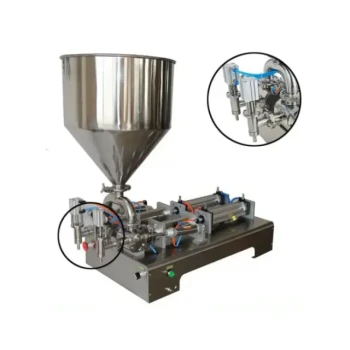
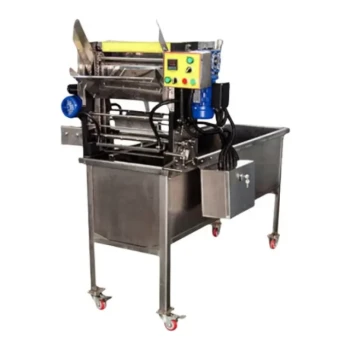
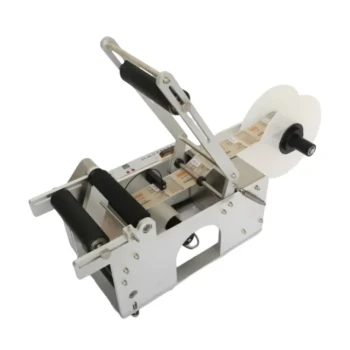
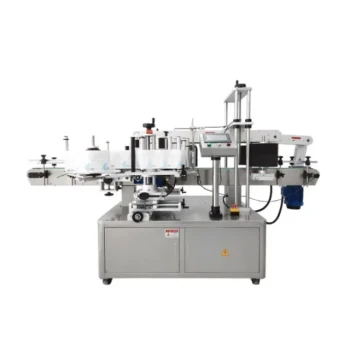
Automated filling and labeling systems serve as the central verification hub in the honey supply chain, transforming packaging from a mere logistical step into a rigorous quality control checkpoint. These systems facilitate traceability by maintaining a sterile processing environment while simultaneously recording specific physical-chemical indicators—such as moisture levels and reducing sugar content—directly onto the product labeling. This dual process creates a standardized, immutable record for every batch, ensuring compliance with strict regulatory frameworks like the Federal Inspection Service (SIF) and enabling full-link visibility from the apiary to the consumer.
By integrating high-precision filling with dynamic data recording, automation ensures that the physical quality of the honey is preserved and accurately reflected in the product's metadata. This effectively links the biological reality of the product to its digital traceability record.
The Mechanics of Quality Assurance
Preserving Chemical Integrity
Traceability is meaningless if the product degrades during packaging. Automated filling systems utilize closed-loop environments to handle honey, which is notoriously viscous and heat-sensitive.
The Role of the Sterile Environment
By isolating the honey from external contaminants and atmospheric moisture, automation preserves the product's natural enzyme activity and flavor profile.
This physical protection ensures that the data eventually printed on the label—such as shelf life and quality grade—remains accurate once the product reaches the shelf.
Precision Measurement
High-precision piston or weighing systems ensure consistent net content across all units. This standardization is a prerequisite for commercial traceability, as it eliminates weight variances that can complicate inventory tracking and logistics.
The Data Layer: Labeling for Traceability
Recording Physical-Chemical Indicators
Unlike manual labeling, automated systems can dynamically print specific batch data based on real-time or pre-loaded quality tests.
Primary data points often recorded include moisture content and reducing sugar levels. Displaying these specific indicators proves that the honey has not been adulterated or diluted, a common issue in the global honey market.
Ensuring Regulatory Compliance
Automated systems are programmed to adhere to rigorous standards, such as the Federal Inspection Service (SIF) or EU Directive 2001/110/EC.
These systems ensure that critical traceability data—including country of origin, production batch numbers, and ingredient descriptions—are applied consistently to every unit. This prevents human error and ensures that the product meets the legal requirements for entry into restricted markets.
Reducing Information Asymmetry
Labels act as the primary communication tool between the producer and the consumer. High-resolution automated labeling ensures clarity regarding organic certifications, nutritional values, and geographic origin.
By making this data transparent and legible, producers build trust and allow consumers to verify the product's journey, reducing the "information gap" that often exists in food logistics.
Understanding the Trade-offs
The Cost of Implementation
While automation ensures consistency, it requires significant upfront capital investment in hardware and software integration. For small-scale apiaries, the ROI depends heavily on production volume and the need to access markets with strict SIF or EU compliance requirements.
Dependency on Upstream Data
Automated labeling systems are highly efficient at printing data, but they operate on the "garbage in, garbage out" principle.
If the initial laboratory testing of the honey batch (for sugar or moisture) is flawed, the machine will efficiently print incorrect data. Automation facilitates traceability, but it does not replace the need for rigorous lab testing prior to the packaging phase.
Making the Right Choice for Your Logistics
When evaluating automated systems for honey packaging, your choice should be dictated by your specific market requirements.
- If your primary focus is Regulatory Compliance (e.g., SIF, EU Directives): Prioritize systems with advanced labeling modules capable of dynamic printing for batch-specific chemical indicators and origin tracking.
- If your primary focus is Product Preservation: Prioritize equipment with closed-loop filling systems that prevent moisture absorption and protect natural enzymes, ensuring the product matches the label claims.
- If your primary focus is Consumer Trust: Focus on high-resolution labeling technology that can clearly display organic certifications and traceability codes to reduce information asymmetry.
True traceability is achieved when the integrity of the physical product is perfectly matched by the accuracy of its data label.
Summary Table:
| Traceability Feature | Technical Mechanism | Impact on Honey Quality |
|---|---|---|
| Chemical Integrity | Closed-loop filling systems | Preserves enzymes and prevents moisture absorption |
| Data Accuracy | Dynamic printing of batch data | Records real-time moisture and sugar content |
| Regulatory Compliance | Automated SIF/EU standard coding | Eliminates human error in origin and batch tracking |
| Standardization | High-precision piston/weighing | Ensures consistent net weight for inventory tracking |
| Consumer Trust | High-resolution labeling | Transparently displays organic certifications and origin |
Elevate Your Apiary's Traceability with HONESTBEE
Transitioning to automated systems is a critical step for commercial apiaries and distributors aiming for international market access. HONESTBEE specializes in bridging the gap between raw production and retail-ready excellence.
We provide a comprehensive wholesale portfolio, including:
- Advanced Machinery: High-precision honey-filling and automated labeling machines designed for SIF/EU compliance.
- Production Hardware: Durable hive-making equipment and professional-grade beekeeping tools.
- Full Spectrum Consumables: Every essential item needed to maintain a high-volume honey supply chain.
Whether you are scaling your distribution or modernizing your packaging line, our team is ready to provide the specialized equipment and cultural merchandise that set your brand apart.
Contact HONESTBEE Today to Modernize Your Honey Production
References
- Letícia Damasia-Gomes, Carlos de Melo e Silva‐Neto. PHYSICAL-CHEMICAL CHARACTERISTICS OF HONEY ON BRAZIL. DOI: 10.18677/enciclopedia_biosfera_2015_110
This article is also based on technical information from HonestBee Knowledge Base .
Related Products
- Fully Automatic Honey Filling Packaging Machine for Processing Line
- Automatic Honey Filling and Filtering Machine for Beekeeping Bottle Filling
- Precision Automated Packaging Turntable Honey Spoon Filling Sealing Packing Machine
- Semi Automatic Small Honey Bottle Filling Machine Honey Filler
- Precision Durable Efficient HONESTBEE Rotary Honey Filling Machine
People Also Ask
- Why are fully automatic honey filling and packaging lines essential? Boost Your Honey's Market Value and Quality
- What is a fully-automatic honey filler? Streamline Your Production with High-Precision Automation
- How do automated honey filling and packaging machines affect profitability? Boost Margins with HONESTBEE Technology
- How do automated honey filling and packaging machines contribute to the market value of honey products? Maximize Your ROI
- How do industrial-grade automated honey filling and packaging machines mitigate the risk of physical contamination?