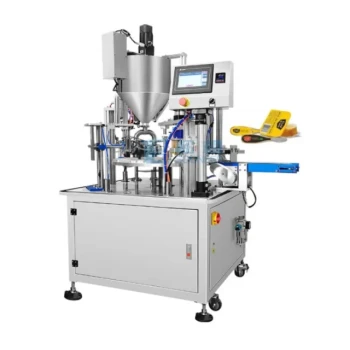
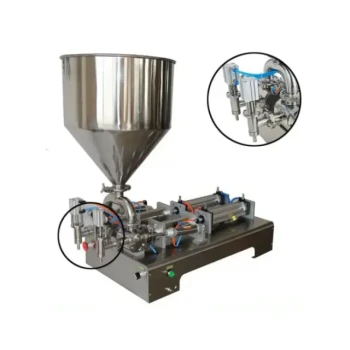
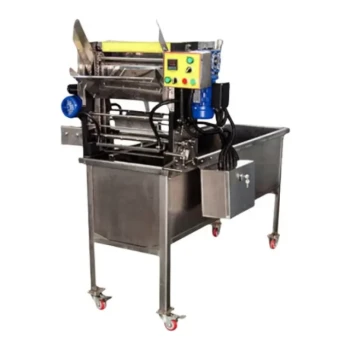
Automated filling machines are the critical infrastructure that bridges the gap between raw apiary production and the retail shelf. By delivering high-precision quantitative filling and rigorous hygiene control, these systems ensure that variable honey batches maintain consistent purity and quality standards. This reliability is the primary factor enabling producers to meet the strict demands of commercial distribution networks and maintain consistency across different seasonal varieties.
Core Takeaway While manual packaging limits a producer to local markets, automated filling machines transform honey into a standardized, scalable commercial product. They guarantee the safety, volume precision, and batch consistency required to secure large-scale retail contracts and international price premiums.
Achieving Commercial Standardization
For a natural product like honey, consistency is the biggest challenge. Automated machines solve this by imposing strict engineering standards on organic variations.
Precision Quantitative Filling
In commercial retail, net weight accuracy is not optional; it is a legal and consumer requirement. Automated machines utilize precise metering controls to ensure every container receives the exact volume required. This eliminates the variability of manual pouring and ensures compliance with commercial circulation standards.
Consistency Across Seasonal Varieties
Honey properties change with the seasons, but consumer expectations do not. Automation ensures that different batches of honey maintain consistent purity and quality standards regardless of when they were harvested. This mechanical consistency is vital for building a reliable brand identity.
Visual Appeal and Brand Identity
Professional packaging is the first indicator of quality to a consumer. By ensuring uniform liquid levels and clean, drip-free bottling, these machines create the polished visual appeal necessary to compete in modern retail markets.
Ensuring Food Safety and Hygiene
The shift from small-scale to large-scale production dramatically increases the risk of contamination. Automation acts as a firewall against these risks.
Rigorous Hygiene Control
Manual handling is the primary source of microbial contamination. Automated fillers feature fully enclosed hygienic designs that minimize or eliminate human contact with the product. This reduction in secondary contamination is essential for meeting international food safety standards.
Extending Shelf Life
Commercial distribution often involves long logistics chains. By combining hygienic filling with specialized sealing packaging processes, these machines help extend the shelf life of the product. This durability is critical for safety during long-distance transportation.
Optimizing Economic Sustainability
Beyond quality, automated filling machines drive the economic viability of large-scale beekeeping projects.
Minimizing Product Loss
Honey is viscous and prone to spillage. Automated machines employ anti-drip designs and accurate level controls to minimize overflow and waste. Over thousands of units, minimizing these micro-losses significantly improves profit margins.
Meeting High-Volume Demands
Manual packaging creates a bottleneck that limits supply capacity. Automation provides the high efficiency needed to meet the capacity demands of large-scale market supply. This speed ensures a smooth, uninterrupted transition of bee products from the production stage to the consumer market.
Understanding the Trade-offs
While automation is powerful, it introduces specific constraints that producers must navigate.
Standardization vs. Flexibility
Automated lines are optimized for "standardized packaging." While this increases speed, it can reduce flexibility. Switching between vastly different bottle shapes or volumes may require retooling or downtime, unlike manual packing which adapts instantly.
Maintenance and Complexity
Moving from manual to automated processing changes the nature of the labor required. The focus shifts from manual labor to technical maintenance of complex industrial machinery to ensure the metering systems remain accurate over time.
Making the Right Choice for Your Goal
How you deploy automation depends on your specific position in the market.
- If your primary focus is Brand Reputation: Prioritize machines with advanced hygiene controls and anti-drip features to ensure pristine visual appeal and safety compliance.
- If your primary focus is Volume and Scale: Prioritize machines with high-speed metering and robust sealing capabilities to maximize throughput and minimize waste.
Ultimately, automated filling is not merely a method of packaging; it is the tool that validates the quality of your honey, allowing it to command a premium in the global marketplace.
Summary Table:
| Feature | Commercial Benefit | Impact on Production |
|---|---|---|
| Quantitative Filling | Legal & Retail Compliance | Eliminates manual weight variability |
| Hygienic Design | Food Safety Standards | Minimizes contamination & human contact |
| Anti-Drip Tech | Cost Reduction | Minimizes product loss and waste |
| High-Speed Output | Scalability | Meets large-scale market supply demands |
| Standardized Sealing | Extended Shelf Life | Facilitates long-distance global logistics |
Elevate Your Honey Brand with HONESTBEE Professional Equipment
Transitioning from manual labor to industrial automation is the key to securing large-scale retail contracts and international price premiums. At HONESTBEE, we specialize in supporting commercial apiaries and distributors with a full spectrum of professional beekeeping tools and machinery.
From high-precision honey-filling machines and hive-making equipment to essential industry consumables and honey-themed merchandise, we provide the infrastructure you need to scale your operations sustainably.
Ready to optimize your production and maximize your profit margins?
Contact HONESTBEE Today for a Wholesale Quote
References
- Jorge Godoy Román. EL ESPÍRITU DEL ZUMBIDO: ENTREVISTA CON ERIKA MAYR. DOI: 10.56255/ma.v1i20.505
This article is also based on technical information from HonestBee Knowledge Base .
Related Products
- Fully Automatic Honey Filling Packaging Machine for Processing Line
- Automatic Honey Filling and Filtering Machine for Beekeeping Bottle Filling
- Precision Durable Efficient HONESTBEE Rotary Honey Filling Machine
- Precision Automated Packaging Turntable Honey Spoon Filling Sealing Packing Machine
- Semi Automatic Small Honey Bottle Filling Machine Honey Filler
People Also Ask
- Why are fully automatic honey filling and packaging lines essential? Boost Your Honey's Market Value and Quality
- What is a fully-automatic honey filler? Streamline Your Production with High-Precision Automation
- How do automated honey filling and packaging machines affect profitability? Boost Margins with HONESTBEE Technology
- How do automated honey filling and packaging machines contribute to the market value of honey products? Maximize Your ROI
- How do industrial-grade automated honey filling and packaging machines mitigate the risk of physical contamination?