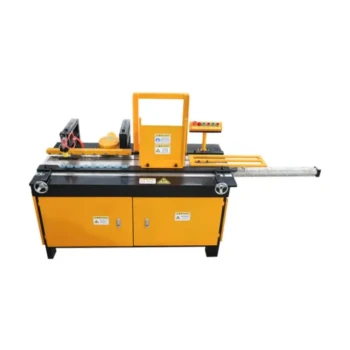
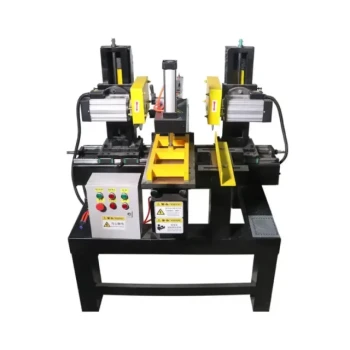
Automated hive-making machines act as the critical logistical catalyst for commercializing wild forest beekeeping by transforming raw materials into standardized infrastructure at an industrial pace. By replacing manual construction with mechanized cutting and assembly, these systems allow operations to rapidly deploy the massive volume of uniform, precise hives required to capture the high nectar yields of resource-rich forest belts.
The core challenge in developing wild forest resources is not a lack of bees or nectar, but a lack of scalable infrastructure. Automated machinery solves this by converting hive production from a slow craft into a rapid manufacturing process, creating the physical foundation necessary for sustainable, industrial-scale expansion.
Establishing Industrial Scalability
Overcoming Hardware Bottlenecks
In resource-rich forest areas, the primary constraint on growth is often the physical shortage of beehives.
Automated machines remove this bottleneck by enabling the rapid production of hives and frames. This autonomous capability ensures that colony expansion is never halted by a lack of housing, allowing beekeepers to increase breeding density to match the available forage.
Ensuring Asset Interchangeability
For a commercial operation, every piece of equipment must fit every other piece.
Standardized hive-making machinery unifies specifications across thousands of units. This precision ensures that frames and boxes are fully interchangeable, which streamlines maintenance, reduces labor costs during inspections, and enables the use of industrial processing equipment for harvesting.
Promoting Ecological Sustainability
Transitioning from Hunting to Farming
Traditional methods of accessing wild forest honey often involve "honey hunting," which can include felling trees or using fire to flush out bees.
Automated manufacturing facilitates the creation of permanent apiary sites using manageable hives. This shifts the paradigm to a structured agricultural model, eliminating the physical destruction of primary forest habitats and preserving the very ecosystem that produces the nectar.
Utilizing Sustainable Materials
Scalability does not have to come at the cost of virgin timber.
Modern machinery allows communities to manufacture structured hives from sustainable or waste materials. This provides a consistent, attractive home for bees while minimizing the environmental footprint of the apiary's physical expansion.
Optimizing Operational Economics
Reducing Production Costs
Manual hive construction is labor-intensive and expensive.
By utilizing mechanized cutting and standardized assembly, automation significantly reduces the hardware investment costs per unit. This improves the overall profit margin of the operation, making it financially viable to deploy thousands of hives into a forest belt.
Standardizing Colony Management
Consistency in hardware leads to consistency in biology.
When hives are structurally stable and identical, they provide a reliable environment that is consistently attractive to bees. This standardization creates a predictable baseline for colony health and behavior, which is essential for establishing large-scale, traceable honey supply bases.
Understanding the Trade-offs
Initial Capital Intensity
While automated machines lower the per-unit cost of hives, they represent a significant upfront capital investment.
Operators must balance the immediate cost of the machinery against the long-term savings in labor and hardware procurement. This approach is most effective when the goal is significant scaling rather than maintaining a small, static apiary.
Maintenance and Infrastructure Requirements
High-throughput machinery requires its own support system.
Unlike manual carpentry, these machines require consistent power sources and technical maintenance skills. Deploying this technology in remote forest regions often requires establishing a centralized workshop with reliable infrastructure, rather than relying on decentralized, low-tech field construction.
Making the Right Choice for Your Goal
To determine if automated hive manufacturing fits your forest development strategy, consider your primary objectives:
- If your primary focus is Rapid Expansion: Invest in automation to eliminate supply bottlenecks and ensure you can deploy colonies as fast as you can split them.
- If your primary focus is Operational Efficiency: Prioritize the standardization benefits to ensure all hive components are interchangeable, reducing long-term labor costs.
- If your primary focus is Conservation: Use the machinery to produce low-cost hives from waste materials, providing a viable economic alternative to destructive honey hunting practices.
Automated hive production is not just about making boxes faster; it is about building the rigorous, standardized framework required to turn a wild resource into a sustainable industry.
Summary Table:
| Key Benefit | Impact on Commercial Beekeeping | Role of Automation |
|---|---|---|
| Industrial Scalability | Overcomes hardware shortages for rapid expansion | High-speed, mechanized hive production |
| Standardization | Ensures 100% asset interchangeability | Precision cutting to uniform specifications |
| Sustainability | Ends honey hunting; protects forest habitats | Enables permanent, structured apiary sites |
| Economic Efficiency | Lowers per-unit cost and labor investment | Reduces manual carpentry and production time |
| Resource Utilization | Facilitates use of sustainable/waste materials | Versatile processing of various raw materials |
Transform Your Apiary into an Industrial Powerhouse
Are you ready to scale your commercial beekeeping operations and capture the untapped potential of forest nectar resources? HONESTBEE is your strategic partner in growth. We provide high-performance automated hive-making and honey-filling machines, alongside a full spectrum of professional beekeeping tools and equipment designed for distributors and large-scale apiaries.
By partnering with us, you gain access to the precision hardware and industry consumables needed to drive efficiency, reduce labor costs, and achieve standardized excellence.
Ready to build your sustainable honey empire?
Contact HONESTBEE Today for Wholesale Solutions
References
- І. Solomakha, V. Solomakha. Field forest strips of the Middle Dnipro Area Forest- Steppe as raw areas for beekeeping. DOI: 10.33730/2077-4893.1.2023.276726
This article is also based on technical information from HonestBee Knowledge Base .
Related Products
- Automatic High-Speed Bee Hive Box Stapling Machine
- High-Efficiency Pneumatic Bee Hive Making Machine for Rapid Box Assembly
- Mini Desktop Bee Hive Frame Forming Making Machine
- Beehive Handle and Frame Rest Cutting Machine: Your Specialized Hive Machine
- Beehive Machine Double End Saw for Precision Hive Component Manufacturing
People Also Ask
- How is the Bee Box machine adjusted for different box sizes? Maximize Your Woodworking Versatility and Precision
- How is the Bee Box machine operated? Optimize Your Commercial Hive Production with Scalable Staffing Solutions
- How was the Bee Box machine designed? Industrial Engineering for High-Volume Beekeeping Production
- What is the production capacity of the Bee Box machine? Boost Output up to 1,000 Boxes Daily
- What are the power requirements and control system for the Bee Box machine? Optimize Your Apiary Equipment Production