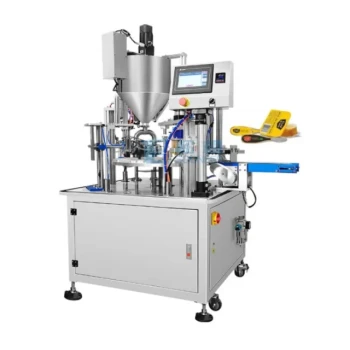
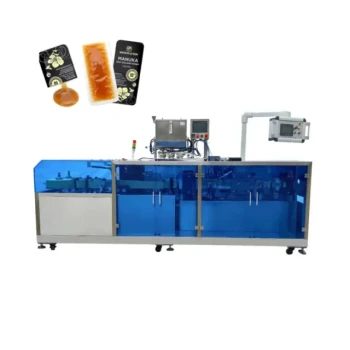
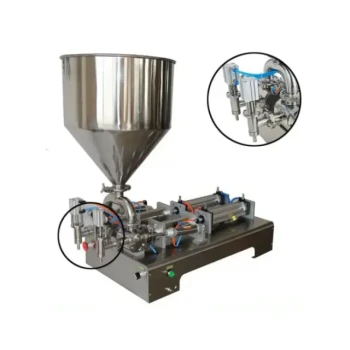
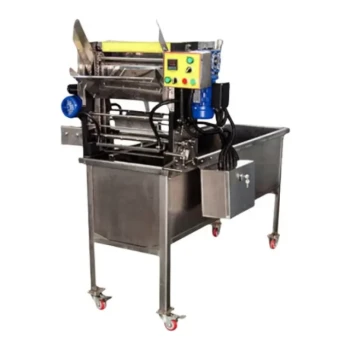
Automated honey filling and packaging machines function as the critical infrastructure that bridges the gap between traditional apiary production and the modern commercial marketplace. They facilitate the modernization of the honey trade by utilizing precise volumetric control and closed-system operations to transform raw, bulk material into standardized, hygienic, and high-value retail products.
By enabling the shift from a raw material supplier to a manufacturer of finished goods, automation allows honey enterprises to capture higher margins, establish regional brands, and meet the rigorous quality standards required for international export.
Elevating Product Integrity and Safety
Precision Volumetric Control
Modern retail demands consistency that manual filling cannot achieve. Automated machines utilize high-precision quantitative filling technology to ensure every unit meets exact volume specifications. This uniformity is essential for consumer trust and regulatory compliance in retail environments.
The Closed-System Advantage
Honey is a food product highly susceptible to environmental factors. Automated systems operate as closed units, significantly reducing human contact with the product. This prevents secondary contamination during the transition from bulk storage to individual packaging.
Preventing Spoilage and Fermentation
Honey is hygroscopic, meaning it absorbs moisture from the air, which can lead to fermentation. High-quality sealing technologies integrated into these machines create hermetic seals that block external moisture and pollutants. This preservation is vital for maintaining shelf life and preventing spoilage during storage.
Strategic Business Transformation
Moving from Bulk to Brand
Traditionally, many producers sell honey in bulk at wholesale prices. Automation empowers these enterprises to become manufacturers of high-value terminal products. By packaging differentiated retail units, producers can establish their own regional brands and capture the added economic value that was previously lost to third-party packagers.
Unlocking International Markets
Exporting honey requires adherence to strict physical and chemical stability standards. Automated packaging ensures the product withstands the rigors of transoceanic transport without leaking, oxidizing, or suffering from impurity contamination. This reliability allows local producers to confidently enter high-end domestic and international markets.
Enhancing Aesthetic Competitiveness
Modern trade is visually driven. Automated machines provide professional, clean sealing and labeling that manual methods struggle to replicate. A polished, standardized appearance directly enhances the purchase appeal of the product, helping it compete against established brands on crowded supermarket shelves.
Operational Efficiency and Economics
Reducing Operational Waste
Manual filling often results in overfilling or spillage, which eats into profit margins. Automated machinery minimizes material loss through precise metering. This ensures that the maximum amount of saleable product is derived from every harvest.
Economic Development for Rural Regions
By processing honey locally rather than selling it raw, producers retain more economic value within the region. This technology supports rural development by converting raw forest resources into high-standard commercial goods, thereby increasing the income potential of local beekeeping communities.
Understanding the Operational Trade-offs
Maintenance and Technical Skill
While automation reduces manual labor costs, it introduces a need for technical oversight. Regular maintenance and calibration are required to ensure the volumetric sensors and sealing mechanisms remain accurate over time.
Managing Viscosity and Crystallization
Honey varies greatly in viscosity and tendency to crystallize. Operators must ensure their machinery is calibrated to handle these physical properties without overheating the honey. Improper handling can damage the sensory characteristics, such as color and enzyme activity, which the machine is designed to protect.
Making the Right Choice for Your Goal
To leverage automation effectively, align your equipment choice with your specific business trajectory:
- If your primary focus is International Export: Prioritize machines with advanced sealing and closed-system capabilities to ensure stability during long-distance transport.
- If your primary focus is Brand Building: Focus on machines that offer aesthetic versatility in labeling and bottle shapes to differentiate your product on the shelf.
- If your primary focus is Operational Efficiency: Look for high-speed systems with precise metering to minimize material loss and reduce labor costs per unit.
True modernization in the honey trade occurs when technology is used not just to work faster, but to guarantee the quality required to build a lasting brand.
Summary Table:
| Feature | Modernization Benefit | Business Impact |
|---|---|---|
| Precision Filling | Ensures exact volume and consistency | Increases consumer trust & regulatory compliance |
| Closed-System Tech | Eliminates secondary contamination | Extends shelf life and maintains honey purity |
| Hermetic Sealing | Blocks moisture and pollutants | Prevents fermentation; vital for export stability |
| Professional Packaging | Enhances aesthetic competitiveness | Enables regional branding and higher profit margins |
| Material Metering | Minimizes overfilling and waste | Maximizes yield and improves operational ROI |
Transform Your Apiary into a High-Value Brand with HONESTBEE
Are you ready to transition from a bulk honey supplier to a leader in the commercial marketplace? HONESTBEE empowers commercial apiaries and distributors with the cutting-edge technology needed to modernize production.
Our comprehensive wholesale offering includes:
- Advanced Honey-Filling & Packaging Machines: Achieve export-quality standards and professional branding.
- Specialized Hive-Making Machinery: Scale your infrastructure with precision.
- Full Spectrum Beekeeping Tools: From essential hardware to honey-themed cultural merchandise.
Let HONESTBEE provide the tools and machinery to capture higher margins and protect your product's integrity. Contact our expert team today to discuss your customized equipment solution!
References
- Alla Chmil. RESOURCE POTENTIAL OF THE BEEKEEPING INDUSTRY OF THE BLACK SEA REGION. DOI: 10.32843/bses.49-20
This article is also based on technical information from HonestBee Knowledge Base .
Related Products
- Fully Automatic Honey Filling Packaging Machine for Processing Line
- Automatic Honey Filling and Filtering Machine for Beekeeping Bottle Filling
- Precision Durable Efficient HONESTBEE Rotary Honey Filling Machine
- Semi Automatic Small Honey Bottle Filling Machine Honey Filler
- Precision Automated Packaging Turntable Honey Spoon Filling Sealing Packing Machine
People Also Ask
- Why are fully automatic honey filling and packaging lines essential? Boost Your Honey's Market Value and Quality
- What is a fully-automatic honey filler? Streamline Your Production with High-Precision Automation
- How do automated honey filling and packaging machines affect profitability? Boost Margins with HONESTBEE Technology
- How do automated honey filling and packaging machines contribute to the market value of honey products? Maximize Your ROI
- How do industrial-grade automated honey filling and packaging machines mitigate the risk of physical contamination?