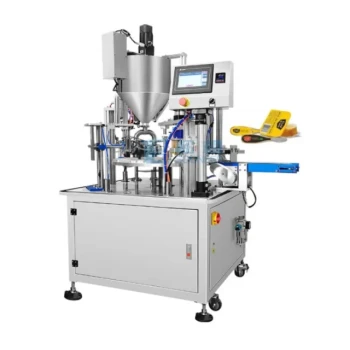
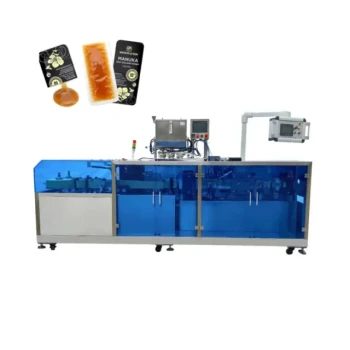
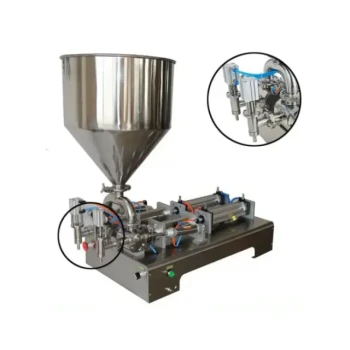
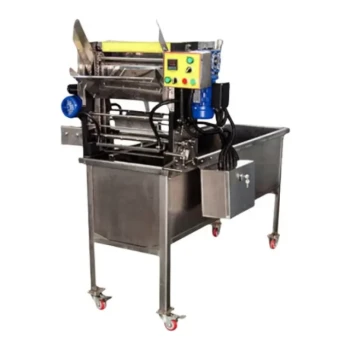
Automated honey-filling machines function as the critical infrastructure for diversifying apiary revenue streams. They achieve product differentiation by offering multi-specification and multi-category packaging capabilities through precise metering control. This adaptability allows apiaries to move beyond selling raw commodities, enabling them to package specific volumes for different market sectors while strictly adhering to food safety regulations.
By decoupling honey production from a "one-size-fits-all" packaging model, these machines allow apiaries to target high-end retail, bulk distribution, and niche markets simultaneously. This flexibility transforms raw yield into a portfolio of branded products, significantly enhancing economic stability.
The Mechanics of Product Differentiation
Multi-Specification Adaptability
The primary driver of differentiation is the machine's ability to handle multi-specification and multi-category packaging. Rather than being locked into a single container size, apiaries can rapidly adjust production to meet the unique needs of various distribution channels. This flexibility allows a producer to package native bee products in small, high-value jars for boutiques while simultaneously filling larger vessels for general retail.
Precision as a Quality Standard
Differentiation is not just about size; it is about perceived value and trust. Automated machines utilize high-precision metering systems to ensure consistent weight and volume. This converts primary honey into standardized products that meet strict market access standards, essential for building a premium brand reputation.
Ensuring Hygiene and Shelf Stability
To differentiate a product as "premium" or "export-grade," hygiene is non-negotiable. Automated filling utilizes sterile packaging technology to eliminate the secondary contamination risks associated with manual handling. This rigorous sealing and hygienic processing ensure the quality stability required for high-value commercial distribution.
Driving Economic Feasibility
Maximizing Yield Value
Economic feasibility relies on extracting the maximum revenue from every ounce of honey produced. Automated machines minimize material loss during the filling process, ensuring that the actual yield is fully monetized. By reducing waste and ensuring precise volumes, apiaries stop "giving away" product through overfilling or spillage.
Operational Cost Reduction
Transitioning to industrial-grade automation significantly lowers labor costs associated with the late-stage processing phase. By reducing the reliance on manual labor for filling and sealing, apiaries can optimize their net profit margins.
Capital for Reinvestment
The efficiency gains provided by automation create a cycle of financial security. The increased net profit allows apiaries to reinvest capital into critical areas, such as purchasing replenishment colonies, improving disease prevention, or upgrading quarantine facilities. This secures the long-term viability of the operation against environmental stressors.
Understanding the Trade-offs
Implementation Complexity
While automation enables "multi-specification" packaging, frequent changeovers between different bottle sizes or honey types can cause production downtime. Operators must balance the desire for extreme product variety against the efficiency losses of re-calibrating the machine for every new SKU.
Maintenance and Technical Reliance
Moving from manual to automated processes introduces a dependency on technical maintenance. To maintain the "precise metering" and "sterile conditions" described, the equipment requires regular calibration and cleaning. Failure to maintain the machinery can lead to the very inconsistencies or contamination issues the technology is meant to solve.
Making the Right Choice for Your Goal
To leverage automation for economic success, align the technology with your specific market strategy:
- If your primary focus is High-End Branding: Prioritize machines with advanced sterile filling and precise metering to guarantee the consistency required for luxury markets.
- If your primary focus is Market Expansion: Select equipment with rapid multi-specification changeover capabilities to service diverse retail and wholesale channels simultaneously.
- If your primary focus is Operational Survival: Focus on high-efficiency, low-loss models to maximize net margins and free up capital for colony health and maintenance.
Ultimately, the economic feasibility of an apiary today depends not just on honey production, but on the ability to package that honey flexibly, efficiently, and hygienically to meet modern market demands.
Summary Table:
| Feature | Impact on Differentiation | Economic Benefit |
|---|---|---|
| Multi-Specification | Enables boutique, retail, and bulk packaging | Accesses diverse, higher-margin market segments |
| Precision Metering | Ensures consistent volume and premium brand trust | Minimizes product waste and eliminates overfilling |
| Sterile Technology | Guarantees export-grade hygiene and stability | Meets strict regulations; reduces spoilage losses |
| High Efficiency | Faster transition between product categories | Lowers labor costs and increases net profit margins |
Scale Your Apiary Operations with HONESTBEE
Are you a commercial apiary or distributor looking to transform your raw yield into a high-value branded portfolio? HONESTBEE provides the end-to-end industrial solutions you need to achieve economic feasibility and market differentiation.
From high-precision honey-filling machines and hive-making equipment to specialized beekeeping tools and essential consumables, we supply everything required to modernize your production. Our machinery is designed to help you minimize waste, ensure food safety compliance, and rapidly adapt to diverse market demands.
Ready to maximize your net margins and streamline your distribution?
Contact HONESTBEE Today to explore our comprehensive wholesale offerings and discover how our expertise can grow your beekeeping business.
References
- Nancy Diana PANTA. OPERATIONALIZING FARM SUSTAINABILITY, PARTICULARITIES FROM THE BEEKEEPING SECTOR. DOI: 10.56043/reveco-2021-0056
This article is also based on technical information from HonestBee Knowledge Base .
Related Products
- Fully Automatic Honey Filling Packaging Machine for Processing Line
- Automatic Honey Filling and Filtering Machine for Beekeeping Bottle Filling
- Precision Durable Efficient HONESTBEE Rotary Honey Filling Machine
- Semi Automatic Small Honey Bottle Filling Machine Honey Filler
- Precision Automated Packaging Turntable Honey Spoon Filling Sealing Packing Machine
People Also Ask
- Why are fully automatic honey filling and packaging lines essential? Boost Your Honey's Market Value and Quality
- What is a fully-automatic honey filler? Streamline Your Production with High-Precision Automation
- How do automated honey filling and packaging machines affect profitability? Boost Margins with HONESTBEE Technology
- How do automated honey filling and packaging machines contribute to the market value of honey products? Maximize Your ROI
- How do industrial-grade automated honey filling and packaging machines mitigate the risk of physical contamination?