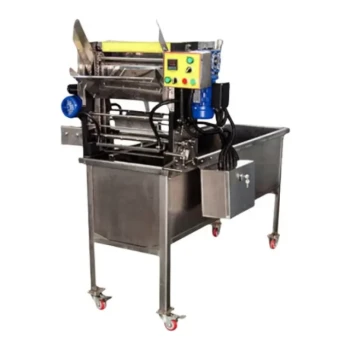
Automated honey-filling machines function as the critical pivot point between local beekeeping and global commerce. These systems empower operations to transition from selling low-margin bulk raw materials to exporting high-premium, branded retail products. By ensuring precise dosage control and sterile encapsulation, automation satisfies the rigorous hygiene and consistency standards required to enter international markets.
The strategic value of automation lies in standardization and risk reduction. By replacing manual handling with sterile, high-precision processing, producers can guarantee the product integrity required to bypass commodity markets and capture the higher profit margins of global retail trade.
Transforming Commodities into Brands
Capturing Added Value
The primary mechanism for scaling an export operation is increasing the added value of the product. Selling raw honey in bulk treats the product as a commodity with low margins.
Automated filling allows regional beekeeping clusters to package their own product. This shifts the revenue model from raw material supply to marketing finished consumer goods, keeping the profits within the local operation.
Ensuring Brand Consistency
Global retailers demand uniformity. Automated equipment employs precision flow control to ensure that every jar meets consistent net weight specifications.
This consistency fosters trade credibility. When a product weighs exactly what the label says, every time, it builds the trust necessary to maintain long-term contracts with international distributors.
Meeting Rigorous International Standards
Eliminating Secondary Contamination
The greatest barrier to export is often hygiene. Manual filling introduces human contact, which significantly increases the risk of secondary contamination.
Automated machines provide a sterile environment for encapsulation. This preserves the natural flavor and quality of the honey while meeting strict food safety regulations necessary for export certifications.
Compliance with Legal Frameworks
Accessing markets like the European Union or Saudi Arabia requires passing technical barriers regarding packaging and safety.
Utilization of this machinery is often a required technical measure to ensure compliance with legal standards for ingredient labeling and traceability. Without this level of automation, obtaining the necessary export certifications is often impossible.
Operational Efficiency and Adaptability
High-Throughput Scalability
Manual filling cannot sustain the volume demands of large-scale global trade. Automated systems provide the high production throughput necessary to fill large orders quickly.
This speed creates a significant competitive advantage. It allows producers to respond rapidly to market fluctuations and large purchase orders without creating bottlenecks.
Supporting the Broader Ecosystem
Honey production is often the economic engine that funds pollination services.
By reducing labor costs and accelerating the time-to-market, efficient filling generates the necessary cash flow to sustain the apiaries. This ensures the long-term viability of the Western honeybees used for pollination.
Packaging Versatility
Modern machines offer adaptability through interchangeable filling molds.
This allows producers to switch between different container specifications and materials quickly. Beekeepers can respond to specific market trends or branding requirements without investing in entirely new machinery for every new package type.
Understanding the Trade-offs
Capital Intensity vs. Volume
The transition to automation requires significant upfront capital. This investment is only justifiable if the operation has secured—or is capable of securing—sufficient export volume.
Small-scale producers without a clear path to international distribution may find the ROI (Return on Investment) too slow compared to manual methods.
Maintenance and Technical Skill
While automation reduces manual labor, it introduces a need for technical maintenance.
Operators must be trained to handle mold changes, calibration, and troubleshooting. A lack of technical expertise on-site can lead to downtime, negating the efficiency gains of the machinery.
Making the Right Choice for Your Goal
To determine if automated filling is the right step for your operation, consider your immediate strategic objectives:
- If your primary focus is Market Access: Prioritize machines with sterile encapsulation and traceability features to pass strict EU or Saudi Arabian certification audits.
- If your primary focus is Brand Building: Focus on equipment with interchangeable molds to offer various packaging sizes and premium container designs.
- If your primary focus is Cost Reduction: Look for high-throughput systems that replace manual labor to maximize cash flow for sustaining pollination operations.
Automation is not just about filling jars faster; it is the technical foundation required to turn a local agricultural product into a globally recognized brand.
Summary Table:
| Feature | Strategic Benefit for Export | Impact on Growth |
|---|---|---|
| Precision Dosage | Ensures net weight compliance for global retailers | Builds trade credibility and trust |
| Sterile Encapsulation | Minimizes contamination risks and meets hygiene audits | Accesses restricted high-value markets |
| High-Throughput | Rapidly fulfills large-scale international orders | Eliminates production bottlenecks |
| Interchangeable Molds | Adapts to diverse regional packaging trends | Increases brand versatility and reach |
Scale Your Apiary to the Global Stage with HONESTBEE
Transitioning from local supply to international export requires more than just honey—it requires precision and industrial-grade reliability. HONESTBEE specializes in empowering commercial apiaries and distributors with the high-performance machinery needed to dominate the global market.
Our comprehensive wholesale offering includes:
- Advanced Honey-Filling Machines: Ensure sterile, high-precision packaging that meets rigorous international standards.
- Hive-Making Machinery: Scale your infrastructure with durable, efficient hardware.
- Beekeeping Equipment & Consumables: From specialized tools to honey-themed cultural merchandise, we provide the full spectrum of industry essentials.
Don't let manual processes limit your growth. Partner with HONESTBEE to enhance your production efficiency and capture higher profit margins worldwide.
Contact Our Export Specialists Today
References
- Lyubomir Lyubenov, Ivaylo Hristakov. Economic-geographical characteristic of beekeeping in the Ruse region. DOI: 10.22616/esrd.2022.56.021
This article is also based on technical information from HonestBee Knowledge Base .
Related Products
- Fully Automatic Honey Filling Packaging Machine for Processing Line
- Automatic Honey Filling and Filtering Machine for Beekeeping Bottle Filling
- Precision Durable Efficient HONESTBEE Rotary Honey Filling Machine
- Precision Automated Packaging Turntable Honey Spoon Filling Sealing Packing Machine
- Semi Automatic Small Honey Bottle Filling Machine Honey Filler
People Also Ask
- Why are fully automatic honey filling and packaging lines essential? Boost Your Honey's Market Value and Quality
- What is a fully-automatic honey filler? Streamline Your Production with High-Precision Automation
- How do automated honey filling and packaging machines affect profitability? Boost Margins with HONESTBEE Technology
- How do automated honey filling and packaging machines contribute to the market value of honey products? Maximize Your ROI
- How do industrial-grade automated honey filling and packaging machines mitigate the risk of physical contamination?