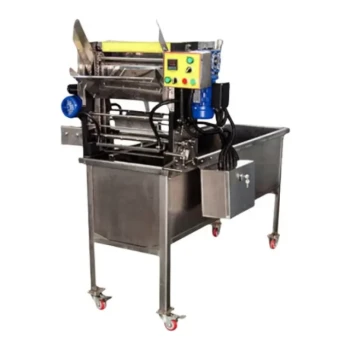
Automated honey-filling machines serve as a critical economic bridge between industrial processing and biological sustainability. By delivering high-precision packaging and minimizing product loss, these systems create the financial redundancy necessary to fund essential apiary management. This economic surplus allows producers to reinvest in biological assets—such as package bees and advanced hives—directly enhancing the operation's resilience against systemic threats like Colony Collapse Disorder (CCD).
The Core Insight: Sustainability in honey production is not just about the bees; it is about the economics of the hive. Automated filling creates the profit margins required to afford "biological insurance"—better pest control, hive replacement, and colony management—thereby securing the long-term survival of the apiary.
Operational Precision and Waste Reduction
High-Precision Metering
Modern automated machines utilize advanced metering pumps to control the exact weight or volume of every container.
This precision eliminates the variability inherent in manual filling. It ensures every gram of product is accounted for, preventing the cumulative financial bleed caused by consistent overfilling.
Minimizing Physical Loss
Manual handling often results in spills, drips, and residue left in transfer vessels.
Automated systems operate using closed-pipe designs that transfer honey directly from bulk storage to retail packaging. This significantly reduces physical waste, ensuring that maximum yield reaches the market.
Protecting Against Contamination
Honey is hygroscopic (absorbs moisture) and susceptible to microbial issues if exposed to open air.
Automated machines perform filling in a closed environment, preventing moisture absorption and secondary contamination. This prevents fermentation and spoilage, ensuring the product does not have to be discarded due to quality failures.
Connecting Economics to Ecological Resilience
Creating Economic Redundancy
The primary contribution of automation to sustainability is the creation of economic redundancy.
By maximizing yield and reducing labor costs, the operation generates a financial buffer. This capital is not merely profit; it is a resource that stabilizes the business against volatile market prices or poor harvest seasons.
Reinvesting in Biological Assets
The savings generated by automation allow producers to reinvest in critical biological management tools.
This includes purchasing "package bees" to replenish lost colonies and investing in advanced hive structures. Without the efficiency of automation, the budget for these essential biological inputs often shrinks, leaving the apiary vulnerable.
Combating Colony Collapse Disorder (CCD)
Long-term sustainability relies on an apiary's systemic resilience against collapse.
Funds freed up by filling efficiency can be directed toward advanced pest control equipment and better husbandry practices. This financial ability to proactively manage hive health is the strongest defense against Colony Collapse Disorder.
Enhancing Market Value and Consistency
Meeting International Standards
To sustain a large-scale operation, producers must access high-value retail and export markets.
Automated filtration and filling ensure the honey meets strict standardized packaging requirements. Consistency in net weight and hygiene allows producers to compete globally, securing the revenue streams needed for long-term growth.
Preserving Active Ingredients
For producers focusing on high-value medicinal honey, automation is essential for product integrity.
Precise control over pressure and temperature during filling preserves active medicinal ingredients derived from specific nectar plants. This maintains the product's premium market position, further securing the operation's financial sustainability.
Understanding the Trade-offs
Capital Intensity vs. Operational Savings
While the long-term benefits are clear, the initial investment in automation is significant.
Small operations may find the upfront capital expenditure strains their liquidity before the efficiency gains result in biological reinvestment. It is a long-term play, not a quick fix.
Maintenance and Technical Skill
Transitioning to automation shifts labor requirements from manual filling to technical maintenance.
Sustainability requires that staff be trained to maintain metering pumps and hygiene systems. Failure to maintain the equipment can lead to downtime that negates the efficiency gains.
Making the Right Choice for Your Goal
To leverage automation for true sustainability, align your equipment choice with your specific operational focus:
- If your primary focus is combating Colony Collapse Disorder: Prioritize machines with the highest efficiency ratings to maximize the funds available for biological reinvestment (bees and pest control).
- If your primary focus is medicinal or premium honey: Select equipment with advanced temperature and pressure controls to preserve active ingredients and justify a higher price point.
- If your primary focus is export market access: Choose machines that offer certified sterile, closed-loop environments to meet rigorous international food safety standards.
Ultimately, an automated filling machine is not just a packaging tool; it is a financial instrument that funds the biological future of your hives.
Summary Table:
| Sustainability Factor | Impact of Automation | Long-Term Benefit |
|---|---|---|
| Waste Reduction | Precision metering & closed-pipe designs | Maximizes yield and prevents product loss |
| Quality Control | Controlled temperature & hygiene | Preserves active ingredients and shelf life |
| Financial Buffer | Reduced labor costs & higher efficiency | Funds hive replacement and CCD prevention |
| Market Access | Standardized packaging compliance | Secures high-value export and retail revenue |
| Biological Health | Reinvestment of operational savings | Allows for better pest control and colony management |
Secure the Future of Your Apiary with HONESTBEE
At HONESTBEE, we understand that sustainability in commercial beekeeping requires a balance of biological health and economic efficiency. Our advanced honey-filling machines and comprehensive range of beekeeping equipment are designed to minimize waste and maximize your profit margins—giving you the resources to fight CCD and reinvest in your colonies.
From specialized hive-making machinery to professional-grade tools and industry consumables, we provide commercial apiaries and distributors with the hardware needed to scale successfully. Contact us today to learn how our wholesale solutions can enhance your production efficiency and protect your biological assets.
References
- Brian Dennis, William P. Kemp. How Hives Collapse: Allee Effects, Ecological Resilience, and the Honey Bee. DOI: 10.1371/journal.pone.0150055
This article is also based on technical information from HonestBee Knowledge Base .
Related Products
- Fully Automatic Honey Filling Packaging Machine for Processing Line
- Automatic Honey Filling and Filtering Machine for Beekeeping Bottle Filling
- Precision Durable Efficient HONESTBEE Rotary Honey Filling Machine
- Precision Automated Packaging Turntable Honey Spoon Filling Sealing Packing Machine
- Semi Automatic Small Honey Bottle Filling Machine Honey Filler
People Also Ask
- Why are fully automatic honey filling and packaging lines essential? Boost Your Honey's Market Value and Quality
- What is a fully-automatic honey filler? Streamline Your Production with High-Precision Automation
- How do automated honey filling and packaging machines affect profitability? Boost Margins with HONESTBEE Technology
- How do automated honey filling and packaging machines contribute to the market value of honey products? Maximize Your ROI
- How do industrial-grade automated honey filling and packaging machines mitigate the risk of physical contamination?