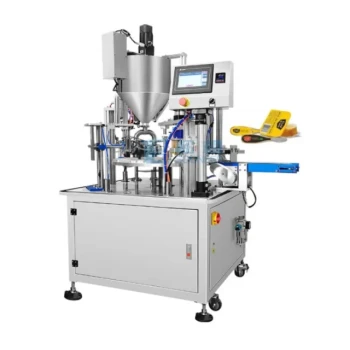
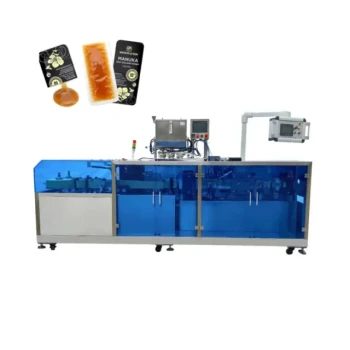
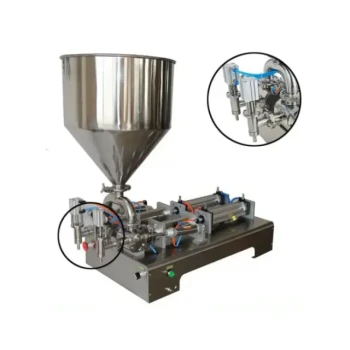
Automated honey filling machines ensure consistency and cleanliness through high-precision quantitative filling technology and advanced flow control systems. By utilizing specific volumetric measurements and anti-drip mechanisms, these systems maintain exact fill levels across various container sizes—from 375ml jars to 1kg pails—while preventing sticky residue at the bottle neck.
The core advantage of automation lies in replacing variable manual handling with precise metering controls and vacuum anti-drip technology. This combination guarantees compliance with label weight specifications and eliminates secondary contamination, ensuring a professional, leak-proof product regardless of container size.
Achieving Precision Across Different Volumes
To handle honey's unique viscosity and varying container sizes, automated machines rely on technologies that remove human error from the equation.
Quantitative Filling Technology
The primary mechanism for consistency is high-precision quantitative filling. Whether filling a small glass jar or a large plastic pail, the machine uses this technology to dispense a specific, pre-set volume.
This ensures that the net weight of the honey remains identical across every batch, strictly complying with label specifications.
Measuring Systems and Loss Reduction
Machines often utilize piston-style or weighing-based filling systems to execute these measurements. This precision significantly reduces raw material loss that typically occurs during manual pouring.
By adhering to exact specifications, producers prevent overfilling (which loses profit) and underfilling (which damages brand trust).
Maintaining Hygiene and Package Integrity
Cleanliness is paramount in honey production, as sticky residue can ruin packaging aesthetics and attract contaminants.
Precise Flow Control
The primary reference highlights that these machines feature precise flow control systems designed specifically to prevent honey from dripping at the bottle neck.
This addresses a primary consumer pain point: the need for a leak-proof, non-sticky container.
Anti-Drip Technology
To support the flow control, many industrial machines employ vacuum anti-drip technology or specialized no-drip nozzles.
Once the filling cycle is complete, the system cuts the flow cleanly and creates a suction effect to retract potential drips, ensuring the sealing area remains pristine for the capping process.
Minimizing Secondary Contamination
By automating the filling and sealing process, the machinery drastically minimizes human contact with the product.
This "no-touch" approach prevents secondary contamination, ensuring the honey maintains the high hygiene standards required for international export and professional certification.
Adapting to Production Versatility
Scaling production requires the ability to switch between container sizes without sacrificing line speed or accuracy.
Mold Interchangeability
Operators can adapt machines to various packaging specifications, such as changing from 375ml to 500ml or 1kg containers, by changing filling molds.
This allows producers to respond quickly to different market demands or SKU requirements while maintaining the same level of volumetric precision.
Understanding the Trade-offs
While automated filling offers significant advantages, it introduces specific operational considerations that must be managed.
Changeover Downtime
While machines are adaptable, switching between significantly different container sizes (e.g., changing molds from jars to pails) is not instantaneous. It requires mechanical adjustments that result in production downtime.
Maintenance and Cleaning
Honey is viscous and can crystallize. The precision components, such as nozzles and pistons, require rigorous cleaning routines to prevent clogging and maintain accuracy, which can add to operational overhead.
Making the Right Choice for Your Goal
Selecting the right automation level depends on your specific production priorities.
- If your primary focus is Hygiene and Shelf Life: Prioritize machines with vacuum anti-drip technology and automatic capping to ensure an airtight, contaminant-free seal.
- If your primary focus is Brand Consistency: Look for high-precision quantitative filling systems (piston or weight-based) that guarantee every jar meets strict label weight specifications.
- If your primary focus is Market Agility: Choose equipment with quick-change filling molds that allow you to switch between container sizes like 375ml and 1kg with minimal downtime.
Automated filling transforms honey packaging from a variable manual task into a standardized process that protects both product purity and brand reputation.
Summary Table:
| Key Feature | Technology Used | Benefit for Producers |
|---|---|---|
| Fill Precision | Quantitative Piston/Weight Systems | Ensures exact weight compliance and reduces product waste. |
| Hygiene Control | Vacuum Anti-Drip Nozzles | Prevents sticky residue at bottle necks and eliminates leaks. |
| Contamination Risk | Automated Sealed Systems | Minimizes human contact to meet high export safety standards. |
| Production Versatility | Interchangeable Molds | Allows quick adaptation to sizes ranging from 375ml to 1kg. |
Scale Your Honey Production with HONESTBEE Precision
Are you looking to eliminate manual errors and enhance your brand's professional image? HONESTBEE provides commercial apiaries and distributors with high-performance honey-filling machines and a comprehensive range of beekeeping equipment designed for efficiency and hygiene.
From industrial-grade machinery to hive-making hardware and essential consumables, we offer a total wholesale solution tailored to your growth. Contact us today to find the perfect machinery for your apiary and discover how our expertise can streamline your honey processing from hive to jar.
References
- P.J. Batt, Aijun Liu. Consumer behaviour towards honey products in Western Australia. DOI: 10.1108/00070701211202449
This article is also based on technical information from HonestBee Knowledge Base .
Related Products
- Precision Durable Efficient HONESTBEE Rotary Honey Filling Machine
- Semi Automatic Small Honey Bottle Filling Machine Honey Filler
- Economy Small Honey Filling Machine Honey Bottle Filler Packaging Machine
- Commercial Rotary Honey Filling Machine for Production
- Fully Automatic Honey Filling Packaging Machine for Processing Line
People Also Ask
- How do honey filling machines work? Achieve Precision & Speed for Your Apiary
- What quality control role does professional honey filling equipment perform? Ensure Consistency and Product Stability
- What is a key feature of the new generation of the honey filling machine? The Advanced Electronic Control Unit
- How do honey filling and processing machines aid native bee product conservation? Boost Value with HONESTBEE Technology
- How do high-precision honey filling machines ensure quality? Optimize Your Commercial Production with HONESTBEE