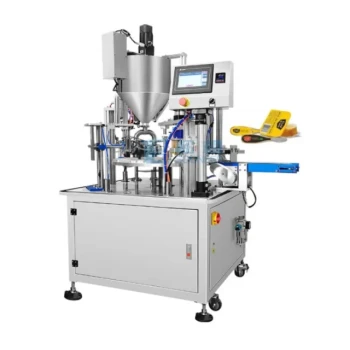
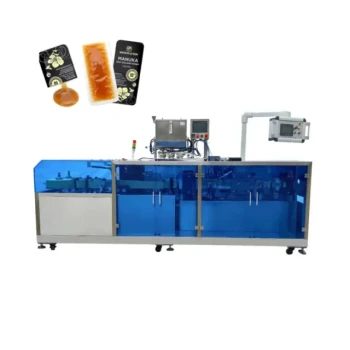
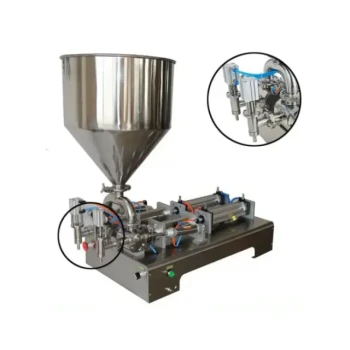
Automated honey-filling machines preserve sensory quality primarily through precise metering control and gentle material transport. By strictly limiting mechanical agitation and preventing overheating, these systems ensure that the delicate aromas, volatile compounds, and flavor nuances of polyfloral honey remain intact during the transition from tank to container.
The core value of modern filling automation is the ability to handle high viscosity without high stress. By stabilizing temperature and pressure, these machines safeguard the enzymes and pollen that define the honey’s biological character.
Protecting Biological and Chemical Integrity
Minimizing Thermal degradation
Heat is the primary enemy of raw honey's sensory profile. Industrial filling machines utilize precision temperature control systems to maintain flow without "cooking" the product.
This specific regulation prevents the elevation of Hydroxymethylfurfural (HMF). Keeping HMF levels low is critical, as high levels indicate that the honey has been overheated, which destroys fresh flavors.
Preserving Enzymatic Activity
Polyfloral honey is valued for its biological properties, including enzymes like invertase, diastase, and glucose oxidase. High-speed pumping can create shear forces that damage these delicate structures.
To verify this protection, advanced machines employ anti-shear internal components. These specialized designs move the honey gently, ensuring that the health-promoting properties remain active in the final product.
Retaining Volatile Aromatics
The distinct "nose" of honey from regions like the Cape Peninsula comes from volatile organic compounds.
Automated fillers often operate within a closed environment. This prevents these fleeting aromatic compounds from evaporating into the open air, locking the specific floral bouquet into the bottle.
Ensuring Consistency in Polyfloral Blends
Uniform Pollen Distribution
For polyfloral honey, the suspension of pollen grains is essential for authenticity and texture. Manual filling can lead to settling, where the first bottles have less pollen than the last.
Automated systems maintain the botanical consistency of the liquid. They ensure pollen grains remain uniformly distributed, guaranteeing that every consumer receives the same botanical quality.
Controlling Viscosity and Hygiene
Honey is naturally stringy and viscous, which poses a risk of mess and contamination. Professional machines use piston or rotor pump systems equipped with anti-drip devices.
These mechanisms provide clean cut-offs after every fill. This eliminates bottle-mouth contamination, reducing the risk of attracting secondary microbes that could spoil the product's flavor over time.
Understanding the Trade-offs
Calibration Complexity
While these machines offer precision, they are not universally "plug-and-play" for all honey types. The viscosity of honey changes drastically with slight temperature shifts.
Operators must skillfully calibrate volumetric or mass-based sensors. Incorrect settings can lead to motor strain or inaccurate fills if the honey density fluctuates during a production run.
Maintenance Rigor
The closed environments that protect aroma also require rigorous cleaning protocols.
Because the system is automated, residue in the lines is not always visible. Strict adherence to cleaning cycles is required to prevent cross-contamination between different floral batches, which would muddy the sensory profile.
Making the Right Choice for Your Production
To select the correct filling technology, you must align the machine's capabilities with your specific quality goals:
- If your primary focus is preserving raw biological value: Prioritize machines with anti-shear components and low-temperature operation to protect enzymes and prevent HMF spikes.
- If your primary focus is consistent botanical texture: Ensure the system is designed to keep pollen grains uniformly suspended throughout the entire batch filling process.
- If your primary focus is hygiene and shelf-life: Look for closed-environment systems with advanced anti-drip mechanisms to eliminate secondary microbial contamination risks.
Ultimately, high-precision automation serves not just to increase speed, but to standardize the delicate handling required to keep honey as nature intended.
Summary Table:
| Feature | Protection Mechanism | Impact on Sensory Quality |
|---|---|---|
| Temperature Control | Prevents HMF elevation | Maintains fresh flavor and prevents thermal degradation |
| Anti-Shear Design | Low-stress material transport | Preserves delicate enzymes (invertase, diastase) |
| Closed Environment | Minimizes evaporation | Retains volatile aromatics and floral bouquets |
| Piston/Rotor Pumps | Uniform pollen distribution | Ensures consistent botanical texture in every bottle |
| Anti-Drip Devices | Clean cut-off technology | Prevents contamination and secondary microbial spoilage |
Elevate Your Honey Production with HONESTBEE Precision Equipment
At HONESTBEE, we specialize in empowering commercial apiaries and distributors with high-performance solutions. Our comprehensive wholesale catalog includes advanced honey-filling machines, hive-making machinery, and professional beekeeping tools designed to preserve the biological integrity of your harvest. Whether you are scaling production or seeking specialized hardware and cultural merchandise, we provide the technical expertise to safeguard your product's value.
Ready to optimize your honey packaging? Contact us today to discover how our automated solutions can enhance your efficiency and quality.
References
- Ferdie du Preez. Fynbos Honey—Pride Of South Africa's Cape Floristic Kingdom. DOI: 10.1080/0005772x.2014.11417578
This article is also based on technical information from HonestBee Knowledge Base .
Related Products
- Fully Automatic Honey Filling Packaging Machine for Processing Line
- Automatic Honey Filling and Filtering Machine for Beekeeping Bottle Filling
- Precision Durable Efficient HONESTBEE Rotary Honey Filling Machine
- Precision Automated Packaging Turntable Honey Spoon Filling Sealing Packing Machine
- Semi Automatic Small Honey Bottle Filling Machine Honey Filler
People Also Ask
- Why are fully automatic honey filling and packaging lines essential? Boost Your Honey's Market Value and Quality
- What is a fully-automatic honey filler? Streamline Your Production with High-Precision Automation
- How do automated honey filling and packaging machines affect profitability? Boost Margins with HONESTBEE Technology
- How do automated honey filling and packaging machines contribute to the market value of honey products? Maximize Your ROI
- How do industrial-grade automated honey filling and packaging machines mitigate the risk of physical contamination?