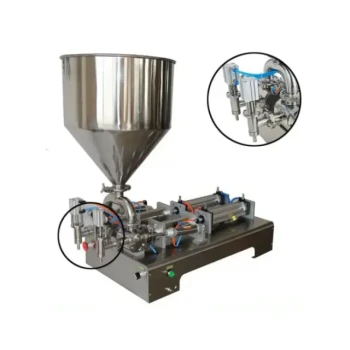
Automated honey packaging systems serve as the technical backbone for transitioning from bulk commodity sales to sophisticated, brand-driven retail strategies. By enabling the production of diverse formats—such as sachets, bottles, and custom shapes—these systems allow manufacturers to tailor products to specific market demands while ensuring the precise application of brand identifiers and anti-counterfeit measures.
Core Takeaway Automation does more than increase speed; it creates the physical infrastructure required for market segmentation and premium branding. By ensuring consistent presentation and enabling flexible product formats, these systems transform raw material into high-value, distinct commercial assets.
Enabling Product Diversification
Adapting to Market Segments
Automated systems provide the flexibility to shift production based on consumer trends. Manufacturers can easily toggle between standard bottles for home use and single-serve sachets for travel or hospitality sectors. This capability allows a single enterprise to cover multiple market segments simultaneously without requiring separate production facilities.
Supporting Varied Formulations
Modern filling technology is designed to handle more than just pure honey. It accommodates the processing of flavored variants, such as lemon or red date honey, as well as distinct products like royal jelly or bee pollen. This allows brands to expand their catalog and appeal to consumers looking for specialized health or flavor profiles.
Customization of Container Shapes
Beyond standard jars, automated lines facilitate the use of custom container shapes. This physical differentiation helps products stand out on crowded retail shelves. Unique packaging shapes often become a signature element of a brand's visual identity, reinforced by the machine's ability to handle irregular dimensions.
Strengthening Brand Identity and Trust
Precision Labeling and Identification
The primary reference highlights that automation ensures the precise application of brand identifiers. High-speed, accurate labeling systems are critical for applying anti-counterfeit labels, which protect brand integrity. This precision ensures that logos and essential brand elements are perfectly aligned, conveying a sense of professionalism and care.
Validating Quality with Certifications
Automated systems provide the consistency required to display critical quality certifications, such as "USDA Organic" or food safety marks. Professional labeling allows producers to clearly communicate these value-adds to the consumer. This transparency serves as the primary communication channel, significantly boosting buyer confidence in the product's compliance and origin.
Consistency as a Trust Signal
Standardized filling machines ensure precise volumetric measurement, resulting in uniform product presentation. When every container on the shelf is filled to the exact same level (e.g., a standardized 16-ounce jar), it builds subconscious consumer trust. Inconsistent fill levels often signal low quality or "backyard" production, whereas uniformity signals a professional, industrial-grade operation.
Understanding the Trade-offs
The Cost of Flexibility
While automation enables diversification, frequent changes between product lines introduce downtime. Switching from filling 16-ounce jars of pure honey to 10-gram sachets of lemon honey requires re-tooling and rigorous cleaning to prevent cross-contamination. Operational efficiency drops if changeovers are too frequent.
Balancing Volume and Variety
High-speed automated lines generally favor long production runs of a single SKU. Introducing too many minor product variations can negate the efficiency gains of automation. Producers must find the "sweet spot" where the volume of a diversified product justifies the machine setup time.
Making the Right Choice for Your Goal
To maximize the value of automated packaging, align your equipment choice with your specific market strategy:
- If your primary focus is Market Penetration: Prioritize systems with rapid changeover capabilities to test multiple package formats (sachets vs. bottles) and identify what consumers prefer.
- If your primary focus is Brand Premiumization: Invest in high-precision labeling and filling units that guarantee a flawless, uniform shelf appearance to support higher price points.
- If your primary focus is Product Integrity: Ensure your system integrates traceability features and anti-counterfeit labeling to protect your brand against adulterated competition.
True brand authority is built when technical precision meets market versatility.
Summary Table:
| Feature | Support for Diversification | Brand Identity Impact |
|---|---|---|
| Multi-Format Filling | Easily switch between bottles, sachets, and custom jars. | Enables premium positioning through unique shapes. |
| Precision Labeling | Supports various label sizes and anti-counterfeit tags. | Ensures professional appearance and builds buyer trust. |
| Volumetric Control | Handles pure honey, flavored variants, and royal jelly. | Consistency in fill levels signals industrial-grade quality. |
| Scalable Automation | Efficiently manages both small batches and mass production. | Facilitates the display of organic and safety certifications. |
Elevate Your Honey Production with HONESTBEE
Are you a commercial apiary or a distributor looking to scale your brand? HONESTBEE provides the technical infrastructure you need to transition from bulk sales to a high-value retail powerhouse.
We offer a comprehensive wholesale portfolio, including:
- Advanced Machinery: Precision honey-filling machines and automated hive-making equipment.
- Beekeeping Hardware: A full spectrum of professional tools and essential industry consumables.
- Cultural Merchandise: Unique honey-themed products to expand your brand's reach.
Our solutions are designed to ensure your product stands out on the shelf with unmatched consistency and professional presentation. Contact us today to streamline your operation and grow your brand!
References
- Muhamad Fauzi, Awang Saputra. Indonesia's Honey Competition Strategy: A New Institutional Economics Analysis. DOI: 10.35308/jbkan.v6i1.4775
This article is also based on technical information from HonestBee Knowledge Base .
Related Products
- Fully Automatic Honey Filling Packaging Machine for Processing Line
- Automatic Honey Filling and Filtering Machine for Beekeeping Bottle Filling
- Semi Automatic Small Honey Bottle Filling Machine Honey Filler
- Precision Automated Packaging Turntable Honey Spoon Filling Sealing Packing Machine
- Precision Durable Efficient HONESTBEE Rotary Honey Filling Machine
People Also Ask
- Why are fully automatic honey filling and packaging lines essential? Boost Your Honey's Market Value and Quality
- What is a fully-automatic honey filler? Streamline Your Production with High-Precision Automation
- How do automated honey filling and packaging machines affect profitability? Boost Margins with HONESTBEE Technology
- How do automated honey filling and packaging machines contribute to the market value of honey products? Maximize Your ROI
- How do industrial-grade automated honey filling and packaging machines mitigate the risk of physical contamination?