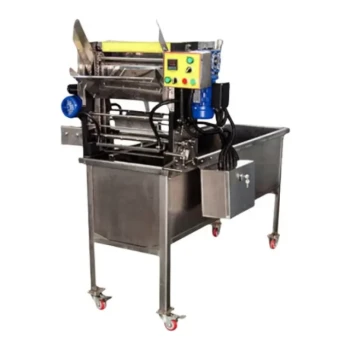
Automated packaging and labeling systems serve as the critical bridge between raw agricultural output and high-value commercial brands. By delivering a standardized, professional appearance and ensuring the precise application of product data—such as geographic origin and botanical source—these machines directly address common marketing deficiencies. They allow producers to differentiate their honey from low-cost imports and establish the consumer trust necessary to command a premium price.
Core Insight Automation is not merely a tool for speed; it is a mechanism for value creation. By guaranteeing a professional presentation, enforcing hygiene standards, and enabling precise traceability, automated systems transform honey from a simple commodity into a trustworthy, export-grade product.
Elevating Brand Perception and Trust
Professional Standardization
Manual packaging often results in inconsistencies that can signal "low quality" to consumers. Automated machines ensure every jar features a standardized, professional appearance. This uniformity is essential for competing with large-scale commercial brands and overcoming the perception of amateur production.
The Information Advantage
Modern consumers demand transparency regarding what they eat. Automated labeling systems precisely apply critical data, including botanical sources, bee species, and geographic indications. This transparency directly targets health-conscious demographics, building the credibility required to justify higher price points.
Differentiation from Imports
The honey market is flooded with low-cost, often generic imports. By utilizing automation to create distinct, high-quality packaging with clear origin details, producers can separate their offering from bulk commodities. This differentiation is the primary driver for establishing a brand premium.
Ensuring Product Integrity and Quality
Precision Dosing and Waste Reduction
Honey is high-viscosity and difficult to handle manually without waste. Automated filling machines utilize precise volumetric controls and anti-drip mechanisms. This ensures consistent product weight in every package and prevents the financial loss associated with product spillage.
Hygiene and Contamination Control
Manual handling introduces risks of bacterial contamination. Industrial-grade machines minimize human contact through enclosed operations. This sterile environment is critical for maintaining the sensory quality of the honey and meeting strict food safety regulations.
Moisture Control and Shelf Life
Exposure to atmospheric moisture is a major threat to honey, leading to fermentation and spoilage. Automated filling and sealing processes are rapid and enclosed, preventing moisture ingress. This preservation of physicochemical stability significantly extends the product's shelf life.
Facilitating Market Expansion
Scalability for Export
To enter wholesale trade or international markets, producers must meet volume demands that manual labor cannot sustain. Mechanized filling allows for rapid scaling of production. This capacity is a prerequisite for engaging in large-scale export agreements.
Regulatory Compliance and Traceability
Export markets enforce rigorous standards regarding traceability and packaging safety. Automated systems facilitate compliance by integrating production dates, batch numbers, and anti-counterfeiting measures directly onto the package. This adherence to international standards unlocks access to modern retail channels globally.
Understanding the Trade-offs
Capital Investment vs. Volume
While automation provides a competitive edge, it requires significant upfront capital. For very small, local hobbyists, the cost of industrial-grade equipment may outweigh the efficiency gains. These systems are best leveraged when production volume is high enough to amortize the investment.
Flexibility Limitations
Automated lines are often optimized for specific bottle shapes and label sizes. shifting between drastically different packaging formats can require downtime for retooling. Producers must balance the need for standardization with the desire for diverse packaging options.
Making the Right Choice for Your Goal
To derive the maximum competitive advantage, align your automation strategy with your specific business objective:
- If your primary focus is Brand Premium: Prioritize labeling systems that support high-quality design and detailed origin traceability to differentiate from generic competitors.
- If your primary focus is Export Compliance: Invest in filling and sealing machinery that guarantees sterility and meets international safety standards to prevent logistical rejections.
- If your primary focus is Operational Efficiency: Focus on high-speed filling machines with anti-drip technology to maximize throughput and minimize raw material waste.
Automation turns the complex variability of nature into a consistent, trusted product that consumers value.
Summary Table:
| Competitive Advantage | Key Feature | Primary Benefit |
|---|---|---|
| Brand Perception | Professional Labeling | Overcomes 'amateur' image & builds consumer trust |
| Product Integrity | Precision Dosing | Reduces honey waste and prevents contamination |
| Shelf Life | Rapid Sealing | Minimizes moisture ingress to prevent fermentation |
| Market Access | Batch Traceability | Meets international standards for global export |
| Operational Scale | High-Speed Filling | Enables high-volume production for wholesale trade |
Elevate Your Beekeeping Business with HONESTBEE
Are you ready to transform your raw honey into a premium, export-grade brand? HONESTBEE specializes in empowering commercial apiaries and distributors with the tools needed to dominate the market.
From precision honey-filling machines that eliminate waste to sophisticated labeling systems that ensure regulatory compliance, we provide the full spectrum of beekeeping hardware and consumables. Whether you are looking for specialized hive-making machinery or honey-themed cultural merchandise to diversify your portfolio, our wholesale solutions are designed for your growth.
Take the next step in your production journey—contact us today to discover how our equipment can maximize your efficiency and brand value!
References
- Sobhy M. Ismaiel, Abdu Zulail. Factors That Affect Consumption Patterns and Market Demands for Honey in the Kingdom of Saudi Arabia. DOI: 10.4236/fns.2014.517186
This article is also based on technical information from HonestBee Knowledge Base .
Related Products
- Precision Automated Packaging Turntable Honey Spoon Filling Sealing Packing Machine
- Automatic Single-Dose Snap & Squeeze Honey Sachets Packing Machine
- Fully Automatic Honey Filling Packaging Machine for Processing Line
- Honey Stick Filler Vertical Paste Sachet Packing Machine for Honey Sachets
- Economy Small Honey Filling Machine Honey Bottle Filler Packaging Machine
People Also Ask
- Why is the use of professional filling and sealing packaging machinery necessary for the production of high-value honey?
- What role do automated filling and packaging machines play in the honey supply chain? Scale Your Retail Distribution
- What are the benefits of automated honey filling and packaging? Scale Your Apiary with Industrial Precision
- What role do professional automated filling and packaging machines play in honey processing? Boost Efficiency & Value
- How do automated honey filling and packaging machines contribute to the market value of honey products? Maximize Your ROI