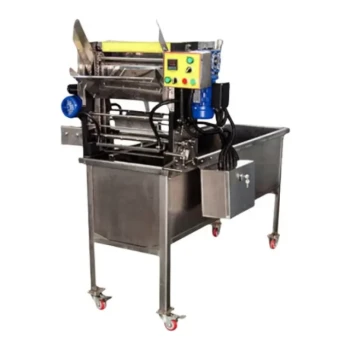
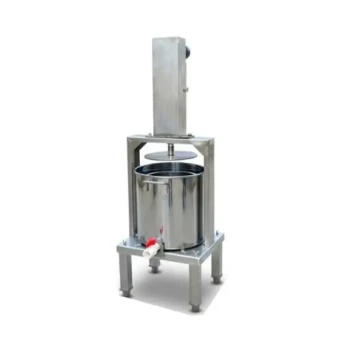
Automated labeling and sealing equipment serves as the critical infrastructure for ensuring honey products meet the rigorous demands of international trade. By minimizing human contact and standardizing the packaging process, these systems provide a sterile environment and high-efficiency output necessary for handling large export volumes while ensuring clear identification for global traceability.
Core Takeaway Automation in honey packaging is not merely about speed; it is a technical guarantee of product integrity and legal compliance. It ensures honey remains hermetically sealed against moisture and fermentation while strictly adhering to international labeling and traceability regulations.
Ensuring Regulatory Compliance and Market Trust
Meeting International Traceability Standards
For export markets, clear identification is not optional; it is a regulatory requirement. Automated labeling systems ensure that essential data—such as origin, traceability codes, and organic certifications—are applied accurately to every unit. This precision is vital for passing customs inspections and complying with international food safety laws.
Enhancing Consumer Confidence
High-resolution automated labeling provides a professional visual appearance that manual methods cannot match. By clearly communicating nutritional facts and quality certifications, you build immediate trust with the consumer. This aesthetic consistency significantly enhances market competitiveness and perceived brand value.
Preserving Product Quality and Safety
Creating a Sterile Barrier
The primary threat to honey quality during export is contamination and fermentation. Automated sealing processes eliminate the need for manual handling, thereby maintaining a sterile environment. This isolation is critical for meeting strict microbiological indicators and ensuring food safety.
Preventing Moisture Absorption
Honey is hygroscopic, meaning it naturally absorbs moisture from the air, which can lead to spoilage. Automatic sealing equipment provides a superior airtight barrier compared to manual methods. This technology effectively isolates the honey from the external environment, preventing oxidation and moisture intake to preserve flavor and stability during long-distance transport.
Operational Efficiency and Scalability
Handling High-Volume Demands
To compete in the global market, producers must meet large-scale distribution requirements. Automated equipment significantly increases production rates and output. This allows distributors to achieve standardized, large-scale production that manual labor forces cannot sustain.
Precision and Cost Reduction
Automated systems utilize high-precision mechanics to ensure consistent application and dosage (when integrated with filling systems). This reduces material waste and the costs associated with manual labor. Furthermore, the flexibility of modern machines allows for quick adjustments to handle various packaging sizes, such as shifting from 1L to 250ml containers to meet budget-conscious consumer trends.
Understanding the Trade-offs
Capital Investment and Maintenance
While the operational benefits are clear, automated systems require a significant upfront capital investment compared to manual labor. Additionally, they introduce a need for specialized technical maintenance. To avoid downtime, operators must be trained to manage the machinery, and a schedule for regular calibration must be established.
Making the Right Choice for Your Goal
To maximize your return on investment, align your equipment choice with your specific export objectives:
- If your primary focus is Regulatory Compliance: Prioritize equipment with high-resolution labeling capabilities and integrated verification systems to ensure every unit meets international traceability codes.
- If your primary focus is Product Preservation: Focus on machines featuring advanced airtight sealing technology to prevent moisture absorption and fermentation during ocean freight.
- If your primary focus is Market Flexibility: Select equipment that supports multiple specifications and bottle sizes to quickly adapt to changing consumer demands for smaller or budget-friendly packaging.
Investing in automation is ultimately a strategic move to secure the biological safety of your product and the longevity of your brand in the global marketplace.
Summary Table:
| Key Benefit | Impact on Honey Export & Trade |
|---|---|
| Regulatory Compliance | Ensures accurate traceability codes, organic certs, and origins to pass global customs. |
| Product Integrity | Provides airtight, hermetic seals to prevent moisture absorption, oxidation, and fermentation. |
| Safety & Hygiene | Minimizes human contact to maintain a sterile environment and meet microbiological standards. |
| Market Scalability | Supports high-volume output and flexible packaging sizes to meet global distributor demands. |
| Brand Professionalism | Delivers consistent, high-resolution labeling that builds consumer trust and brand value. |
Elevate Your Honey Export Business with HONESTBEE
Transitioning to automated packaging is a strategic move to secure your brand's future in the global marketplace. HONESTBEE specializes in empowering commercial apiaries and distributors with high-performance honey-filling, sealing, and labeling machinery designed for international standards.
Beyond specialized hardware, we provide a comprehensive wholesale range of beekeeping tools, equipment, and essential industry consumables to streamline your entire supply chain. Whether you are scaling production or entering new markets, our expertise ensures your honey remains pure, compliant, and competitive.
Ready to optimize your production line? Contact our expert team today to discuss how our tailored solutions can grow your business.
References
- Georgi Aleksiev. HONEY TRADE IN BULGARIA AND ITS IMPACT ON THE APPICULTURAL SECTOR. DOI: 10.15547/tjs.2019.s.01.073
This article is also based on technical information from HonestBee Knowledge Base .
Related Products
- Precision Automated Packaging Turntable Honey Spoon Filling Sealing Packing Machine
- Fully Automatic Honey Filling Packaging Machine for Processing Line
- Automatic Honey Frame Uncapper Machine for Beekeeping
- Automatic Single-Dose Snap & Squeeze Honey Sachets Packing Machine
- Honey Stick Filler Vertical Paste Sachet Packing Machine for Honey Sachets
People Also Ask
- Why is the use of professional filling and sealing packaging machinery necessary for the production of high-value honey?
- What role do automated filling and packaging machines play in the honey supply chain? Scale Your Retail Distribution
- What are the benefits of automated honey filling and packaging? Scale Your Apiary with Industrial Precision
- What role do professional automated filling and packaging machines play in honey processing? Boost Efficiency & Value
- How do automated honey filling and packaging machines contribute to the market value of honey products? Maximize Your ROI