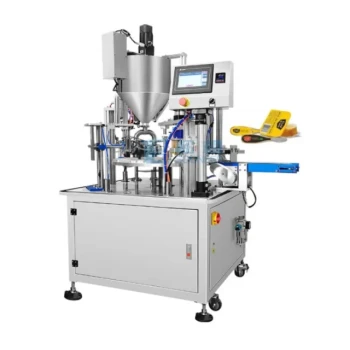
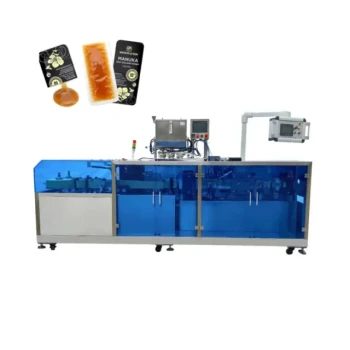
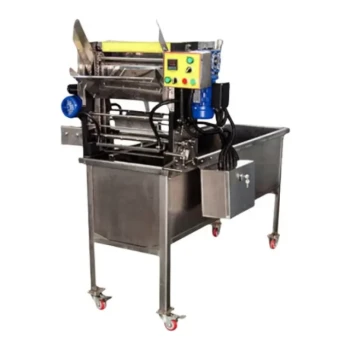
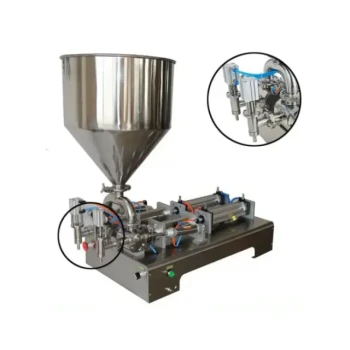
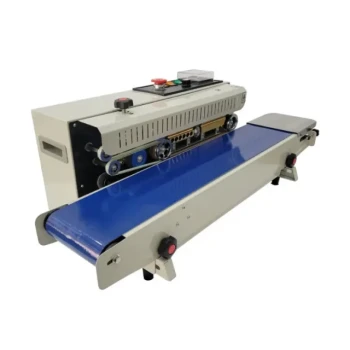
Automatic honey filling and sealing machines serve as the critical infrastructure for transforming a raw material supply business into a branded consumer goods operation. These systems provide precise quantitative filling and hygienic sealing, significantly reducing the risk of secondary contamination while ensuring professional packaging aesthetics. By standardizing the final product, they allow beekeeping enterprises to move away from low-margin bulk sales and compete directly in the high-value retail market.
The primary competitive advantage lies in value addition: automation enables the strategic shift from selling bulk raw honey to offering high-margin, shelf-ready branded products that meet strict retail and safety standards.
Transitioning from Bulk Commodity to Retail Brand
The most significant impact of automation is the ability to change your business model. Beekeeping enterprises often struggle with the low profit margins associated with selling raw honey in bulk.
Capturing Market Added Value
Selling bulk honey transfers the potential profit to the bottler or middleman. By implementing automatic filling, you retain control over the final product. This allows you to capture the "added value" of a consumer-facing brand, leading to significantly improved profit margins.
Professional Product Presentation
Consumers equate packaging quality with product quality. Manual filling often results in sticky bottles, uneven fill lines, or imperfect seals. Automatic machines ensure a clean, professional appearance that builds consumer trust and justifies a premium price point.
Expanding Market Access
Large retail chains and distributors require supply stability and standardized packaging. Automation allows you to meet the volume and consistency requirements necessary to enter these lucrative commercial channels, shifting your reach beyond local markets.
Operational Efficiency and Cost Control
Beyond revenue growth, automation enhances competitiveness by tightening operational costs. In an environment of rising labor expenses, efficiency is a survival mechanism.
Reducing Raw Material Loss
Honey is viscous and valuable; manual filling inevitably leads to drips, spills, and overfilling. Automated machines utilize high-precision piston or weighing systems to ensure the net content matches the label exactly. This eliminates "giveaway" product and reduces waste.
Enhancing Labor Productivity
Manual bottling is labor-intensive and slow. Automated lines integrate metering, filling, and rapid capping into a single workflow. This drastically reduces the unit packaging cost and frees up your workforce for other critical tasks, such as hive management or marketing.
Ensuring Quality and Regulatory Compliance
Competitiveness is also defined by the ability to adhere to strict food safety standards. Automation removes human error and variability from the hygiene equation.
Minimizing Secondary Contamination
The greatest risk in honey packaging is contamination during the transfer from tank to jar. Automatic machines often feature closed systems and no-drip nozzles. This creates a sanitary barrier that protects the honey from external contaminants, ensuring a longer shelf life and safer product.
Meeting Legal Weight Standards
Regulatory bodies enforce strict compliance regarding net weight labeling. Automated equipment guarantees weight consistency across every unit. This reliability protects your enterprise from legal liabilities and ensures you meet the rigorous physicochemical indicators required for international trade.
Understanding the Trade-offs
While automation offers clear advantages, it introduces new variables that must be managed to ensure a return on investment.
Capital Expenditure vs. Volume
The upfront cost of high-quality filling and sealing machinery is significant. This investment only increases competitiveness if your production volume is high enough to lower the cost-per-unit below that of manual labor.
Maintenance and Technical Requirements
Transitioning to automation requires a shift in skills. You must account for the regular maintenance of mechanical components, such as piston seals and filling nozzles. Neglecting maintenance can lead to downtime, effectively neutralizing the efficiency gains.
Making the Right Choice for Your Goal
To leverage automation for maximum competitiveness, align your equipment choice with your specific business objective.
- If your primary focus is Brand Building: Prioritize machines with high-precision no-drip nozzles and consistent capping to ensure a flawless, premium shelf appearance.
- If your primary focus is Profit Margins: Focus on high-speed equipment with strict dosage controls to minimize raw material loss and reduce labor overhead per unit.
- If your primary focus is Export/Retail Compliance: Choose equipment that offers certified sterile sealing and verifiable weight consistency to meet international food safety standards.
Ultimately, automation is not just about processing speed; it is the strategic bridge that allows a beekeeper to evolve into a competitive, modern food manufacturer.
Summary Table:
| Competitive Factor | Manual Bottling Impact | Automated Machine Impact | Business Benefit |
|---|---|---|---|
| Profit Margin | Low (Bulk/Commodity sales) | High (Branded retail products) | Capture more added value |
| Filling Accuracy | High waste/overfilling risk | Precision piston/weight control | Reduced raw material loss |
| Hygiene & Safety | Higher contamination risk | Closed system, no-drip nozzles | Regulatory compliance & trust |
| Labor Efficiency | Labor intensive & slow | High-speed integrated workflow | Lower unit production costs |
| Market Reach | Limited local sales | Large-scale retail & export ready | Expanded distribution channels |
Transform Your Beekeeping Business with HONESTBEE Automation
Are you ready to transition from a bulk honey supplier to a high-margin retail brand? HONESTBEE specializes in empowering commercial apiaries and distributors with professional-grade machinery designed for growth. Our comprehensive wholesale portfolio includes:
- Precision Machinery: High-efficiency honey-filling and sealing machines that guarantee weight consistency and professional aesthetics.
- Total Solutions: Everything from hive-making equipment to specialized honey-themed cultural merchandise.
- Industry Consumables: A full spectrum of essential beekeeping tools and equipment to maintain peak operation.
Maximize your profit margins and secure your place in the global market. Contact HONESTBEE today to discover how our tailored equipment solutions can scale your production and enhance your brand's competitiveness.
References
- Dinkar Morvadia. Entrepreneurial Constraints Faced by Beekeeper Entrepreneurs in Junagadh Districts of Gujarat. DOI: 10.56360/dijcm/3.ii.2023.2302
This article is also based on technical information from HonestBee Knowledge Base .
Related Products
- Precision Automated Packaging Turntable Honey Spoon Filling Sealing Packing Machine
- Automatic Honey Filling and Filtering Machine for Beekeeping Bottle Filling
- Fully Automatic Honey Filling Packaging Machine for Processing Line
- Precision Durable Efficient HONESTBEE Rotary Honey Filling Machine
- Automatic Single-Dose Snap & Squeeze Honey Sachets Packing Machine
People Also Ask
- Why is the use of professional filling and sealing packaging machinery necessary for the production of high-value honey?
- What role do automated filling and packaging machines play in the honey supply chain? Scale Your Retail Distribution
- What are the benefits of automated honey filling and packaging? Scale Your Apiary with Industrial Precision
- What role do professional automated filling and packaging machines play in honey processing? Boost Efficiency & Value
- How do automated honey filling and packaging machines contribute to the market value of honey products? Maximize Your ROI