Beehives equipped with pollen drawers facilitate the non-invasive management of Varroosis by enabling the "natural mite drop" monitoring method. Rather than requiring the physical handling or distinct sampling of bees, the drawer collects mites that naturally fall from the colony. This allows the beekeeper to quantify infestation levels and apply treatments only when specific thresholds are reached.
The core value of this system is the shift from indiscriminate medication to diagnostic-based intervention. By utilizing the drawer to monitor natural mite mortality, you can time chemical or physical interventions precisely, significantly reducing the risk of drug residues in hive products.
The Mechanics of Non-Invasive Monitoring
Utilizing Natural Mite Drop
The primary mechanism for monitoring Varroosis with this equipment is the natural mite drop method.
Varroa mites naturally fall off their host bees or die due to the grooming behavior of the colony.
The drawer captures this debris, providing a physical record of the parasite load without disrupting the colony's internal operations.
The Function of the Drawer
The drawer serves as a catch-basin situated beneath the main hive body.
It allows for the collection of falling debris while preventing the bees from accessing it.
By periodically removing and inspecting the drawer, beekeepers can count the fallen mites to calculate a daily drop rate.
From Data to Prevention
Defining Treatment Thresholds
The data collected from the drawer transforms Varroa management from a guessing game into a calculated decision.
By tracking the number of mites, you can determine exactly when the infestation reaches a critical treatment threshold.
This prevents the common error of treating too early (wasting resources) or too late (risking colony collapse).
Preventing Chemical Residue
A major advantage of this monitoring system is the reduction of indiscriminate medication.
Beekeepers often apply prophylactic chemical treatments without knowing the actual mite load, leading to drug residues in honey and wax.
Using the drawer to confirm necessity ensures that medication is applied only when the biological data supports it, preserving the purity of hive products.
Understanding the Trade-offs
Monitoring vs. Pollen Harvesting
It is critical to distinguish between the monitoring function of the drawer and the harvesting function of the trap.
As noted in the supplementary references, a "pollen trap" utilizes a grid structure to scrape pollen pellets from the hind legs of bees for harvest.
While the drawer collects this pollen, utilizing the scraping mechanism purely for mite monitoring can unintentionally deprive the colony of essential protein if used continuously.
Interpretation Requirements
While the drawer provides valuable data, it requires consistent interpretation.
A "natural drop" count is a proxy for the total population, not a direct census.
Beekeepers must understand how to correlate the number of mites found in the drawer with the total population size of the colony to make accurate management decisions.
Making the Right Choice for Your Goal
To effectively utilize this equipment, you must align the usage with your specific objective:
- If your primary focus is Varroosis management: Use the drawer primarily to track natural mite drop and establish a baseline for when intervention is strictly necessary.
- If your primary focus is Product Quality: Rely on the monitoring data to minimize chemical applications, thereby preventing residue contamination in your honey and wax.
- If your primary focus is Pollen Production: Engage the trapping grid to scrape pollen for harvest, but remain vigilant that you do not compromise the colony's nutritional intake during high-stress periods.
Ultimately, the pollen drawer transforms the hive from a passive box into a diagnostic tool, ensuring interventions are driven by biological reality rather than a calendar schedule.
Summary Table:
| Feature | Function in Varroosis Management | Primary Benefit |
|---|---|---|
| Natural Mite Drop | Captures mites falling naturally from bees | Non-invasive population assessment |
| Pollen Drawer | Acts as a debris catch-basin below the hive | Accurate data collection without colony stress |
| Threshold Tracking | Provides daily mite count data | Precise timing of chemical or physical treatments |
| Residue Control | Reduces the need for prophylactic medication | Preserves purity of honey and beeswax |
Maximize Your Apiary’s Health with HONESTBEE
At HONESTBEE, we understand that large-scale beekeeping requires precision and efficiency. Whether you are managing a commercial apiary or supplying a distribution network, our comprehensive wholesale range provides the tools you need to succeed.
We offer everything from specialized hive-making and honey-filling machinery to high-quality hives equipped with integrated pollen drawers for effective Varroosis management. Our goal is to empower beekeepers with diagnostic-driven equipment that reduces chemical reliance and boosts product quality.
Ready to upgrade your equipment? Contact us today to explore our full spectrum of beekeeping tools and machinery
References
- Ayşe Ebru BORUM. BIOSECURITY AND GOOD BEEKEEPING PRACTICES IN BEEKEEPING. DOI: 10.31467/uluaricilik.1175874
This article is also based on technical information from HonestBee Knowledge Base .
Related Products
- Removable Plastic Pollen Trap With Ventilated Tray for Bees Pollen Collector
- 30 cm Plastic Entrance Hole Bee Pollen Trap and Collector
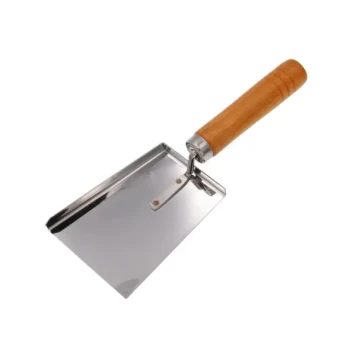
- Stainless Steel Pollen Shovel with Wooden Handle
- Heavy-Duty Ergonomic Grip Galvanized Pollen Shovel
- Plastic Bee Pollen Trap Strips Comb Catcher Collector
People Also Ask
- What are the design principles and advantages of pollen traps in the collection of bee pollen? Boost Your Apiary Yield
- What is the function of professional pollen traps in evaluating honey plants? Quantifying Pollination and Crop Potential
- What functions do pollen traps serve for bee bread production? Optimize Your Raw Material Collection
- What maintenance and pest prevention measures should be taken for pollen traps? Protect Your Hive and Harvest Quality
- How does the use of pollen traps in honeybee hives enhance crop fertilization? Boost Your Yield Through Induced Activity