Demographic shifts are turning labor efficiency into a strategic necessity for commercial apiaries. More than 80% of beekeepers are aged 40 or older, with a significant share over 70, creating succession challenges and reducing the availability of workers for physically demanding, seasonal, and migratory tasks. Automated beekeeping machinery helps smaller teams maintain hive construction, colony management, harvesting, filling, and processing capacity without relying on a large manual workforce.
An aging workforce does not eliminate the need for beekeeping expertise; it increases the value of each skilled worker. Automation converts that expertise into scalable output by reducing repetitive labor, standardizing operations, and improving continuity during labor shortages.
How Demographic Shifts Increase Operational Pressure
An aging workforce reduces labor availability
Commercial beekeeping depends on experienced operators, but many businesses are approaching a retirement and succession challenge. When fewer younger workers enter the sector, apiaries have difficulty replacing experienced personnel and filling seasonal positions.
The impact is especially serious during short, high-volume work periods, when delays in hive preparation, colony management, extraction, or packaging can affect the entire production cycle.
Physical demands limit workforce capacity
Beekeeping involves lifting, repetitive handling, extended outdoor work, equipment cleaning, and frequent movement between apiary locations. These demands can restrict how much work an aging operator or a small team can safely complete.
Labor shortages therefore affect more than headcount. They reduce the number of hives each employee can manage and increase the risk of fatigue, injury, delays, and inconsistent work quality.
Migratory operations intensify the challenge
Migratory beekeepers move colonies and equipment across regions in response to flowering cycles and pollination demand. This creates additional requirements for loading, unloading, hive repair, field servicing, harvesting, and logistics coordination.
Because work must often be completed within narrow time windows, a shortage of available labor can create bottlenecks across the entire route rather than at a single apiary.
Why Automation Is Essential for Modern Apiaries
Automation expands the management capacity of each worker
Automated and low-labor equipment allows one skilled operator to supervise more colonies and process greater volumes. It does not remove the need for judgment; instead, it reduces the time spent on repetitive physical tasks.
This is particularly valuable when an apiary must maintain production with a smaller permanent workforce or limited access to temporary labor.
Mechanized hive production supports continuity
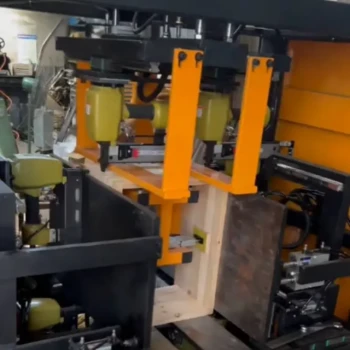
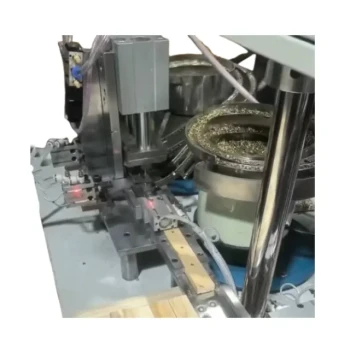
Automated hive-making equipment produces standardized, high-precision hive components more efficiently than manual construction. Standardization supports consistent colony management, inspection, maintenance, and expansion.
For migratory operations, hive manufacturing and component-repair equipment can also help restore damaged or worn equipment at logistics bases. Maintaining hive sealing and structural integrity is important for protecting colonies from physical pest intrusion and environmental exposure.
Automated grafting improves colony-management efficiency
Mechanized larval ovipositor or grafting tools can reduce the manual effort required for queen-rearing and related colony-management tasks. This helps commercial apiaries complete delicate, repetitive operations more consistently when experienced labor is limited.
The equipment should be viewed as a productivity aid for trained personnel, not as a substitute for biological knowledge or quality control.
Automated extraction and filling reduce processing bottlenecks
Honey extraction, cleaning, and filling are labor-intensive stages that can slow production after the colonies have been managed successfully. Automated systems replace many manual handling steps with repeatable mechanical operations.
This improves throughput and helps maintain more consistent hygiene, filling, and product-handling practices across larger volumes.
Standardization supports commercial quality requirements
Industrial equipment creates more consistent operating conditions during collection, processing, and storage. That consistency can help apiaries control hygiene and maintain stable physicochemical indicators required by demanding buyers and export markets.
The benefit extends beyond honey. Mechanized systems can support the efficient handling and standardization of beeswax, pollen, propolis, and other bee products.
Automation Connects Labor Efficiency With Business Growth
It supports larger-scale operations
Large commercial apiaries must manage colonies, equipment, transportation, harvesting, and processing as an integrated system. Manual methods become increasingly difficult to scale when colony numbers and geographic coverage grow.
Automation provides the infrastructure needed to transition from a traditional craft model toward a more predictable commercial operating model.
It helps bridge pollination and supply demands
Rising pollination demand requires commercial operators to manage substantial numbers of healthy colonies across multiple regions. When labor availability does not grow at the same rate, equipment becomes a practical way to expand management capacity.
This allows businesses to improve continuity without depending entirely on scarce or high-cost external labor.
It improves resilience during labor shortages
A mechanized apiary is less vulnerable to the sudden loss of seasonal workers or the inability to recruit local labor. Automated systems preserve essential production steps when staffing levels fluctuate.
That resilience is particularly important for migratory businesses, where delays can affect transportation schedules, flowering windows, and customer commitments.
Understanding the Trade-offs
Automation requires upfront investment
Machinery introduces capital costs for equipment, installation, training, maintenance, and potentially facility upgrades. The economic case should therefore be based on expected throughput, labor savings, utilization rates, and the cost of production delays.
The most suitable solution is not always the most automated one. Equipment should match the apiary’s scale, workflow, product mix, and expansion plans.
Skilled oversight remains essential
Machines can standardize physical operations, but they cannot replace decisions about colony health, timing, bee behavior, weather, or field conditions. Poorly trained operators may still produce poor outcomes more efficiently.
Training, operating procedures, inspection routines, and access to technical support are essential parts of any automation strategy.
Maintenance affects operational reliability
Beekeeping equipment is exposed to dust, moisture, honey residue, vibration, transport, and changing climates. Migratory operations face additional wear because machinery and hive components are frequently moved.
Reliable suppliers, spare parts, repair capability, and responsive after-sales service are therefore as important as the initial equipment specification.
Integration matters more than isolated machines
Purchasing a single automated machine will not solve bottlenecks elsewhere in the workflow. Hive preparation, colony management, extraction, cleaning, filling, storage, and logistics should be evaluated as connected processes.
A coordinated equipment portfolio often delivers greater value than a collection of unrelated devices.
What Distributors and Commercial Buyers Should Evaluate
Build a full-spectrum equipment portfolio
Distributors and B2B resellers should consider products across the complete apiary workflow, including hive-making equipment, grafting tools, extraction and cleaning systems, filling machinery, and repair equipment.
A one-stop sourcing model makes it easier for commercial customers to standardize operations and avoid fragmented purchasing.
Prioritize technical fit and scalability
Equipment should be matched to colony volume, seasonal throughput, facility layout, mobility requirements, and the types of bee products being handled. Buyers should also assess whether the machinery can support future capacity increases.
Standardized components and compatible systems can simplify training, maintenance, and inventory management.
Treat service and fulfillment as part of the product
Rapid response times, technical expertise, spare-parts availability, and efficient order fulfillment directly affect the buyer’s operational risk. Delayed equipment or support can be costly during seasonal production windows.
For distributors, dependable delivery and dedicated customer service are important competitive advantages, particularly when serving migratory and time-sensitive commercial operations.
Making the Right Choice for Your Goal
Select automation according to the operational constraint you need to solve first.
- If your primary focus is reducing physical labor: Prioritize automated hive-making, repair, extraction, cleaning, and filling equipment that removes repetitive manual handling.
- If your primary focus is increasing apiary capacity: Choose integrated machinery that allows each skilled worker to manage more colonies and process higher volumes.
- If your primary focus is migratory beekeeping: Favor durable, transportable equipment and repair capabilities that support rapid field or logistics-base servicing.
- If your primary focus is product quality and compliance: Invest in standardized harvesting, cleaning, filling, and storage processes that improve hygiene and consistency.
- If your primary focus is distribution and resale value: Offer a full-spectrum portfolio supported by technical expertise, fast fulfillment, spare parts, and responsive after-sales service.
For modern apiaries, automation is not a replacement for beekeeping expertise—it is the mechanism that allows limited expertise and labor to produce reliable commercial scale.
Summary Table:
| Impact | Description |
|---|---|
| Labor scarcity | Aging workforce reduces available experienced workers for seasonal and migratory tasks. |
| Physical constraints | Demanding tasks limit capacity and increase injury risk for older staff. |
| Bottlenecks | Manual processing slows operations, especially during peak harvest windows. |
| Scalability | Automation enables smaller teams to manage more hives and process higher volumes. |
| Quality control | Standardized equipment improves consistency and hygiene for commercial and export requirements. |
| Resilience | Mechanized systems reduce vulnerability to labor shortages and staff turnover. |
| Investment vs. benefit | Upfront capital costs are offset by labor savings, throughput gains, and reduced delays. |
| Integration | A coordinated equipment portfolio across the workflow delivers greater value than isolated machines. |
Ready to future-proof your apiary? HONESTBEE provides comprehensive beekeeping machinery and supplies, from hive-making to honey filling. For distributors and resellers, we offer full-spectrum sourcing, OEM/ODM support, and rapid fulfillment to keep your business humming. Contact our experts today to discuss your needs and get a tailored solution — get in touch.
Related Products
- Automatic Honey Filling and Filtering Machine for Beekeeping Bottle Filling
- Automatic High-Speed Bee Hive Box Stapling Machine
- High Performance Cordless Electric Bee Shaker for Beekeeping
- Heavy Duty Manual Bee Smoker Blower for Beekeeping
- Automatic Pneumatic Bee Frame Machine for Eyelet Insertion
People Also Ask
- What process advantages do professional honey filtering and filling machines provide? Optimize Your Organic Honey Output
- How do honey filling and filtering machines increase product value? Turn Raw Honey into Premium Export-Grade Goods
- How do honey filtration and filling machinery contribute to industrialization? Scale Your Commercial Honey Production
- What specific issues do industrial filtration and automated filling machinery address? Ensure Honey Quality & Compliance
- How does the use of professional honey filtration and filling machinery facilitate international honey exports?