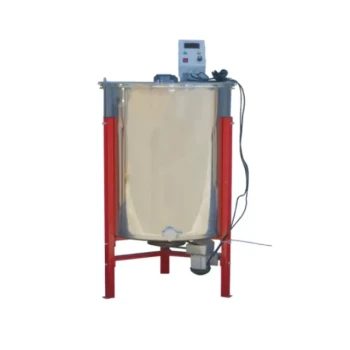
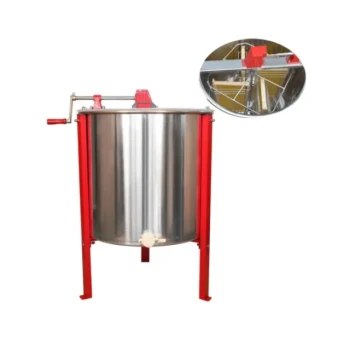
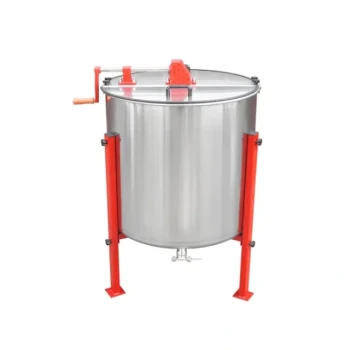
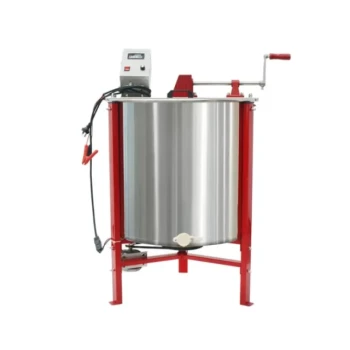
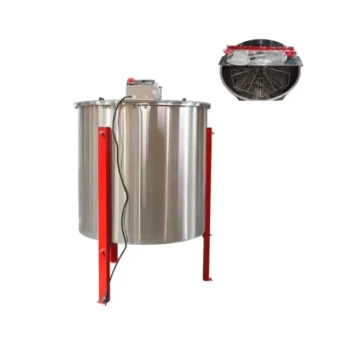
Hand-cranked cast iron centrifugal extractors operate by converting manual rotational energy into centrifugal force. By turning a hand crank, the operator spins an internal basket holding the honeycomb frames, generating sufficient force to pull the honey out of the wax cells and onto the extractor walls. This mechanical process separates the liquid honey from the comb without requiring the destructive crushing or pressing associated with traditional methods.
The definitive value of this equipment lies in its ability to decouple honey harvesting from wax destruction. By preserving the structural integrity of the honeycomb, the extractor allows for immediate reuse of the frames, drastically reducing the biological energy cost for the bee colony and accelerating the production cycle.
The Mechanics of Extraction
Generating Controlled Centrifugal Force
The core function of the extractor is the application of high-speed rotational force. As the operator cranks the handle, the internal gears multiply the torque to spin the frames rapidly.
This rotation creates physical centrifugal force that overcomes the surface tension holding the honey in the cells. The honey is flung outwards against the drum wall, where it drains to the bottom for collection, leaving the wax structure intact.
The Role of Cast Iron Construction
The specific mention of cast iron in these units points to a focus on stability and durability. Cast iron provides significant weight, which anchors the machine and dampens the vibrations caused by spinning heavy, unbalanced frames.
This structural rigidity is essential for consistent operation. It ensures the mechanism can withstand the mechanical stress of "large-scale" sessions without warping or shifting, which is critical for maintaining high-quality production standards.
Biological and Operational Efficiency
Preserving Frame Integrity
Unlike traditional pressing methods that crush the comb to release honey, the centrifugal approach leaves the wax foundation undamaged. The primary reference highlights this as a critical advantage for maintaining the structural integrity of the frames.
Because the comb is not destroyed, it does not need to be rendered down or discarded after harvest. The empty, intact frames can be immediately returned to the hive.
The Energy Conservation Loop
This mechanical process directly impacts biological efficiency. Bees consume substantial amounts of energy and honey to secrete the wax needed to build honeycombs.
By returning intact combs to the hive, you eliminate the need for bees to rebuild. This allows the colony to redirect their energy from construction back to foraging, significantly shortening the cycle for the next honey harvest.
Quality Control and Hygiene
Achieving Superior Clarity
Manual squeezing or pressing often forces wax particles, pollen, and other debris into the final product. Centrifugal extractors prevent this by pulling only the liquid honey from the cells.
This results in a "more thorough separation" that prevents the introduction of impurities. The outcome is honey with higher clarity and purity, meeting the standards required for high-quality commercial production.
Avoiding Secondary Contamination
The mechanized nature of the extractor minimizes direct human contact with the honey compared to hand-pressing. This reduces the risk of introducing external contaminants during the extraction phase.
Understanding the Trade-offs
The Maintenance Imperative
While centrifugal extractors improve efficiency, they introduce a large surface area that comes into contact with the honey. If the equipment is not maintained, residual honey can form microbial films.
Sanitation Requirements
Unlike single-use natural comb methods, these machines require rigorous cleaning. The structural design must be regularly disinfected to prevent these microbial films from becoming sources of secondary contamination, which could otherwise lead to higher colony counts in the processed honey.
Making the Right Choice for Your Goal
To maximize the utility of a cast iron centrifugal extractor, align its function with your specific production targets:
- If your primary focus is Volume and Speed: Prioritize the return of wet, intact frames to the hive immediately after spinning to minimize the bees' downtime.
- If your primary focus is Product Purity: Utilize the extractor to eliminate the filtration steps required by pressing, but implement a strict sanitation schedule to prevent microbial buildup.
Ultimately, the hand-cranked extractor is not just a harvesting tool, but a conservation device that trades human mechanical effort for substantial biological savings within the hive.
Summary Table:
| Feature | Mechanical Function | Benefit for Beekeepers |
|---|---|---|
| Centrifugal Force | Flings honey from cells to drum walls | Separates honey without crushing the wax |
| Cast Iron Build | Provides weight and vibration dampening | Ensures stability and durability during high-speed spinning |
| Frame Preservation | Keeps honeycomb structural integrity intact | Allows immediate reuse of frames, saving bee energy |
| Manual Cranking | Converts human torque to rotational energy | Cost-effective extraction without needing electricity |
| Quality Control | Pure liquid extraction via force | Higher clarity and reduced debris compared to pressing |
Scale Your Honey Production with HONESTBEE Professional Equipment
Are you looking to maximize your apiary's output while maintaining the highest standards of honey purity? HONESTBEE specializes in supporting commercial apiaries and distributors with a comprehensive range of high-quality beekeeping machinery.
From durable cast iron extractors and honey-filling machines to advanced hive-making equipment and essential industry consumables, we provide the tools you need to succeed. Our solutions help you preserve comb integrity, reduce biological energy costs for your colonies, and deliver a premium product to your customers.
Ready to upgrade your wholesale supply or commercial operation?
Contact HONESTBEE today to discover how our professional beekeeping hardware and cultural merchandise can drive your business forward.
References
- Judit Szűcs. Beekeeping in Csongrád. DOI: 10.1556/aethn.55.2010.1.10
This article is also based on technical information from HonestBee Knowledge Base .
Related Products
- Manual Hand Crank 4 Frame Honey Extractor Centrifuge for Beekeeping
- Stainless Steel 3 Frame Manual Honey Extractor Spinner for Bee Honey Extraction
- electric honey extractor honey centrifuge 3 frame honey extractor stainless steel honey frame extractor
- Plastic Hand Crank 2 Frame Honey Extractor Low Price
- HONESTBEE 3-Frame Manual Acrylic Honey Extractor
People Also Ask
- What are some tips for achieving efficient honey extraction with a centrifuge extractor? Maximize Your Yield & Efficiency
- What is the proper procedure for maintaining a centrifuge honey extractor? Expert Tips for Longevity and Hygiene
- What are the advantages of using a centrifuge honey extractor? Maximize Yields and Protect Your Honeycombs
- Which type of honey extractor is generally more durable? Focus on Material & Build Quality for Longevity
- What is a manual honey extractor? The Essential Guide to Cost-Effective Beekeeping for Beginners