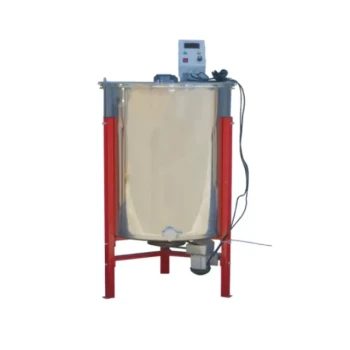
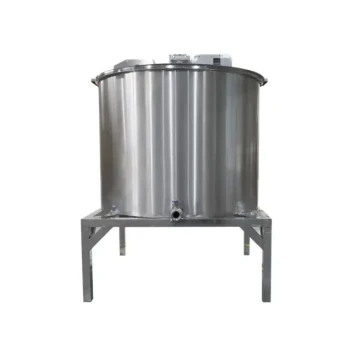
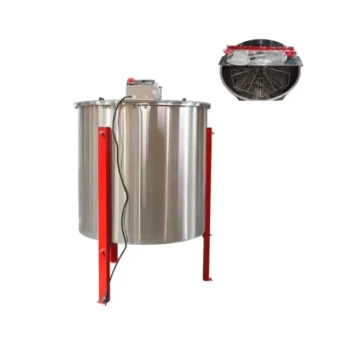
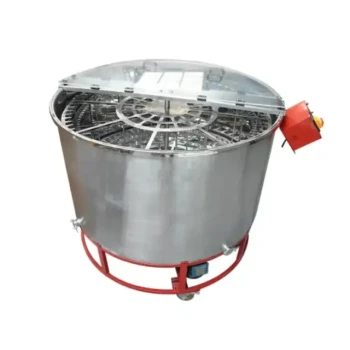
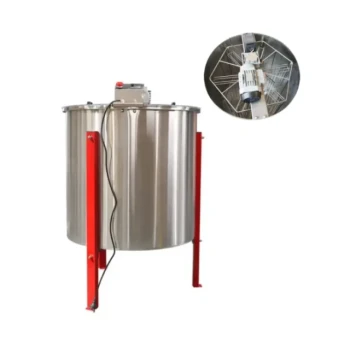
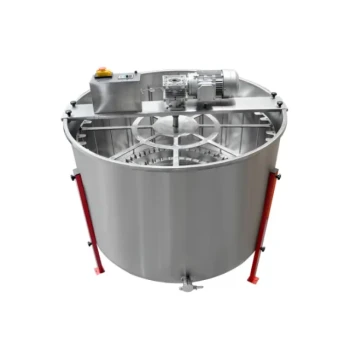
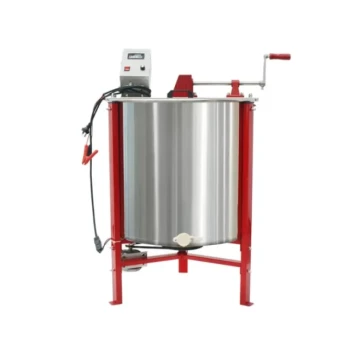
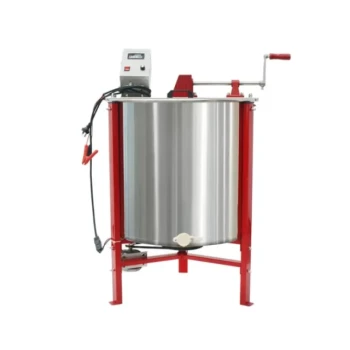
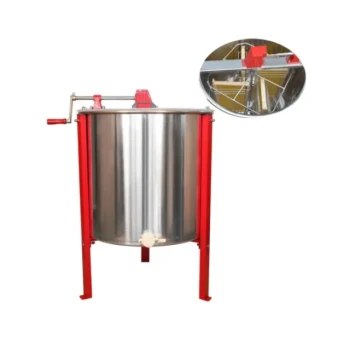
The centrifuge functions as the primary mechanism for mechanical separation in honey extraction. It utilizes high-speed rotation to expel liquid honey from uncapped honeycomb cells via centrifugal force. This process achieves a distinct liquid-solid separation without altering the honey's chemical structure.
The core value of the centrifuge lies in its ability to isolate high-purity honey samples suitable for sensitive pollutant residue analysis while mechanically preserving the wax comb for future use.
The Mechanics of Extraction
Generating Centrifugal Force
The centrifuge holds frames of honeycomb within a stainless steel drum. As the machine spins, it generates significant centrifugal force that pulls the liquid honey outward.
Liquid-Solid Separation
This force physically flings the honey out of the cells and onto the walls of the extractor, where it drains to the bottom. This allows for the efficient removal of the liquid product while leaving the solid wax structure intact.
Preserving Sample Integrity
Maintaining Chemical Composition
According to primary technical standards, the centrifuge ensures the original chemical composition of the honey remains unchanged. This is critical for scientific applications, specifically when high-purity samples are required for pollutant residue analysis.
Protecting Heat-Sensitive Components
Because the process relies on physical force rather than heat, it protects the honey's nutritional profile. Heat-sensitive components, such as specific enzymes and proteins, remain viable and unaltered during the extraction.
Operational Efficiency and Sustainability
Conserving the Drawn Comb
A distinct advantage of centrifugal extraction is that it does not destroy the honeycomb. Unlike crush-and-strain methods, the centrifuge leaves the wax structure—the "drawn comb"—intact.
Reducing Biological Energy Cost
By returning intact combs to the hive, beekeepers save the colony the immense energy and resources required to secrete new wax. This allows the bees to focus immediately on honey production rather than reconstruction.
Understanding the Trade-offs
The Requirement of Uncapping
A centrifuge cannot extract honey from sealed cells. The process is strictly dependent on a preliminary "uncapping" stage, where the wax layer sealing the cells is manually removed with a heated knife or fork.
Balancing Speed and Integrity
Operator precision is required regarding rotational speed. Spinning too slowly results in incomplete extraction, while excessive speeds can damage the frame structure or the wax comb itself.
How to Apply This to Your Project
If your primary focus is Laboratory Analysis:
- Utilize the centrifuge to obtain chemically unaltered samples to ensure accuracy in pollutant residue testing.
If your primary focus is Production Efficiency:
- Prioritize centrifugal extraction to preserve drawn combs, significantly reducing the turnaround time for bees to refill the hive.
If your primary focus is Nutritional Quality:
- Select this method to ensure heat-sensitive enzymes and proteins are not denatured during the separation process.
The centrifuge is the definitive tool for balancing high-yield extraction with the preservation of both chemical purity and physical resources.
Summary Table:
| Feature | Benefit | Importance |
|---|---|---|
| Centrifugal Force | Rapid liquid-solid separation | Maximizes extraction yield |
| Physical Separation | No heat applied | Preserves heat-sensitive enzymes/proteins |
| Comb Preservation | Keeps drawn comb intact | Reduces bees' energy cost for wax creation |
| Chemical Integrity | Zero structural alteration | Essential for sensitive laboratory analysis |
| High-Speed Rotation | Efficient honey discharge | High-volume production & sample collection |
Elevate Your Apiary with HONESTBEE Precision Equipment
At HONESTBEE, we understand the critical balance between high-volume production and sample purity. As a premier partner for commercial apiaries and distributors, we provide a comprehensive wholesale range of professional-grade beekeeping tools and industrial machinery.
From high-performance honey centrifuges and filling machines to specialized hive-making equipment and essential consumables, our portfolio is designed to enhance your operational efficiency and protect the nutritional value of your honey. Whether you are scaling a commercial operation or supplying the industry with the latest hardware, we have the expertise to support your growth.
Ready to optimize your extraction process? Contact us today to explore our wholesale solutions and discover how HONESTBEE can deliver value to your business.
References
- Żaneta Bargańska, Jacek Namieśnik. Honey bees and their products: Bioindicators of environmental contamination. DOI: 10.1080/10643389.2015.1078220
This article is also based on technical information from HonestBee Knowledge Base .
Related Products
- Manual Hand Crank 4 Frame Honey Extractor Centrifuge for Beekeeping
- electric honey extractor honey centrifuge 3 frame honey extractor stainless steel honey frame extractor
- Professional 4 Frame Self Reversing Electric Honey Extractor for Beekeeping
- Stainless Steel 3 Frame Manual Honey Extractor Spinner for Bee Honey Extraction
- 24 Frame Honey Extractor Commercial Radial Honey Frame Extraction Machine
People Also Ask
- What are some tips for achieving efficient honey extraction with a centrifuge extractor? Maximize Your Yield & Efficiency
- What is the proper procedure for maintaining a centrifuge honey extractor? Expert Tips for Longevity and Hygiene
- What are the advantages of using a centrifuge honey extractor? Maximize Yields and Protect Your Honeycombs
- Which type of honey extractor is generally more durable? Focus on Material & Build Quality for Longevity
- What is a manual honey extractor? The Essential Guide to Cost-Effective Beekeeping for Beginners