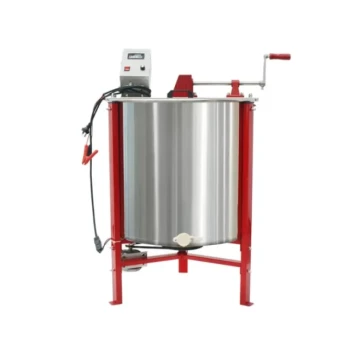
Honey extractors accelerate harvesting by using centrifugal force to spin honey out of the frames. These mechanical or electrical devices, capable of holding between 2 and 30 frames at a time, automate the extraction process while preserving the structural integrity of the honeycomb.
Core Takeaway While the surface function of an extractor is simply to remove honey, its deeper value is comb preservation. By extracting honey without destroying the wax, you allow bees to reuse the comb immediately, which eliminates the energy cost of rebuilding and significantly increases your overall honey yield.
The Mechanics of Extraction
Harnessing Centrifugal Force
The fundamental principle of a honey extractor is centrifugal force. Frames are placed inside a drum and spun at high speeds.
This spinning action creates an outward force that pulls the liquid honey out of the comb cells and onto the walls of the drum, where it drains to the bottom for collection.
Preserving the Wax Structure
Unlike manual methods that often require crushing the comb, an extractor leaves the wax framework intact.
This is the distinct technical advantage of the machine: it separates the harvestable product (honey) from the biological infrastructure (wax) without damaging the latter.
Capacity and Scalability
Extractors are built to scale with your apiary, typically holding anywhere from 2 to 30 frames simultaneously.
Whether using a hand-cranked mechanical model or a high-speed electrical version, these machines represent a significant investment designed to last for many years of service.
The Biological Advantage
Reducing Bee Energy Expenditure
Bees must consume a significant amount of honey and energy to secrete beeswax and build honeycomb.
When you return intact wet combs to the hive after extraction, the colony does not need to waste resources rebuilding their nest.
Increasing Production Cycles
Because the bees are relieved of the burden of wax construction, they can immediately switch their focus back to foraging and nectar collection.
This efficiency shortens the overall production cycle, often allowing for more frequent harvests within a single season.
Understanding the Trade-offs
Initial Investment
Extractors are substantial pieces of equipment and represent a "significant investment" compared to simple crush-and-strain tools. You must weigh the upfront cost against the long-term gains in efficiency and honey yield.
Operational Complexity
While efficient, extractors introduce a layer of mechanical complexity to your operation. They require cleaning, storage space, and maintenance to ensure they last for the many years they are built to serve.
Making the Right Choice for Your Goal
Before investing in an extractor, consider your specific objectives for your apiary:
- If your primary focus is increasing yield: Prioritize an extractor to preserve drawn comb, as this eliminates the biological "tax" bees pay to rebuild wax, directly boosting honey output.
- If your primary focus is efficiency: Look for electrical models with larger frame capacities (up to 30) to minimize the physical labor and time spent in the honey house.
- If your primary focus is budget: A smaller, manual 2-frame extractor provides the biological benefits of comb preservation without the higher cost of industrial-grade automation.
The right extractor transforms honey harvesting from a destructive, labor-intensive chore into a sustainable cycle that benefits both the beekeeper and the colony.
Summary Table:
| Feature | Manual Extraction (Crush/Strain) | Mechanical/Electrical Extraction |
|---|---|---|
| Mechanism | Physical pressure/gravity | Centrifugal force |
| Comb Integrity | Destroyed during process | Preserved and reusable |
| Processing Speed | Slow and labor-intensive | Fast (2 to 30 frames at once) |
| Bee Energy Cost | High (must rebuild wax) | Low (return "wet" combs) |
| Yield Potential | Lower due to cycle delays | Higher through faster production cycles |
Maximize Your Honey Production with HONESTBEE
As a commercial apiary or distributor, your success depends on efficiency and high-quality equipment. HONESTBEE provides a comprehensive wholesale range of beekeeping solutions—from high-capacity honey-filling machines and industrial honey extractors to precision hive-making machinery and essential consumables.
By choosing our professional-grade equipment, you reduce labor costs, preserve vital honeycomb infrastructure, and accelerate your harvest cycles. Let us help you scale your operations with tools built for durability and performance.
Ready to upgrade your harvesting efficiency? Contact HONESTBEE Today to discuss our wholesale offerings and customized equipment solutions.
Related Products
- HONESTBEE 72 Frame Industrial Electric Honey Extractor for Beekeeping
- Commercial Electric 12 Frame Honey Extractor Spinner Motorized Honey Extractor
- HONESTBEE 3-Frame Manual Acrylic Honey Extractor
- electric honey extractor honey centrifuge 3 frame honey extractor stainless steel honey frame extractor
- HONESTBEE 6 Frame Self Reversing Electric Honey Extractor for Beekeeping
People Also Ask
- What is the importance of balancing honeycomb frames within a honey extractor? Ensure Stability and Protect Machinery
- How is honey separated from the frames after they are uncapped? Efficient Extraction Methods for High Yields
- What are the main benefits of using a honey extractor? Maximize Yields and Protect Your Honeycomb
- What are the recommended methods for removing honey from the honeycomb? Top Extraction Techniques for Maximum Efficiency
- How do manual honey extractors compare to electric honey extractors? Choosing the Right Tool for Your Apiary Growth