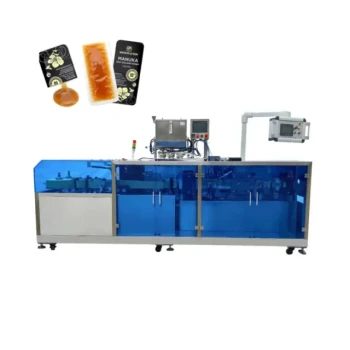
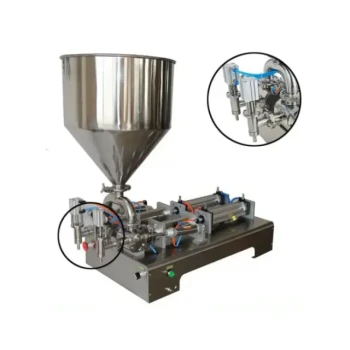
Honey filling machines and processing equipment safeguard authenticity by establishing a closed-loop production environment that physically isolates the product from the hive to the bottle. This isolation minimizes the risk of external pollen contamination and prevents the unauthorized introduction of common adulterants, such as cane sugar syrup or caramel, ensuring the product's biological identity remains intact.
By maintaining a consistent pollen fingerprint from the apiary to the final package, these industrial systems provide the essential hardware foundation for a verifiable traceability system and rigorous quality assurance compliance.
The Role of Closed-Loop Architecture
Eliminating Adulteration Pathways
The primary contribution of modern filling equipment is the creation of a closed production cycle. By automating the transfer of honey, these machines remove human contact points where adulterants, such as sugar syrups or caramel, could be surreptitiously introduced. This physical barrier transforms the bottling line into a secure chain of custody.
Preserving the Pollen Fingerprint
Authenticity testing often relies on analyzing the pollen present in the honey to verify its botanical and geographical origin. Industrial processing equipment is designed to preserve this pollen fingerprint. By preventing cross-contamination with external pollens, the machinery ensures that the bottled product's profile matches the original samples taken from the apiary.
Ensuring Biological Maturity and Integrity
Validating Harvest Maturity
Advanced extraction equipment supports authenticity by ensuring honey is processed only when it reaches optimal maturity. This is verified through specific biochemical markers, such as proline levels and moisture content. Proper machinery ensures that only fully ripened honey enters the supply chain, preventing the sale of immature or unstable products.
Selective Filtration
Authenticity also involves texture and purity. Mechanical separation and high-efficiency filtration utilize specific consumables to remove physical impurities without stripping essential bioactive components. This process clarifies the product while retaining the nutritional elements that distinguish genuine honey from processed sweeteners.
Hygiene and Environmental Control
Moisture Management
Honey is hygroscopic, meaning it readily absorbs moisture from the air, which can lead to fermentation and spoilage. High-quality filling machines utilize hygienic sealing technologies that lock out environmental moisture. This extends shelf life and ensures the chemical composition of the honey remains stable and authentic over time.
Precision and Standardization
Automated lines employ high-precision quantitative pumps to ensure consistent volume control. This standardization reduces product waste and manual handling errors. By strictly controlling the volume and seal, the equipment ensures the final product meets regulatory compliance for minimally processed natural goods.
Understanding the Trade-offs
The Risk of Over-Processing
While filtration equipment removes impurities, improper settings or aggressive ultra-filtration can strip away the very pollen needed for verification. It is crucial to balance clarity with the preservation of the microscopic elements that prove authenticity. Over-processed honey may look cleaner but can fail traceability tests.
Capital Investment vs. Market Value
Implementing a fully automated, closed-loop system requires significant capital investment in infrastructure. While this equipment enables "industrial-grade" packaging and supports a premium brand image, the cost must be weighed against the volume of production. For smaller artisans, the leap to automation must be justified by a clear demand for verifiable, high-volume consistency.
Making the Right Choice for Your Goal
To maximize the authenticity and value of your honey products, align your equipment choice with your strategic objectives:
- If your primary focus is verifiable origin: Prioritize equipment with gentle filtration systems that explicitly preserve the pollen fingerprint for traceability.
- If your primary focus is regulatory compliance: Choose automated filling lines with integrated hygiene controls and precise metering to meet strict food safety and moisture standards.
- If your primary focus is market scale: Invest in high-speed, closed-loop packaging systems that deliver standardized branding and extended shelf life for retail distribution.
Ultimately, the right machinery acts not just as a packaging tool, but as a guardian of your product's biological truth.
Summary Table:
| Feature | Contribution to Authenticity | Impact on Quality |
|---|---|---|
| Closed-Loop Architecture | Prevents unauthorized additives and external contamination | Ensures a secure chain of custody from hive to bottle |
| Pollen Fingerprint Preservation | Maintains botanical and geographical markers | Enables verifiable traceability for origin testing |
| Hygienic Sealing | Controls moisture levels and prevents fermentation | Extends shelf life and maintains chemical stability |
| Precision Metering | Ensures consistent volume and minimizes manual handling | Guarantees regulatory compliance and reduces waste |
| Selective Filtration | Removes impurities while retaining bioactive components | Balances product clarity with biological integrity |
Elevate Your Honey Production Standards with HONESTBEE
At HONESTBEE, we understand that for commercial apiaries and distributors, authenticity is your brand's greatest asset. Our comprehensive range of beekeeping machinery, including precision honey-filling machines, hive-making equipment, and industrial processing consumables, is designed to create a secure, closed-loop environment for your products.
Whether you are scaling your retail distribution or seeking to enhance your quality assurance, we provide the hardware foundation needed to protect your honey’s biological truth.
Ready to upgrade your facility? Contact us today to explore our wholesale equipment solutions
References
- Emuobosa Akpo Orijemie. Comparative pollen analysis of honeys from apiary and open markets in Nigeria and Bénin Republic. DOI: 10.4314/ijs.v19i2.2
This article is also based on technical information from HonestBee Knowledge Base .
Related Products
- Precision Durable Efficient HONESTBEE Rotary Honey Filling Machine
- Semi Automatic Small Honey Bottle Filling Machine Honey Filler
- Economy Small Honey Filling Machine Honey Bottle Filler Packaging Machine
- Fully Automatic Honey Filling Packaging Machine for Processing Line
- Commercial Rotary Honey Filling Machine for Production
People Also Ask
- What quality control role does professional honey filling equipment perform? Ensure Consistency and Product Stability
- What is a key feature of the new generation of the honey filling machine? The Advanced Electronic Control Unit
- How do honey filling machines work? Achieve Precision & Speed for Your Apiary
- How do honey filling and processing machines aid native bee product conservation? Boost Value with HONESTBEE Technology
- How do high-precision honey filling machines ensure quality? Optimize Your Commercial Production with HONESTBEE