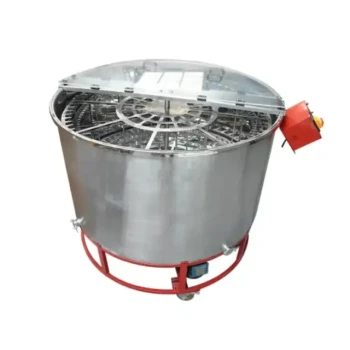
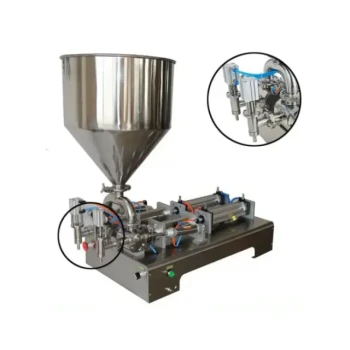
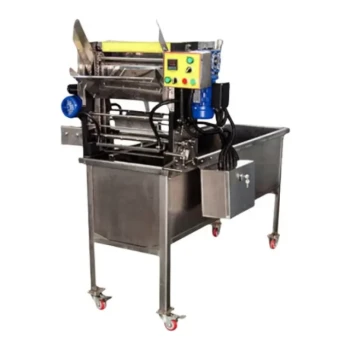
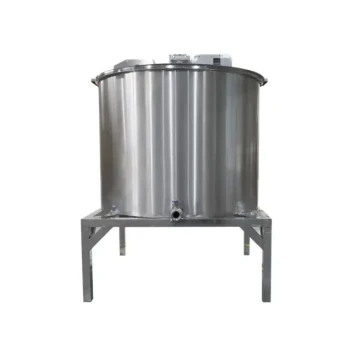
Industrial automatic honey-filling machines serve as a critical economic counterweight to the rising costs associated with Varroa destructor management. While these machines do not directly treat the infestation, they mitigate the financial damage by drastically improving packaging efficiency and reducing labor expenses. This operational savings helps balance the ledger, allowing commercial apiaries to absorb the costs of chemical treatments and colony losses while maintaining overall profitability.
Varroa destructor infestations squeeze profit margins by shrinking honey yields and increasing veterinary costs. Automatic filling machines offset these financial burdens by streamlining post-harvest processing, ensuring that the remaining harvest is packaged with maximum efficiency and minimal waste.
Offsetting the High Cost of Colony Management
The primary economic threat of Varroa is the increase in overhead required to keep colonies alive. Automation addresses this by freeing up capital elsewhere in the production line.
Reducing Labor Expenses
Manual bottling is labor-intensive and costly. By implementing automated production lines, apiaries significantly reduce the man-hours required for packaging.
The savings generated from reduced labor can be reallocated to essential hive management tasks, such as purchasing mite treatments or replacing lost colonies.
Scaling Operations to Maintain Margins
To survive tighter profit margins caused by pest outbreaks, apiaries often need to scale up volume.
Industrial machines allow for high-speed processing that manual labor cannot match. This capability enables producers to handle larger volumes efficiently, helping to maintain total revenue even if the profit per hive decreases.
Maximizing Yield Efficiency
When Varroa infestations lead to decreased honey supply, every ounce of the harvest becomes more valuable. Waste reduction becomes a financial necessity.
Precision Volumetric Control
Automated machines utilize precise volumetric control to ensure every container receives the exact intended amount of product.
This eliminates the "giveaway" overfilling common in manual processes. By strictly controlling the net weight, apiaries maximize the number of sellable units from a limited bulk supply.
Minimizing Material Waste
During post-harvest processing, manual filtration and filling often result in spills and drips.
Advanced machinery integrates efficient extraction and filtration systems that significantly reduce material waste. This ensures that the limited honey yield is converted almost entirely into revenue rather than being lost during processing.
Securing Market Value and Distribution
Mitigating economic impact isn't just about cutting costs; it is about protecting the value of the end product.
Meeting Large-Scale Distribution Standards
Retailers and large distribution networks require strict adherence to quality and consistency.
Automated fillers ensure consistent net weights and use hygienic sealing processes to prevent environmental contamination. This reliability allows apiaries to access higher-value markets that demand standardized, safe products.
Preserving Product Integrity
Automated systems utilize sealed, sterile processes that maintain the stability of active components, such as enzymes.
By preventing contamination and preserving quality, apiaries can command better market prices. This helps mitigate the profit margin compression caused by the initial pest outbreak.
Understanding the Trade-offs
While automation offers a path to economic stability, it introduces its own set of challenges that must be weighed against the benefits.
High Initial Capital Expenditure
The machines required to achieve these efficiencies represent a significant upfront investment.
For apiaries already struggling with cash flow due to Varroa losses, financing this equipment can add short-term financial pressure before the long-term ROI is realized.
Technical Maintenance Requirements
Shifting from manual to automated labor changes the nature of the work.
Operators must manage the maintenance of complex machinery. Downtime due to mechanical failure can be costly, potentially disrupting the very efficiency gains the machine was intended to provide.
Making the Right Choice for Your Goal
Deciding to automate is an economic calculation based on your current infestation levels and production goals.
- If your primary focus is immediate cost control: Prioritize automation to slash labor overhead, allowing you to redirect wages toward mite treatments and colony recovery.
- If your primary focus is revenue maximization: Leverage the precision of automated filling to eliminate overfilling waste, ensuring you get the maximum number of retail units from your mite-reduced harvest.
- If your primary focus is market expansion: Use the hygienic and standardization capabilities of the machine to qualify for large-scale distribution contracts that offer more stable pricing.
Automation turns the honey production process into a highly efficient engine, generating the savings necessary to weather the storm of biological threats.
Summary Table:
| Feature | Economic Impact on Varroa Management | Benefit to Apiary |
|---|---|---|
| Automated Filling | Reduces manual labor hours and operational overhead | Reallocates budget to mite treatments |
| Precision Control | Eliminates overfilling and product giveaway | Maximizes sellable units from reduced yields |
| High-Speed Output | Enables scaling to maintain margins despite lower hive yield | Protects total revenue streams |
| Hygienic Sealing | Ensures compliance with large-scale retail standards | Accesses higher-value, stable markets |
| Waste Reduction | Minimizes spills during filtration and packaging | Converts limited supply into maximum profit |
Protect Your Margins with HONESTBEE Solutions
Biological threats like Varroa destructor shouldn't jeopardize your commercial success. HONESTBEE empowers commercial apiaries and distributors with the industrial-grade tools needed to survive and thrive. From high-precision honey-filling machines and hive-making hardware to a full spectrum of beekeeping consumables, we provide the infrastructure to slash labor costs and eliminate waste.
Why partner with HONESTBEE?
- Maximize Yield: Our precision machinery ensures every drop of honey is accounted for.
- Scalable Efficiency: Transition from manual labor to high-speed automated production lines.
- Comprehensive Support: We supply everything from specialized machinery to honey-themed cultural merchandise.
Don't let rising management costs shrink your profits. Contact HONESTBEE today to discover how our wholesale equipment can safeguard your apiary's future.
References
- Jay M. Iwasaki, Katharine J. M. Dickinson. The New Zealand experience of varroa invasion highlights research opportunities for Australia. DOI: 10.1007/s13280-015-0679-z
This article is also based on technical information from HonestBee Knowledge Base .
Related Products
- Fully Automatic Honey Filling Packaging Machine for Processing Line
- Precision Durable Efficient HONESTBEE Rotary Honey Filling Machine
- Automatic Honey Filling and Filtering Machine for Beekeeping Bottle Filling
- Precision Automated Packaging Turntable Honey Spoon Filling Sealing Packing Machine
- Automatic Single-Dose Snap & Squeeze Honey Sachets Packing Machine
People Also Ask
- Why are fully automatic honey filling and packaging lines essential? Boost Your Honey's Market Value and Quality
- What is a fully-automatic honey filler? Streamline Your Production with High-Precision Automation
- How do automated honey filling and packaging machines affect profitability? Boost Margins with HONESTBEE Technology
- How do automated honey filling and packaging machines contribute to the market value of honey products? Maximize Your ROI
- How do industrial-grade automated honey filling and packaging machines mitigate the risk of physical contamination?