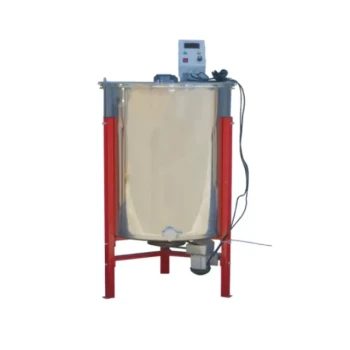
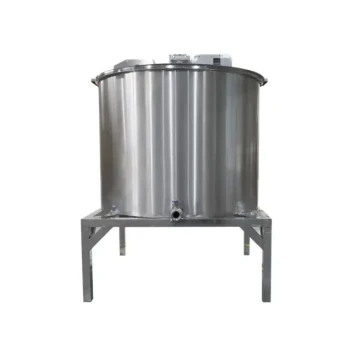
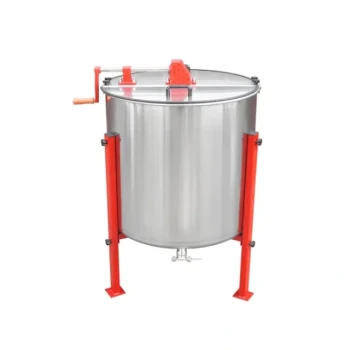
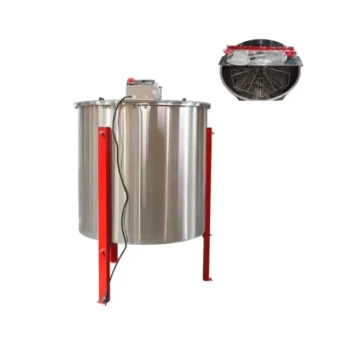
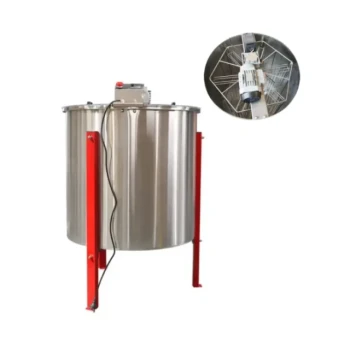
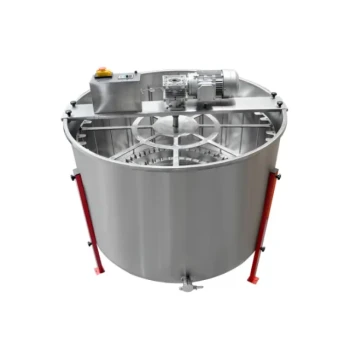
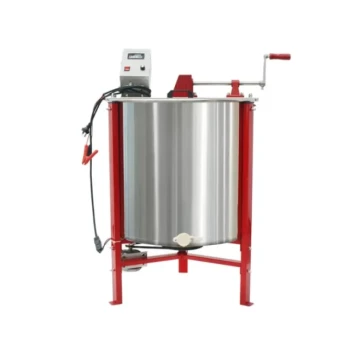
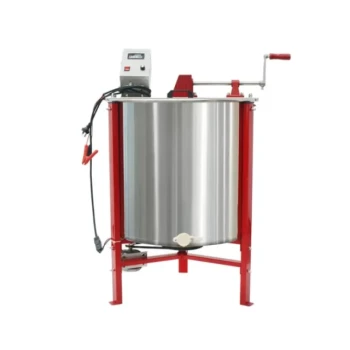
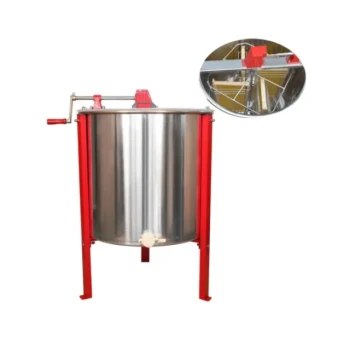
Industrial centrifugal honey extractors influence microbial indicators primarily through increased contact surface area. While this method effectively separates honey via rotational force, it significantly increases the exposure of the liquid to machinery surfaces. If the equipment is not meticulously sanitized, this contact turns the extractor into a vector for secondary contamination, potentially raising the total colony count of the final product.
The core challenge of centrifugal extraction is managing the trade-off between mechanical efficiency and biological hygiene. While the process preserves physical purity and pollen, the machinery itself can harbor residual microbial films that compromise the honey's microbial stability if sanitation protocols are not strictly enforced.
The Mechanism of Contamination Risk
Surface Area Exposure
The centrifugal process relies on high-speed rotation to force honey out of the comb. Unlike gravity draining, this method sprays honey against the inner walls and components of the extractor.
This action dramatically increases the contact area between the food product and the industrial equipment.
The Threat of Biofilms
According to technical analysis, the primary risk factor is the accumulation of residual microbial films.
If the extractor is not properly maintained, these microscopic layers of bacteria or yeast persist on the machinery. When fresh honey contacts these films during the spin cycle, cross-contamination occurs.
Impact on Total Colony Counts
The result of this secondary contamination is measurable.
Processed commercial honey extracted via centrifugation often exhibits higher total colony counts compared to natural, unprocessed comb honey. This differential is directly attributed to the sanitation status of the extraction machinery.
Understanding the Trade-offs
Mechanical Purity vs. Microbial Load
It is crucial to distinguish between physical purity and microbial purity. As noted in supplementary data, centrifugal extractors are excellent for maintaining physical integrity—they retain natural pollen and avoid the damage caused by heating or fine filtration.
However, this physical benefit does not negate the microbial risk. A machine that preserves pollen perfectly can still introduce bacteria if the internal surfaces are compromised.
The Maintenance Variable
The risk of microbial influence is not inherent to the physics of centrifugation, but rather to the maintenance regime.
The machine is not the source of bacteria; the residue left behind from previous batches is. Therefore, the influence on microbial indicators is a variable dependent on human operation and cleaning schedules.
Critical Design Considerations
Ease of Disinfection
To mitigate microbial risks, the structural design of the extractor is paramount.
Equipment must be engineered to facilitate thorough cleaning and disinfection. Blind spots, crevices, or materials that resist sanitation allow microbial films to develop, making the machine a recurring source of contamination.
Material Compatibility
The internal surfaces must be durable enough to withstand frequent, rigorous chemical or thermal sterilization without degrading.
This ensures that the "residual films" mentioned in safety protocols can be completely removed between production cycles.
Making the Right Choice for Your Goal
To manage the microbial quality of your honey while leveraging the efficiency of centrifugal extraction, consider the following:
- If your primary focus is Food Safety Compliance: Prioritize extractors with "clean-in-place" (CIP) capabilities or seamless stainless steel interiors to eliminate biofilm harbors.
- If your primary focus is Product Purity: Implement a strict sanitation schedule to ensure the high pollen retention benefits of centrifugation are not negated by elevated bacterial counts.
- If your primary focus is High-Volume Production: Recognize that increased throughput requires increased frequency of cleaning to prevent the buildup of microbial films over long shifts.
The quality of your honey is defined not just by the nectar source, but by the hygiene of the surfaces it touches during extraction.
Summary Table:
| Factor | Influence on Microbial Indicators | Mitigation Strategy |
|---|---|---|
| Contact Surface Area | High exposure to inner walls increases secondary contamination risk. | Use seamless stainless steel to reduce adhesion. |
| Biofilm Accumulation | Residual films from previous batches raise total colony counts. | Implement strict cleaning-in-place (CIP) protocols. |
| Mechanical Purity | Preserves pollen but can introduce microscopic bacteria. | Balance physical integrity with rigorous sterilization. |
| Equipment Design | Crevices and blind spots harbor microbial growth. | Choose extractors designed for easy disinfection. |
Elevate Your Honey Production Standards with HONESTBEE
At HONESTBEE, we understand that for commercial apiaries and distributors, the balance between efficiency and food safety is non-negotiable. Our industrial-grade beekeeping machinery is engineered to minimize microbial risks while maximizing output.
Why partner with HONESTBEE?
- Superior Hygiene: Our centrifugal honey extractors and honey-filling machines feature high-grade materials designed for thorough disinfection.
- Comprehensive Supply: From hive-making machines to essential industry consumables and honey-themed cultural merchandise, we provide the full spectrum of tools your business needs.
- Global Distribution Support: We offer competitive wholesale solutions tailored to the needs of large-scale beekeeping operations.
Ensure your honey meets the highest microbial stability standards. Contact us today to discuss your equipment needs!
References
- Ye. V. Rudenko, N. V. KAMYSHAN. INDICATION OF CAUSES OF INFECTIOUS DISEASES OF BEES IN BEEKEEPING PRODUCTS. DOI: 10.46913/beekeepingjournal.2023.11.12
This article is also based on technical information from HonestBee Knowledge Base .
Related Products
- electric honey extractor honey centrifuge 3 frame honey extractor stainless steel honey frame extractor
- HONESTBEE 72 Frame Industrial Electric Honey Extractor for Beekeeping
- Manual Hand Crank 4 Frame Honey Extractor Centrifuge for Beekeeping
- Professional 4 Frame Self Reversing Electric Honey Extractor for Beekeeping
- Commercial 48-Frame Stainless Steel Honey Extractor
People Also Ask
- What are the characteristics of electric honey extractors? Boost Your Apiary Efficiency with Automated Technology
- What are the disadvantages of using an electric honey extractor? Weighing Cost, Power, and Comb Safety
- What are the advantages of an electric honey extractor? Boost Efficiency and Scale Your Honey Production
- What are the technical advantages of electric honey extractors? Maximize Yield and Protect Your Bee Colony
- How does an electric honey extractor affect the quality of honey? Preserve Flavor & Purity with Precision Extraction