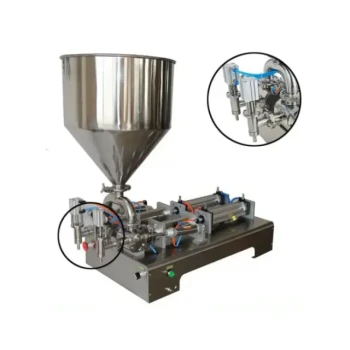
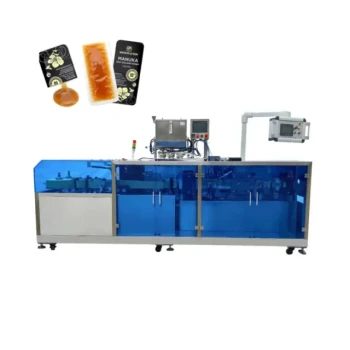
Industrial-grade filling machines act as the critical compliance gatekeepers for honey entering retail markets. By utilizing high-precision quantitative metering and automated hygiene controls, these systems ensure every container meets strict net weight and sealing regulations. This automation eliminates human variability, securing the product's status as a quality-guaranteed brand suitable for large-scale supermarkets.
Core Takeaway Achieving retail-grade quality in honey production is less about speed and more about repeatable standardization. Industrial filling equipment integrates aseptic environments with precise volume control to ensure that the physical purity, chemical composition, and legal weight of the product remain consistent across millions of units.
Achieving Regulatory Compliance through Precision
The primary function of industrial filling equipment is to align production with strict legal parameters. Retail supply chains demand zero variance in product quantity and presentation.
Quantitative Filling Control
The foundation of retail compliance is net weight accuracy. Industrial machines use high-precision automated metering to dispense exact amounts of honey into every jar.
This precise volume control prevents regulatory fines associated with under-filling. It also eliminates the cumulative product loss associated with over-filling, ensuring standardized yield calculations.
Sealing and Packaging Integrity
Once filled, the container must be secured immediately. Industrial machines automate the sealing process to guarantee a hermetic closure.
This ensures the package is tamper-evident and prevents leaks during transport. A consistent seal is vital for maintaining the product’s "quality-guaranteed" status on supermarket shelves.
Hygiene and Purity Management
Honey is a food product susceptible to environmental contaminants. Industrial machinery shifts the packaging process from an open environment to a controlled, sterile loop.
Aseptic Processing Technologies
To meet organic and high-end market standards, machines employ aseptic packaging technologies.
This creates a sterile filling environment that prevents "secondary contamination." By isolating the honey from the open air, the machinery inhibits microbial growth and ensures the product remains safe for consumption.
Filtration and Clarification
Before filling, integrated filtration systems remove physical impurities such as wax particles or debris.
This process ensures the visual clarity required by consumers. Crucially, this is done within a closed system to maintain the honey's purity and prevent the re-introduction of external contaminants.
Preserving Sensory and Chemical Properties
Honey contains heat-sensitive enzymes and active ingredients. Industrial equipment is designed to process the product without degrading its natural value.
Constant Temperature Control
High-quality filling machines integrate constant temperature control systems.
These systems maintain the honey at a viscosity suitable for pumping without overheating it. This preserves the natural active ingredients and ensures the honey retains its specific sensory characteristics (taste and aroma).
Maintaining Chemical Indicators
Strict international trade measures (NTMs) monitor chemical markers like moisture and sucrose content.
By minimizing environmental exposure and controlling the filling atmosphere, industrial machines prevent moisture absorption. This helps maintain the honey's physicochemical parameters, ensuring it meets standards like NMX-F-036-NORMEX-2006 for global export.
Understanding the Trade-offs
While industrial automation is essential for scale, it introduces specific operational risks that producers must manage.
The Risk of Over-Processing
Filtration intensity matters. While consumers want clear honey, excessive filtration can strip away pollen, which may affect the product's classification as "raw" or "organic" in certain jurisdictions. You must calibrate filtration to balance clarity with botanical authenticity.
Thermal Management Sensitivity
Heat is a double-edged sword. While temperature control facilitates flow, even minor equipment malfunctions leading to overheating can increase HMF (Hydroxymethylfurfural) levels. High HMF levels indicate degradation and can disqualify honey from export markets.
Making the Right Choice for Your Goal
Selecting the right filling technology depends on your specific market positioning and volume requirements.
- If your primary focus is Mass Retail Distribution: Prioritize machines with high-precision quantitative metering to ensure absolute net weight compliance and uniform packaging for supermarket shelves.
- If your primary focus is Organic or High-End Export: Prioritize machines with aseptic filling technology and temperature control to prevent secondary contamination and preserve bio-active enzymes.
- If your primary focus is Global Supply Chain Security: Ensure your system supports batch management and anti-counterfeiting labeling to meet traceability requirements for international export.
Invest in the hardware that guarantees not just efficiency, but the integrity of the honey itself.
Summary Table:
| Feature | Key Benefit | Compliance Goal |
|---|---|---|
| Quantitative Metering | Eliminates net weight variance | Legal trade compliance |
| Aseptic Technology | Prevents secondary contamination | Hygiene & food safety |
| Temp. Control | Preserves enzymes & HMF levels | Chemical & sensory integrity |
| Automated Sealing | Guarantees hermetic closure | Tamper-evidence & shelf-life |
| Closed Filtration | Removes physical impurities | Visual clarity & purity |
Elevate Your Apiary with HONESTBEE Precision Solutions
At HONESTBEE, we understand that for commercial apiaries and distributors, equipment reliability is the foundation of market success. We provide a comprehensive wholesale range of beekeeping tools, specialized hive-making hardware, and high-performance honey-filling machines designed to meet the most rigorous retail standards.
Whether you are scaling up for mass distribution or targeting the high-end organic export market, our machinery ensures your product maintains its natural integrity and legal compliance. From essential industry consumables to honey-themed cultural merchandise, we are your strategic partner in the global honey supply chain.
Ready to optimize your production line?
Contact HONESTBEE today for expert consultation and wholesale pricing.
References
- Asger Søgaard Jørgensen. Beekeeping In An Agricultural Landscape—Denmark. DOI: 10.1080/0005772x.2011.11417429
This article is also based on technical information from HonestBee Knowledge Base .
Related Products
- Precision Durable Efficient HONESTBEE Rotary Honey Filling Machine
- Commercial Rotary Honey Filling Machine for Production
- Fully Automatic Honey Filling Packaging Machine for Processing Line
- Automatic Honey Filling and Filtering Machine for Beekeeping Bottle Filling
- Precision Automated Packaging Turntable Honey Spoon Filling Sealing Packing Machine
People Also Ask
- How do honey filling and processing machines aid native bee product conservation? Boost Value with HONESTBEE Technology
- What quality control role does professional honey filling equipment perform? Ensure Consistency and Product Stability
- How do high-precision honey filling machines ensure quality? Optimize Your Commercial Production with HONESTBEE
- How do honey filling machines work? Achieve Precision & Speed for Your Apiary
- What are the common types of bottling machines used for honey? Choosing the Right Solution for Your Apiary