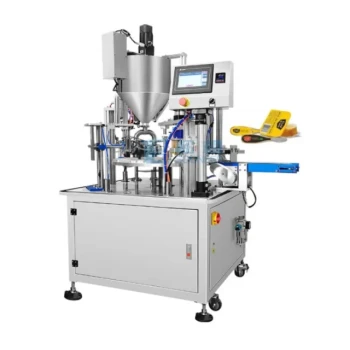
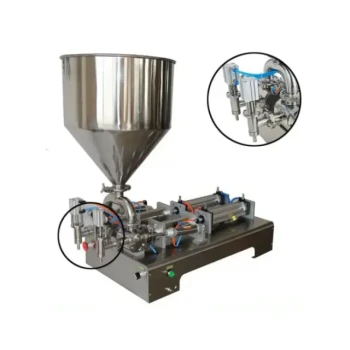
Industrial-grade honey filling and packaging equipment serves as the critical bridge between raw agricultural production and a commercially viable retail commodity. These machines directly enhance market value by ensuring high-precision volume control, maintaining strict hygiene standards, and delivering the consistent packaging necessary for professional branding. By standardizing operations, producers can move beyond manual limitations to achieve the efficiency and quality assurance required for large-scale distribution and high-end markets.
By automating the filling and sealing process, this equipment eliminates the variability of manual handling, protecting the honey's biochemical stability and transforming it into a standardized, trustworthy product suitable for modern retail shelves.
Preserving Product Integrity and Quality
To command a high commercial value, honey must maintain its chemical properties from the hive to the consumer.
Preventing Environmental Contamination
Manual packaging exposes honey to airborne contaminants and human contact. Industrial machines utilize hygienic sealing technologies to create a closed environment. This significantly reduces the risk of secondary contamination, ensuring the product meets strict food safety regulations.
Controlling Moisture and Fermentation
Honey is hygroscopic, meaning it readily absorbs moisture from the atmosphere. Automated equipment creates an immediate, reliable seal during packaging. This prevents moisture ingress, which is the primary cause of fermentation and spoilage, thereby extending shelf life.
Maintaining Biochemical Stability
Advanced equipment minimizes the thermal and physical stress placed on the honey. This preservation is vital for keeping biochemical indicators, such as Hydroxymethylfurfural (HMF) levels, within the optimal range required for premium labeling.
Transitioning from Bulk to Brand
Commercial value is heavily dependent on consumer perception and trust. Industrial equipment provides the infrastructure to build a professional brand identity.
Precision Dosing for Consumer Trust
High-precision quantitative control ensures that every jar contains the exact volume stated on the label. This consistency builds consumer trust and prevents regulatory fines associated with under-filling.
Standardization for Retail Environments
Retailers require uniform packaging for shelf display and logistics. Automated machines ensure that every unit is identical in appearance and seal integrity. This standardization allows honey products to compete in high-end domestic and international export markets.
Enabling Traceability
Modern consumers and regulators demand supply chain transparency. Industrial packaging systems facilitate the integration of tracking codes and batch numbers. This capability is essential for meeting the traceability demands of the food, pharmaceutical, and cosmetic industries.
Understanding the Operational Trade-offs
While the benefits are clear, adopting industrial automation involves specific challenges that must be managed.
Capital Investment vs. Production Volume
High-end filling machinery represents a significant upfront cost. For smaller operations, the return on investment depends heavily on having a consistent, high-volume supply of raw honey to justify the expense.
Technical Maintenance Requirements
Unlike manual processing, automated lines require specialized technical maintenance. Producers must account for the need for skilled operators or technicians to keep the machinery calibrated and functioning, which adds a layer of operational complexity.
Loss of "Artisanal" Flexibility
Industrial machines are optimized for specific container sizes and standard runs. They offer less flexibility than manual methods if a producer relies on frequently changing bottle shapes or extremely small, custom batches for niche markets.
Making the Right Choice for Your Goal
Selecting the right level of automation depends on your target market and production scale.
- If your primary focus is International Export: Prioritize equipment with advanced sealing and vacuum features to ensure optimal HMF levels and long-term shelf stability during transport.
- If your primary focus is High-Volume Retail: Focus on machines with high-speed precision dosing to maximize throughput and ensure absolute uniformity on the shelf.
- If your primary focus is Boutique Branding: Choose flexible semi-automated systems that allow for unique packaging shapes while still providing professional-grade hygiene.
Investing in the right packaging infrastructure is not just an operational upgrade; it is the fundamental step in converting raw honey into a valuable, scalable commercial asset.
Summary Table:
| Feature | Commercial Benefit | Impact on Value |
|---|---|---|
| Precision Dosing | Eliminates under-filling and regulatory risks | Increases consumer trust & brand reliability |
| Hygienic Sealing | Prevents contamination and moisture ingress | Extends shelf life and ensures food safety |
| Thermal Control | Maintains low HMF levels and biochemical stability | Preserves premium quality for high-end markets |
| Automated Labeling | Enables batch tracking and professional aesthetics | Facilitates international export and retail entry |
| Standardization | Uniform packaging for shelf display | Improves logistics and retail competitiveness |
Elevate Your Honey Brand with HONESTBEE Professional Equipment
Transitioning from raw production to a high-value retail brand requires more than just quality honey—it requires precision and professional packaging. At HONESTBEE, we specialize in empowering commercial apiaries and distributors with the tools needed to scale.
Our Value to You:
- Comprehensive Wholesale Range: From specialized hive-making and honey-filling machines to essential industry consumables.
- Industrial Efficiency: High-precision machinery designed to maximize your throughput while maintaining strict biochemical stability.
- Cultural Merchandise: A unique portfolio of honey-themed merchandise to diversify your retail offerings.
Whether you are expanding your distribution network or upgrading your production line, our team is ready to provide the hardware and expertise you need to succeed in the global market.
Contact HONESTBEE Today to Discuss Your Wholesale Needs
References
- Genevieve M. Nouyrigat, Elena Barbu. Managing Apis Mellifera Bees’ Mortality to Protect the Environmental Sustainability: Perceptions, Practices and Solutions of Beekeepers. DOI: 10.18280/ijsdp.180201
This article is also based on technical information from HonestBee Knowledge Base .
Related Products
- Precision Durable Efficient HONESTBEE Rotary Honey Filling Machine
- Commercial Rotary Honey Filling Machine for Production
- Fully Automatic Honey Filling Packaging Machine for Processing Line
- Precision Automated Packaging Turntable Honey Spoon Filling Sealing Packing Machine
- Automatic Honey Filling and Filtering Machine for Beekeeping Bottle Filling
People Also Ask
- How do honey filling machines work? Achieve Precision & Speed for Your Apiary
- What are the common types of bottling machines used for honey? Choosing the Right Solution for Your Apiary
- How do honey filling and processing machines aid native bee product conservation? Boost Value with HONESTBEE Technology
- How do high-precision honey filling machines ensure quality? Optimize Your Commercial Production with HONESTBEE
- What is a key feature of the new generation of the honey filling machine? The Advanced Electronic Control Unit