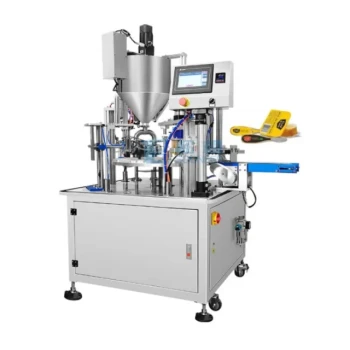
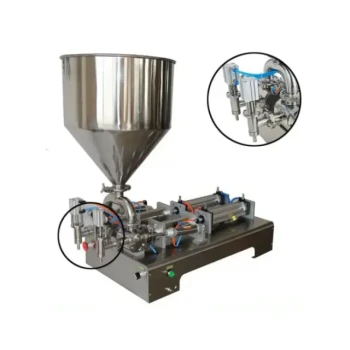
Industrial-grade honey filling machines and stainless steel containers utilize specific material properties to effectively neutralize the risk of metal contamination. By employing high-grade stainless steel and food-grade polymers, this equipment resists corrosion and prevents the electrochemical reactions that typically occur when honey contacts reactive surfaces. This creates a chemical barrier that stops the migration of harmful ions—specifically lead, iron, and zinc—from the equipment into the final product.
Core Takeaway: The prevention of metal contamination relies on the chemical inertness of professional-grade materials, which ensures honey remains free of leached heavy metals while meeting strict international export standards for consumer safety.
The Chemical Barrier: Material Selection
Preventing Electrochemical Reactions
Honey is a substance that can induce corrosion when stored in improper containers. Industrial-grade machines use materials engineered to possess excellent corrosion resistance.
By using high-grade stainless steel or food-grade polymers, producers prevent the electrochemical reactions that degrade standard equipment. This ensures the machinery remains inert even during long-term contact with the product.
Stopping Ion Migration
A critical risk in honey processing is the leaching of metallic elements into the food supply. Without proper barriers, ions of lead, iron, or zinc can migrate from the equipment surface into the honey.
Professional-grade stainless steel containers effectively block this migration. This is essential for maintaining the chemical purity required for consumer safety and regulatory compliance.
Mechanical Safeguards Against Impurities
Precision Filtration Systems
Beyond chemical leaching, industrial machines address physical contamination. Advanced automated systems utilize precision filtration within fully enclosed production lines.
This technology actively eliminates physical impurities during processing. It acts as a fail-safe against the inclusion of glass shards, metal fasteners, or industrial debris.
Closed-Loop Automation
Manual handling increases the risk of introducing foreign objects. Industrial-grade equipment utilizes hygienic, closed-loop operations to transfer honey from bulk storage to retail packaging.
This automation minimizes human contact with the product. By providing hermetic sealing, the machinery prevents secondary contamination and ensures the product remains physically stable during transit.
Understanding the Trade-offs
Investment vs. Market Access
While industrial-grade equipment demands a significant capital investment, it is a non-negotiable requirement for scaling operations. Using non-standard equipment may save money initially but often results in products that fail international export standards.
Operational Complexity
Transitioning to high-precision automated systems increases operational complexity. While these machines reduce labor costs, they require strict adherence to maintenance schedules to ensure the metering controls and hygienic seals function correctly.
Making the Right Choice for Your Goal
- If your primary focus is International Export: Invest in high-grade stainless steel machinery to prevent ion migration and meet strict regulatory safety standards.
- If your primary focus is Product Consistency: Utilize automated filling systems with closed-loop filtration to eliminate physical debris and ensure uniform packaging.
Prioritizing inert materials in your processing line is the single most effective step toward guaranteeing a safe, export-ready honey product.
Summary Table:
| Feature | Protection Mechanism | Benefit to Honey Quality |
|---|---|---|
| High-Grade Stainless Steel | Resists electrochemical reactions & corrosion | Prevents leaching of lead, iron, and zinc ions. |
| Precision Filtration | Physical debris removal | Eliminates glass shards and metal fasteners. |
| Closed-Loop Automation | Hermetic, human-free processing | Minimizes secondary contamination and debris ingress. |
| Food-Grade Polymers | Chemical inertness | Maintains purity and compliance with export standards. |
Elevate Your Apiary to International Standards with HONESTBEE
Don't let contamination risks compromise your product's integrity or market access. HONESTBEE specializes in empowering commercial apiaries and distributors with the high-performance tools needed to scale safely and efficiently.
From industrial-grade honey filling machines and precision-engineered stainless steel containers to our specialized hive-making machinery, we provide the full spectrum of equipment designed to eliminate metal migration and physical impurities.
Partner with HONESTBEE to secure your honey’s purity and maximize your wholesale potential.
Contact Our Equipment Experts Today
References
- Marian Asantewah Nkansah, Francis Opoku. Phytocompounds, Heavy Metal and Mineral Contents in honey Samples from Selected Markets in the Kumasi Metropolis. DOI: 10.28991/esj-2018-01152
This article is also based on technical information from HonestBee Knowledge Base .
Related Products
- Precision Durable Efficient HONESTBEE Rotary Honey Filling Machine
- Commercial Rotary Honey Filling Machine for Production
- Fully Automatic Honey Filling Packaging Machine for Processing Line
- Automatic Honey Filling and Filtering Machine for Beekeeping Bottle Filling
- Precision Automated Packaging Turntable Honey Spoon Filling Sealing Packing Machine
People Also Ask
- How do high-precision honey filling machines ensure quality? Optimize Your Commercial Production with HONESTBEE
- What are the common types of bottling machines used for honey? Choosing the Right Solution for Your Apiary
- How do honey filling machines work? Achieve Precision & Speed for Your Apiary
- What is a key feature of the new generation of the honey filling machine? The Advanced Electronic Control Unit
- What quality control role does professional honey filling equipment perform? Ensure Consistency and Product Stability