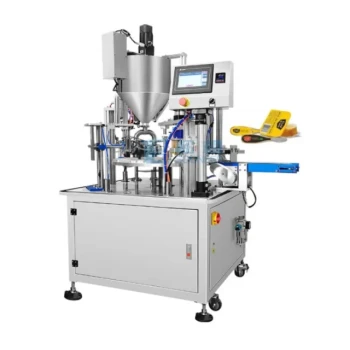
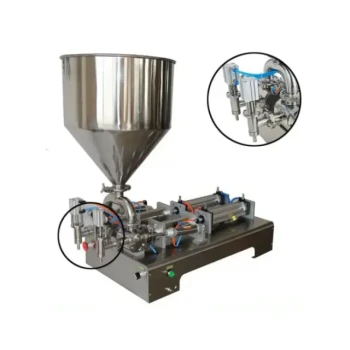
Industrial-grade honey filling machines safeguard product quality primarily through the integration of high-precision metering control and closed-system architectures. These technologies guarantee that every unit meets strict international trade standards regarding net weight while simultaneously isolating the honey to prevent secondary contamination. By stabilizing the filling environment, these machines preserve the delicate biological activity and flavor integrity that define high-value natural honey.
By eliminating manual variability and environmental exposure, industrial filling technology protects the delicate physicochemical properties of honey—ensuring that the premium value, from enzyme activity to exact weight, remains intact from vat to jar.
The Mechanics of Precision and Consistency
High-Precision Metering Control
The cornerstone of industrial quality assurance is high-precision metering. This technology guarantees that the net weight of each container is identical, ensuring compliance with rigorous international trade standards. It eliminates the financial loss of overfilling and the regulatory risks of underfilling.
Adapting to Viscosity Variations
Honey varies significantly in texture, from fluid blossom varieties to thick chestnut types. Advanced machines utilize automated flow control systems that adapt to these viscosity changes. This ensures consistent dosage regardless of the honey's thickness or temperature fluctuations during processing.
Ensuring Batch Uniformity
Automated systems provide a level of consistency that manual operations cannot match. By strictly controlling the volume and weight of every unit, manufacturers ensure uniformity across finished products. This standardization is essential for brand reliability and meeting the expectations of the retail market.
Hygiene and Contamination Prevention
Closed-System Architecture
To maintain the purity of natural honey, industrial machines employ closed systems. This design isolates the product from the surrounding environment, significantly reducing the risk of secondary contamination from airborne dust or bacteria.
Aseptic and Non-Contact Filling
Many high-end machines utilize non-contact filling technology and aseptic packaging methods. By removing direct physical contact and human handling from the equation, these systems meet the strict hygiene requirements necessary for organic certifications and food safety regulations.
Anti-Drip Technology
Precision isn't just about volume; it is also about cleanliness. Anti-drip designs prevent honey residue from coating the bottle neck or exterior. This prevents the attraction of external contaminants and ensures the final package meets hygienic commercial circulation standards.
Preserving Bio-Activity and Chemical Stability
Minimizing Air Exposure
High-value honey is sensitive to oxidation and moisture. Industrial machines utilize rapid airtight sealing to minimize the honey's exposure to air. This prevents physical stratification and reduces the risk of fermentation or spoilage caused by air mixing.
Protecting Biological Integrity
Natural honey contains sensitive enzymes and antioxidants. By controlling the filling environment and temperature, these machines preserve the biological activity and nutritional components of the product. This ensures the flavor and health benefits remain potent for the consumer.
Stabilizing Physicochemical Indicators
Precise sealing and handling prevent fluctuations in the honey's chemical composition. This technology is critical for maintaining key stability indicators, such as the acidity index and sucrose content, throughout the product's shelf life.
Understanding the Trade-offs
Calibration Complexity
While high-precision systems offer superior consistency, they require exact calibration to match specific honey viscosities. If the machine is not properly adjusted when switching between honey types, the accuracy of the fill and the speed of production can be compromised.
Rigorous Maintenance Protocols
The "closed system" benefit relies entirely on the system remaining sterile. These machines require strict cleaning and maintenance schedules to prevent residue buildup in the nozzles or flow meters, which could otherwise become a source of the very contamination they are designed to prevent.
Making the Right Choice for Your Goal
When selecting equipment for high-value honey production, align the technology with your primary business objective.
- If your primary focus is International Export: Prioritize machines with certified high-precision metering to strictly guarantee net weight compliance and avoid trade disputes.
- If your primary focus is Organic or Raw Honey: Select equipment featuring closed systems and non-contact filling to ensure the biological activity and purity required for organic certification are preserved.
- If your primary focus is Retail Shelf Life: Look for machines offering rapid airtight sealing and anti-drip features to stabilize physicochemical indicators and prevent stratification.
Industrial filling technology transforms honey packaging from a bottleneck into a quality control checkpoint, securing the value of your harvest.
Summary Table:
| Feature | Quality Control Benefit | Impact on Product Value |
|---|---|---|
| High-Precision Metering | Guarantees exact net weight | Ensures trade compliance & prevents product loss |
| Closed-System Architecture | Prevents secondary contamination | Maintains purity for organic & food safety standards |
| Anti-Drip Technology | Keeps bottle necks clean | Prevents bacterial growth & improves shelf appeal |
| Rapid Airtight Sealing | Minimizes oxidation & air exposure | Preserves enzymes, flavor, and prevents fermentation |
| Flow Control Systems | Adapts to different honey viscosities | Ensures batch uniformity across all honey types |
Elevate Your Honey Production with HONESTBEE
Protect the premium value of your harvest with professional-grade equipment. HONESTBEE specializes in supporting commercial apiaries and distributors with high-performance honey-filling machines, hive-making hardware, and essential beekeeping tools.
Whether you are scaling up for international export or maintaining the integrity of organic raw honey, our comprehensive wholesale offering ensures you have the machinery and consumables to succeed.
Ready to optimize your production line? Contact HONESTBEE Today to discuss our range of honey-filling solutions and cultural merchandise tailored for your business.
References
- Petra Dearden, Peter K. Dearden. More than just buzz: New Zealand bee research and its impact. DOI: 10.26686/nzsr.v71.8669
This article is also based on technical information from HonestBee Knowledge Base .
Related Products
- Commercial Rotary Honey Filling Machine for Production
- Precision Durable Efficient HONESTBEE Rotary Honey Filling Machine
- Fully Automatic Honey Filling Packaging Machine for Processing Line
- Automatic Honey Filling and Filtering Machine for Beekeeping Bottle Filling
- Precision Automated Packaging Turntable Honey Spoon Filling Sealing Packing Machine
People Also Ask
- What role do commercial honey filling machines play in honey distribution? Scaling Efficiency and Quality Control
- What technical support do commercial-grade filling machines provide? Convert Honey NTFPs into Marketable Commodities
- What is the significance of specialized honey filling equipment? Scaling from Beekeeping to Commercial Success
- Why is professional honey filling machinery critical for honey production? Scale Your Apiary's Profit & Efficiency
- Why is high-capacity honey filling machinery necessary for Giant Honey Bees? Solve the Apis dorsata Volume Crisis